Get in touch to send in cinephile news and discoveries. To keep up with our latest features, sign up for the Weekly Edit newsletter and follow us @mubinotebook on X and Instagram.
NEWS
In & Out (Frank Oz, 1997)
- The Academy of Motion Picture Arts and Sciences have made changes to the Oscar eligibility rules, some of which include: 1) An actor can now be nominated for multiple performances in the same category; 2) in an attempt to bar AI performances from eligibility, the Academy has decreed that only roles “demonstrably performed by humans with their consent” can be nominated; 3) non-English language films can now be submitted for consideration by winning a qualifying award at select international film festivals, thereby circumventing foreign governments’ potential efforts to censor dissident filmmakers.
- Paramount subscribers have filed a lawsuit in California federal court against the studio in an attempt to block their upcoming merger with Warner Bros. Discovery as well as undoing aspects of Skydance’s 2024 acquisition. This is the first lawsuit filed so far against Paramount that directly involves their $110 billion deal.
- The Human Made Mark, an initiative to certify films that have not utilized generative AI, has officially launched. The mark itself will appear as an ident before a verified film and as a certified “Trust Mark” in its end credits. “The Human Made Mark is the Michelin Star of human craft,” says cofounder Eric Gruber. “By doing so, we can create a premium for human made work, while inspiring the next generation of artists coming through.”
DEVELOPING
Mistress America (Noah Baumbach, 2015)
- Letterboxd’s controlling investor is reportedly looking to sell its stake in the company. The Canadian holding company Tiny purchased 60% of the social cataloguing service back in 2023 but now wants to cash out, possibly to manage their debt in light of their declining stock price.
REMEMBERING
Apocalypse Now (Francis Ford Coppola, 1979)
- Dean Tavoularis has died at 93. The American production designer studied architecture at the former Los Angeles County Art Institute before landing a job at Disney as an in-betweener in the animation department. His career began in earnest when he was hired by Arthur Penn as the art director for Bonnie and Clyde (1967). After serving as the production designer on Zabriskie Point (1970) and Little Big Man (1970), he embarked on a decades-long partnership with Francis Ford Coppola when he worked on the design of The Godfather (1972). He would go on to work with Coppola ten more times on films such as The Godfather Part II (1974), for which he won an Oscar, Apocalypse Now (1979), where he met his future wife Aurore Clément on set, and One from the Heart (1982), his first and only film as Zoetrope Studios’ head of the art department. Tavoularis received a lifetime achievement award from the Art Directors Guild in 2007 celebrating his work with Coppola as well as his collaborations with Wim Wenders on Hammett (1982), Warren Beatty on Bulworth (1998), and Roman Polanski on The Ninth Gate (1999). “I would be unable to list the many ways he benefited my work and my personal life,” Coppola remembers. “He was a beloved Uncle to my children. He was a great artist, a great friend, a great Production Designer and a great man.”
RECOMMENDED READING

Erupcja (Pete Ohs, 2025)
- Film Comment has relaunched as a new quarterly digital magazine that will publish new reviews, interviews, podcasts, and more each week. The new issue features a cover story on Boots Riley’s I Love Boosters (2026) by Blair McClendon, a profile of Michaela Coel by Amy Taubin, and Jonathan Rosenbaum’s reflections on his years as the magazine’s London and Paris correspondent.
- “The frame of the image is merely the confinement of the story and its unfurling. What appears on-screen is its enclosed geographical setting. The off-screen is the timeless utopia from which the film’s reality – its most improbable, least expected, most accurate reality – is extracted, isolated and invented, for cinematically it is as close as possible to the concept and its realisation.” Sabzian presents a selection from Cinéma cinéaste, notes sur l’image écrite, Marcel Hanoun’s 2001 collection of short notes on cinema’s myriad relationships to history, the filmmaker, and the viewer.
- “Showing how misunderstood Charli is by the machine is of course branding by other means, and even the development that could constitute self-parody—an overwhelmed Charli ducking out of rehearsals to recharge poolside in Ibiza, leaving her ride-or-dies in the lurch—burnishes the bad-girl brand.” For Defector, Mark Asch examines Charli XCX’s “cinephile era” through the lens of her two latest films, Erupcja (2025) and The Moment (2026), and the history of pop star branding.
- “Experienced as cinema, every frame of Dry Leaf (2025) enacts a drama of form. Figure and ground lose their distinctness. A smudge turns out to be a person, who seems to vanish before our eyes as they recede toward the horizon only to reappear moments later. Clouds take on serrated edges; power cables resemble dotted lines. The pixel, an unwanted video artifact, becomes a compositional element, a visible unit of information that periodically fills the screen with grids and gradients.” For the New York Review of Books, Dennis Lim delves into how Alexandre Koberidze harkens back to early cinema’s imperfections by using the Sony Ericsson W595 camera to shoot his latest film Dry Leaf.
RECOMMENDED EVENTS
Crooklyn (Spike Lee, 1994)
- New York, through June 13: The Kitchen presents Upon a Machine, the first institutional exhibition in the United States by the Indonesian art collective Tromarama, which “extends their ongoing inquiry into the blurred lines between labor and leisure through the use of artificial intelligence.”
- London, through June 7: The Approach presents Baby Blue Benzo, Sara Cwynar’s video installation that uses a Mercedes Benz 300SLR as a catalyst for a research film that explores “the arbitrariness of value and the role of photography in capitalism as a generator of desire.”
- Venice, May 9 through November 23: The Fondazione Prada presents Helter Skelter: Arthur Jafa and Richard Prince, a conversation between two artists who share an “ethos of lawlessness” surrounding the ways they filter American popular culture and their respective racial identities through imagery.
- New York, May 12 through 25: Roxy Cinema presents the world premiere of Patrick Wang’s A. Rimbaud, a biopic about French poet Arthur Rimbaud, featuring a conversation with the filmmaker after the May 12 screening.
RECOMMENDED VIEWING
- Janus films presents a trailer for Carla Simón’s Romería (2025), a coming-of-age film about a young woman’s search for information about her late biological father, based upon the director’s own upbringing.
- Monument Releasing presents a trailer for The Misconceived (2026), James N. Kienitz Wilkins’s millennial social satire that utilizes experimental 3D-rendered processes, ahead of its New York theatrical run at Anthology Film Archives.
- National Geographic presents a trailer for Time and Water (2026), Sara Dosa’s follow-up to the Oscar-nominated Fire of Love (2022) that explores the life and work of Icelandic writer Andri Snær Magnason.
- As part of their six-week series New American Voices, Le Cinema Club presents Family Portrait (2023), Lucy Kerr’s feature debut shot on the Guadalupe River about a woman trying to gather her Texas relatives for a family photo.
RECENTLY ON NOTEBOOK
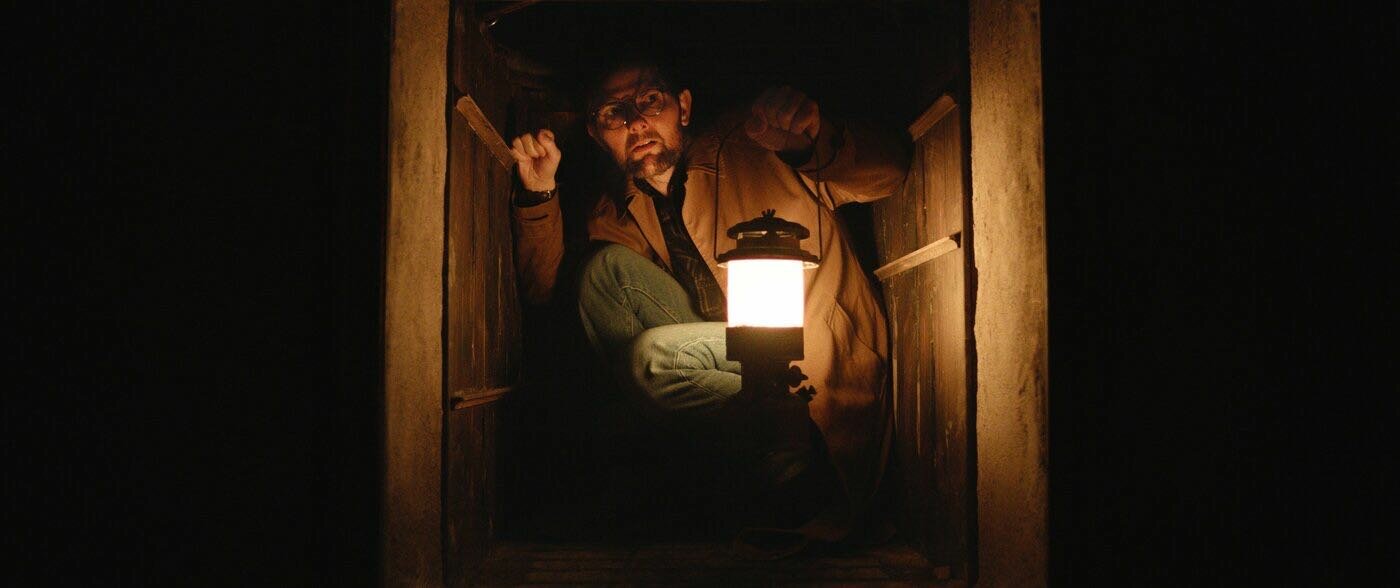
Hokum (Damian McCarthy, 2026)
- “[Damian McCarthy’s] symbols and images point to an older, deeper world, a system of powers and spiritual personages which we would like to dismiss as so much hokum, but ultimately can’t. There is always more that goes on than we know. All those cursed antiques and folkloric totems are not just set dressing: they constitute the base matter of an enchanted world.” Robert Rubsam examines the new film Hokum (2026) and the influence of legends and mythology on the history of Irish horror cinema.
- “I’m completely convinced that the dominant narrative form is a kind of war model—it pushes the idea of protagonist and antagonist, of conflict. Everything becomes conflict. But human experience doesn’t work like that… There are other forms. And those other forms are interesting—people would respond to them. But this model persists, and I think it’s a dangerous one now. It prevents other ways of seeing from emerging.” Lucia Ahrensdorf interviews Lucretia Martel about her documentary Our Land (2025), the on-screen representation of Indigenous communities, and trying to untangle narratives from oppositional binaries.
- “[Ali] Khamraev, like [Sergei] Parajanov and [Andrei] Tarkovsky, used poetic visual language as a ploy to circumvent the strictures of socialist realism. But it is his ability to move between genres that proved the longevity of his career. Unlike Tarkovsky and Parajanov, who suffered under the regime’s censorship, Khamraev learned to work within it.” Botagoz Koilybayeva surveys the career and legacy of Ali Khamraev in the context of the Soviet Union’s indelible impact on Central Asian cinema.
- “Now, you can only meaningfully talk about truth in the context of irreversible processes, that is when something is a fact. But everything else escapes that definition and becomes a matter of interpretation. That’s what we do when we engage with cinema.” Leonardo Goi interviews Sergei Loznitsa about Two Prosecutors (2025), adapting Georgy Demidov’s 1969 novella, and whether his films play a pedagogical role.
WISH LIST
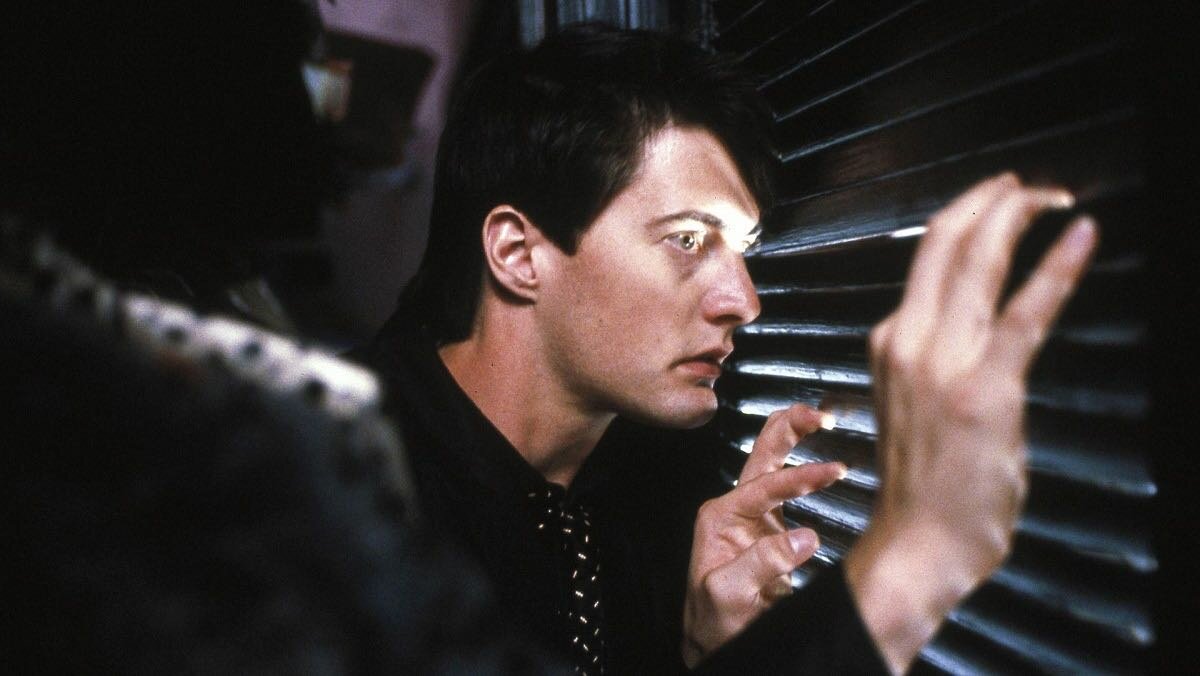
Blue Velvet (David Lynch, 1986)
- Fictional Selves, Kyle MacLachlan’s memoir exploring his “offbeat journey” through Hollywood, is available to preorder from Penguin Random House.
EXTRAS
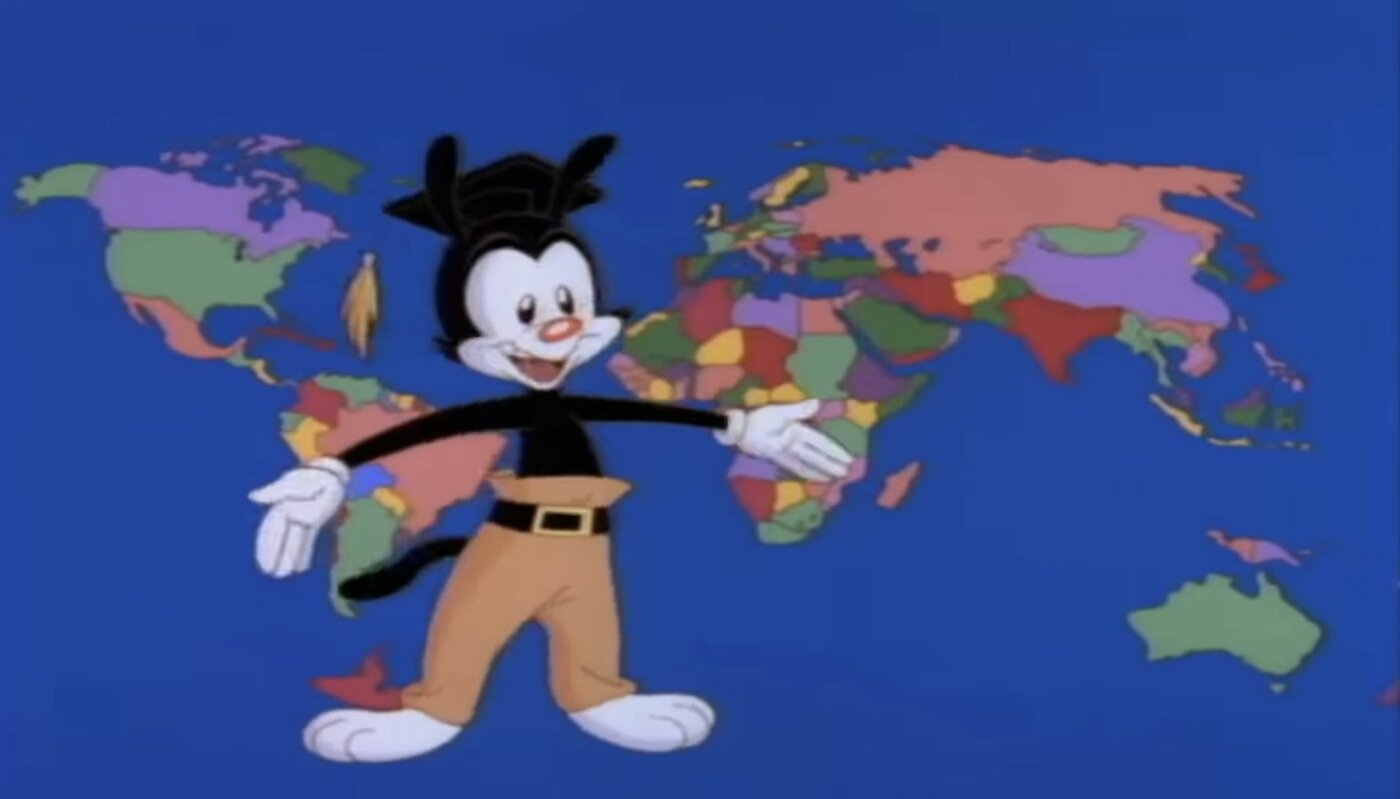
"Yakko's World" (Rusty Mills, 1993)
- The International Federation of Film Archives and the George Eastman Museum presents Film Atlas, an “interactive guide to every motion picture film format, soundtrack, 3-D and color process ever invented.” Explore hundreds of essays detailing the history behind each format, including selections from guest curators highlighting their favorites on the platform.