Get in touch to send in cinephile news and discoveries. To keep up with our latest features, sign up for the Weekly Edit newsletter and follow us @mubinotebook on X and Instagram.
NEWS
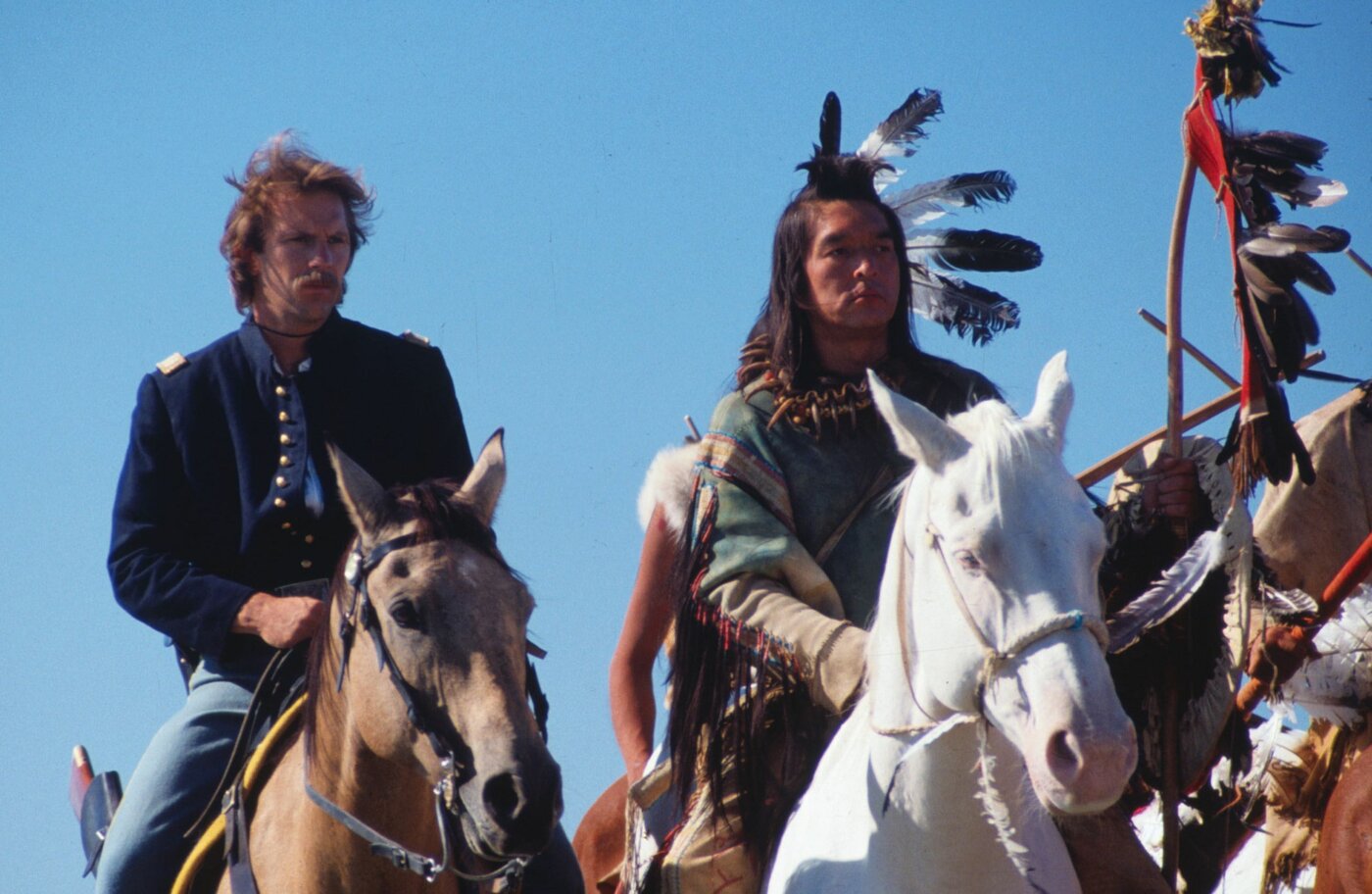
Dances With Wolves (Kevin Costner, 1990).
- The Locarno International Film Festival unveiled the lineup for its 79th edition, featuring new films by Hong Sang-soo, Albert Serra, and Nelson Yeo, as well as a new 4K version of Kevin Costner’s extended Dances with Wolves (1990). Explore the full program on the festival website.
- After facing widespread backlash about privacy and copyright concerns, Meta paused a new AI feature on Instagram that allowed users to generate images based on people’s public accounts. Hollywood agencies and unions, including Creative Artists Agency and SAG-AFTRA, both spoke out against Meta and encouraged their clients to opt out of the feature.
- Netflix is reportedly in talks to buy Letterboxd, the social platform that currently has more than 26 million users worldwide. Other companies in negotiations include Sony Pictures Entertainment, Paramount Skydance, and VC firm Seven Seven Six founded by Reddit co-creator Alexis Ohanian.
- 4Columns ceased publication on June 26. The arts magazine published their final column, explaining that the project was “conceived as a finite endeavor” and that it “was created to support criticism as a literary genre.” Read their decade-long archive collected on their website.
DEVELOPING
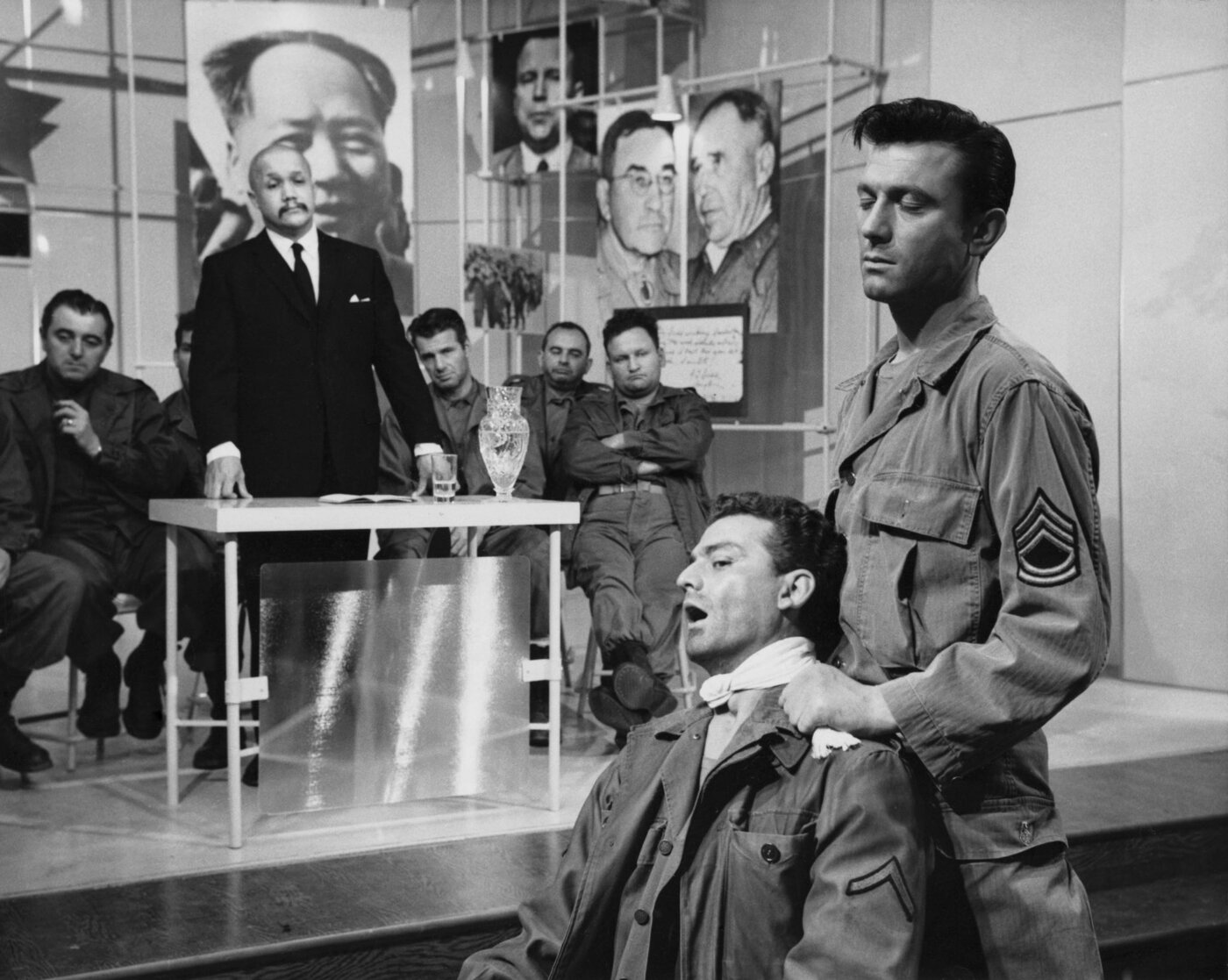
The Manchurian Candidate (John Frankenheimer, 1962).
- David Lowery is set to direct an adaptation of John Langan’s The Fisherman, produced by Michael Bay, with a script co-written with Alex Ross Perry.
- David Chase is set to write and direct a feature and an HBO limited series about the CIA’s MKUltra program inspired by his own adolescent experiences with psychedelics.
REMEMBERING

In the Mouth of Madness (John Carpenter, 1994)
- Sam Neill has died at 78. The New Zealand actor’s versatile career began on the stage as a member of the Downstage Theater Company and the New Zealand Players Drama Quartet. He transitioned to feature film in the mid-1970s, starring in the thriller Sleeping Dogs (1977), the highest-grossing New Zealand film at the time, before breaking through internationally with Gillian Armstrong’s period drama My Brilliant Career (1979). In 1981, Neill starred in both Omen III: The Final Conflict and Andrzej Żuławski’s cult psychological horror Possession—this combination of mainstream crowdpleaser and arthouse roles would define his on-screen legacy going forward. He would co-star opposite Sean Connery in The Hunt for Red October (1990) and follow it up by appearing in Wim Wenders’s sci-fi romantic road drama Until the End of the World (1991). He would star in two Oscar-winning films in the same year: Jane Campion’s The Piano (1993) and, in what would become his most recognized performance, Jurassic Park (1993). Other notable films in Neill’s career include Phillip Noyce’s Dead Calm (1989), John Carpenter’s In the Mouth of Madness (1994), and Taika Waititi’s Hunt for the Wilderpeople (2016). He regularly acted up through his death—including in two upcoming films that will feature posthumous appearances from him—even as he was undergoing chemotherapy for non-Hodgkin’s lymphoma. (Neill died cancer free, according to a statement from his family.) “I’m not afraid of dying,” Neill told the BBC when he was diagnosed. “What I don’t want to do is to stop living, because I really enjoy living.”
- Louise Lasser has died at 87. The American actress first started performing in the early films of Woody Allen, whom she married in 1966 and later divorced in 1970, playing the girlfriend of Allen’s character in Bananas (1971) and a woman who can only achieve orgasm in public in his anthology film Everything You Always Wanted to Know About Sex* (*But Were Afraid to Ask) (1972). After appearing on a handful of sitcoms and TV movies, Lasser’s breakthrough was playing the eponymous character on the satirical soap opera Mary Hartman, Mary Hartman (1976–77), which chronicled the life of a suburban housewife desperately trying to stave off a nervous breakdown amidst consumerist propaganda and bizarre violence. Her post-Mary Hartman career includes supporting roles in Happiness (1998), Requiem for a Dream (2000), and a one-scene turn in Funny Pages (2022), her final film performance. “When we were making Girls (2012–17), we got a chance to work with so many legends. But Louise Lasser was always canon, the prototype,” wrote Lena Dunham in tribute. “I will remember her, lit as she requested and rewriting all her lines, as one of the best to ever do it.”
- Tony Rayns has died at 77. The British writer and programmer began writing for the underground film publication Cinema Rising before becoming a regular contributor to Sight & Sound and its sister publication Monthly Film Bulletin in the 1970s. A tireless advocate for East Asian cinema, Rayns coordinated the Dragons and Tigers competition at the Vancouver International Film Festival from 1988 to 2006 and helped found the Busan International Film Festival in South Korea. In numerous books and essays, as well as in myriad audio commentaries on Criterion and Eureka releases, he championed and introduced filmmakers like Wong Kar-wai, Hou Hsiao-hsien, and Edward Yang to many in the West. Rayns was also one of the most influential subtitle writers of his generation, contributing English-language subtitles and materials for many Asian film releases. “My work relied on you, yet I often neglected you,” wrote Jia Zhangke in tribute. “You were a free spirit in the realm of cinema, yet back in 1999, you told me: ‘You should always stay and work in your own country.’ I am in Yantai now, gazing at a sea blurred before my eyes.”
- Yervant Gianikian has died at 84. The Italian experimental filmmaker and his late partner Angela Ricci Lucchi made political cinema whose “manipulation of archival images of war and repression in the 20th century ran parallel with an urgency to infuse bygone images with immediacy—to treat them as ‘object[s] of the present.’” Their film work was supplemented by their presence in the gallery space, such as their six-channel video and sound installation Journey to Russia (1989–2017) at documenta 14. Together, they won the Biennale’s Golden Lion in 2015 for Armenia with their watercolor showcase that paid tribute to Gianikian’s father, an Armenian genocide survivor. In conversation with Notebook’s Patrick Holzapfel about his collaboration with Ricci Lucchi, Gianikian said, “Our life is film, it is cinema. And I still want to continue. I feel a need, especially now in this situation with the return of fascism in Europe and the world. This is a mission.”
RECOMMENDED READING
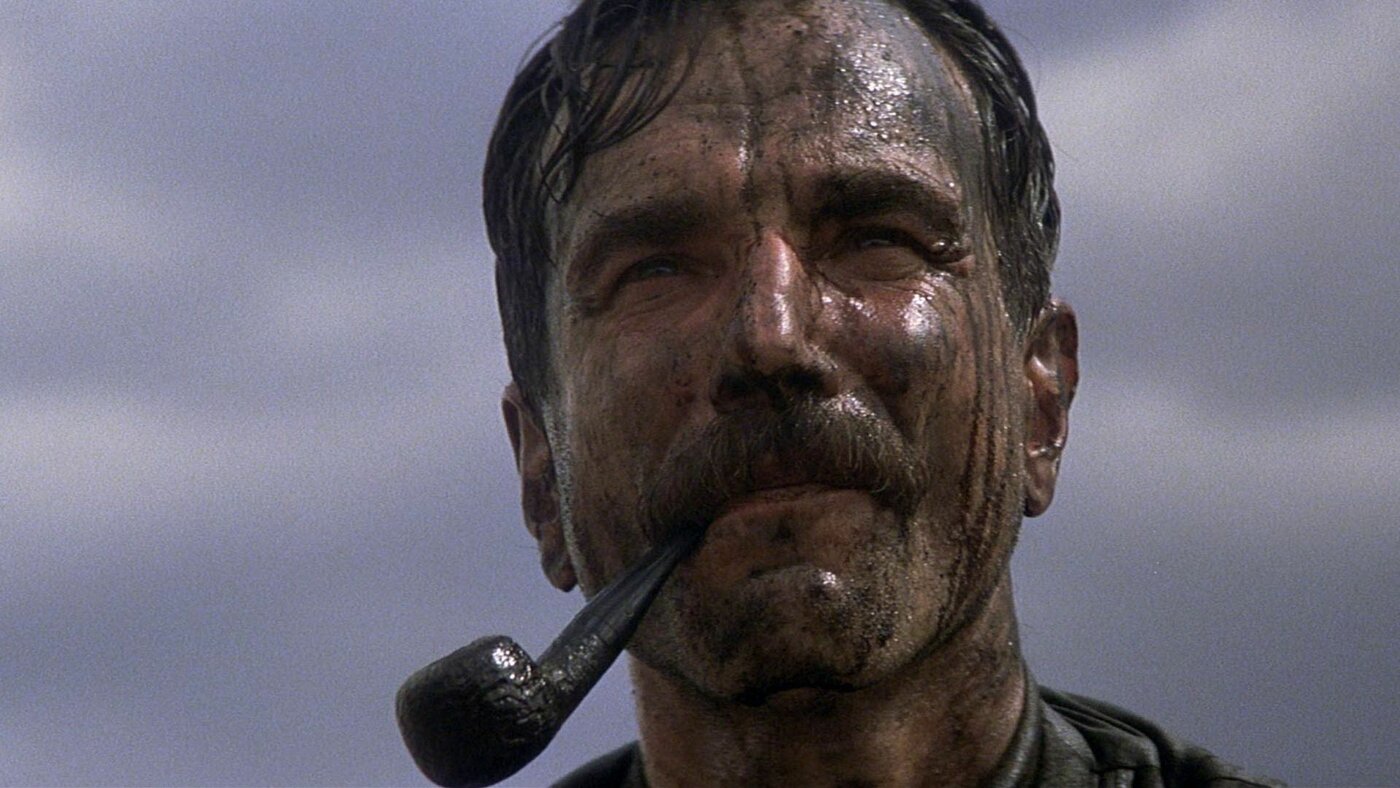
There Will Be Blood (Paul Thomas Anderson, 2007).
- “In this vision of the West, the frontier yields oil as black as night and exacts blood in return as the twin forces of American prosperity—unfettered capitalists with no scruples and grifters who steal religion for their own ends—barrel toward an explosive conclusion. In this great land, There Will Be Blood (2007) suggests, you can gain the whole world as long as you’re prepared to lose your soul, too.” For the New York Times, ten writers choose their pick for the definitive film about America, including Zabriskie Point (1970), Dirty Dancing (1987), and Dazed and Confused (1993).
- “In later interviews, [Mario] Kassar stated that most outfits back then had ‘no idea about foreign rights,’ nor their potentially lucrative profits. So, sans competition, the duo would pick up, say, the talking vagina laff-fest Chatterbox! (1977), which they sold globally outside the US, or snag an Italian crime comedy like 1976’s Roger Moore/Stacy Keach team-up Street People for $100,000, crank out slick promo materials, sell it in Hong Kong for $250,000, and make a tidy sum.” For the Metrograph Journal, Curtis Tsui examines the legacy of independent film studio Carolco Pictures, which shepherded films like Terminator 2: Judgment Day (1991) and Basic Instinct (1992) into theaters during their heyday.
- “In depicting the whirl of August, 1939, he’s also depicting a social world that survives even political cataclysm (at least, for those who do survive). Even during the Occupation, people go to college, hold jobs, take vacations, make and lose friends, flirt, marry, separate, and write; this was the sardonic truth of Rohmer’s own life at the time. In Élisabeth momentous political events are experienced the way that most people experience them: as newspaper headlines that are given less prominence than ads for toothpaste.” For the New Yorker, Richard Brody reviews Éric Rohmer’s only novel Élisabeth, newly translated into English for the first time.
- “[Ron] Carter’s bootstraps narrative falls flat in the face of the absolute abjection [Frederick] Wiseman obliges us to witness: an absurdist play of cops and dealers made tolerable by the filmmaker’s dry sense of humor (some call it black, or perhaps ironic, but it’s too sympathetically attuned to the rhyme and unreason of a world of contradictions to qualify), and by the integrity with which all the actors play the roles to which they have been condemned. In one of Public Housing’s (1997) central scenes, Wiseman presents us with an assessment interview for a treatment diversion program, in which a man rehearses a grim lifetime of addiction to a sympathetic counselor, only to learn after fifteen minutes that he is ineligible for the program.” For n+1, Mariana Mogilevich surveys Frederick Wiseman’s career and the ways his films “provide historical records of ends and beginnings.”
RECOMMENDED EVENTS

Zidane: A 21st Century Portrait (Douglas Gordon & Philippe Parreno, 2006).
- New York, through July 19: The Guggenheim presents Zidane, a 21st century portrait, Douglas Gordon and Philippe Parreno’s two-channel video projection of the French soccer player Zinédine Zidane in real time over the course of a single match in honor of the 2026 World Cup.
- Tokyo, through September 21: The Tokyo Photographic Art Museum presents What a Woman Made, a large-scale retrospective dedicated to the experimental film and video art work of Idemitsu Mako, which “explored themes such as women’s lives, family, and the relationship between media and society.”
- Lisbon, through November 1: The Belem Cultural Center presents Cloud of Confusion, Frida Orupab’s first solo exhibition in Portugal, featuring her image archive assembled on her Instagram account, which emphasizes the “abyss” of digital imagery.
- London, July 17 through September 6: The Institute of Contemporary Art presents She Flickered In and Out of History, a new video and mixed-media installation by Elisa Giardina Papa exploring “the geological, mythological and political temporalities of the Mediterranean” presented on an LED screen, alongside a series of sculptures and photographs, connected by a poem composed by Megan Fernandes.
RECOMMENDED VIEWING
- Warner Bros. presents a trailer for Alejandro G. Iñárritu’s Digger, starring Tom Cruise as “the most powerful man in the world,” who is tasked with saving the world from a catastrophe of his own making.
- Janus Films presents a trailer for Kiyoshi Kurosawa’s The Samurai and the Prisoner (2026), a “cerebral, discursive, and ultimately abstract wartime film ironically on the theme of mercy in a society at war with itself,” says Notebook's Daniel Kasman from this year’s Cannes Film Festival.
- IFC presents a trailer for Joe Swanberg’s The Sun Never Sets (2026), which stars Dakota Fanning as a woman who reconnects with her ex-boyfriend (Cory Michael Smith) while separated from her older partner (Jake Johnson).
- Magnolia Pictures presents a trailer for Late Fame (2025), Kent Jones’s adaptation of Arthur Schnitzler’s posthumously published novella about a former poet (Willem Dafoe) whose work is rediscovered by a group of young acolytes.
- Le Cinema Club presents Half-Cocked (1994), Suki Hawley and Michael Galinsky’s portrait of a DIY punk group touring the American south in a stolen van, featuring a soundtrack produced by Matador Records.
RECENTLY ON NOTEBOOK
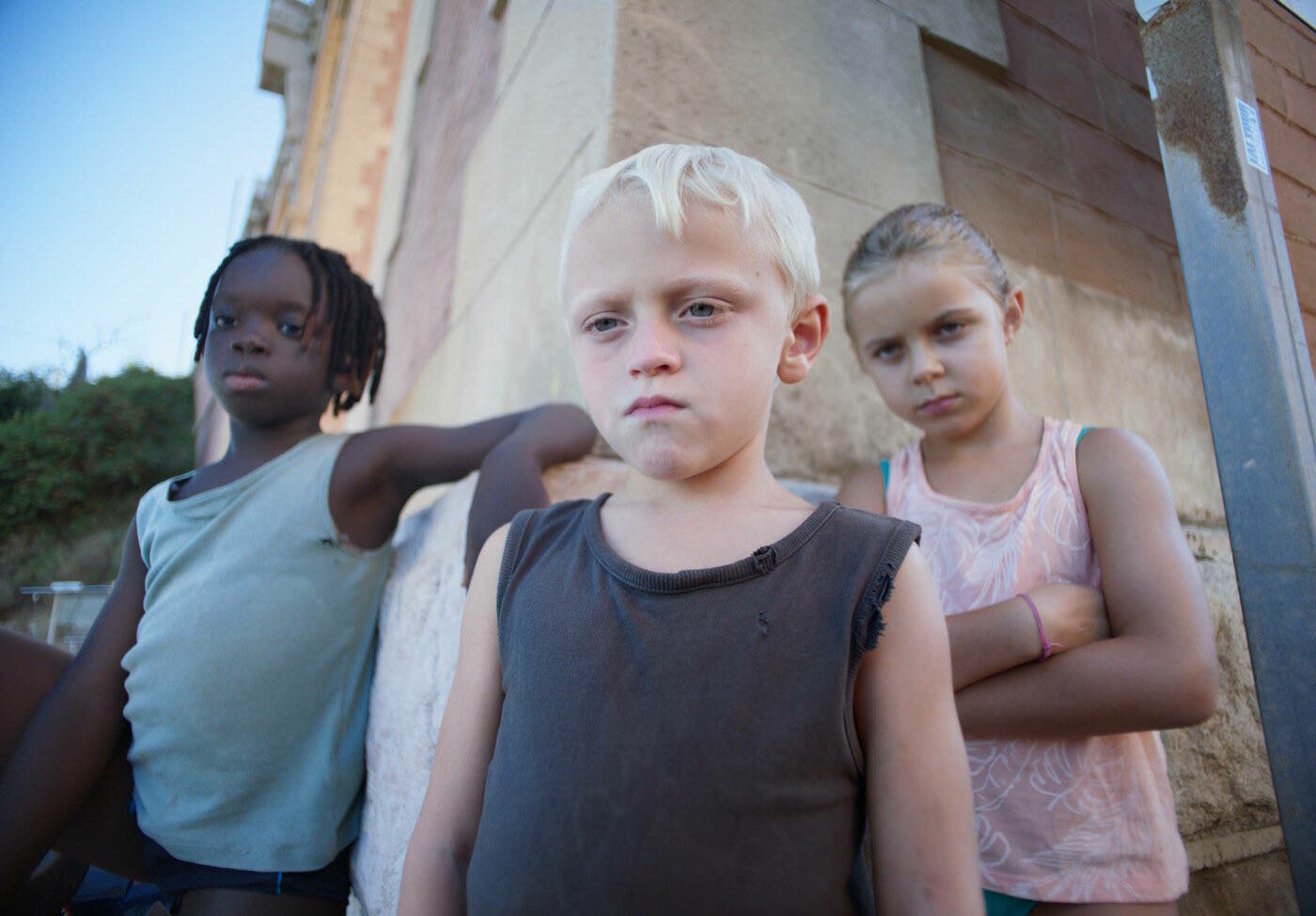
Red Rocks (Bruno Dumont, 2026).
- “I just think the relationship between performers and characters—the distance between them, I mean—is really quite close… Kaylon is not Géo, no matter how similar their personalities might be, and my job as a director is to nurture that proximity, to bring character and actor as close to each other as possible. It’s a long and difficult journey, a bit like filming a landscape, but I find it to be immensely rewarding.” Leonardo Goi interviews Bruno Dumont about his new feature Red Rocks (2026), which chronicles a few days in the lives of children in contemporary Côte d’Azur as they get into trouble on the riviera.
- “By the 2010s, with the rise of the internet, the invention of social media, the ubiquity of reality television, the shrinkage of the world and the notion that we were all connected, or at the very least, separated only by a bridgeable distance, pop-stars lost their duality. Now, their private and public identities have collapsed into a singular persona. In fact, these days, the pop star gets her power from how convincingly she can telegraph “authenticity” by denying any sense of a manufactured public identity.” Rafaela Bassili examines contemporary pop-star films like Mother Mary (2026), The Moment (2026), and Michael (2026) and how they narrativize the construction of persona.
- “And yet Obsession (2026) shares the premise of Obsession (1976) and its source: A man is driven crazy by a woman who is compelled, by real or purported supernatural forces, to play a male-scripted role… Whether or not [Curry] Barker has ever seen Vertigo (1958), it seems as though he’s made a confusing wish to become [Alfred] Hitchcock and Madeleine at once: possessed by his cinematic ancestor’s spirit, compelled to repeat his thematic itinerary in a trance.” Katie Kadue explores Vertigo’s long-tail influence on Hollywood’s imitation mania epitomized by the commercially successful Obsession.
- “Bennani’s use of anthropomorphic animals is far more than a whimsical stylistic flourish; it is a critical strategy of diasporic opacity. By appearing as a jackal, Bennani draws on an animal associated with North African landscapes and oral imagination, a creature capable of crossing the boundaries between the human and spirit worlds… This digital skin allows Bennani to inhabit what philosopher Édouard Glissant championed as the “right to opacity”—a refusal to be “fully transparent” to a Western gaze that often demands the queer migrant subject become a specimen to be dissected.” Fatoumata Bah unpacks the intimacy and distance of queer diasporic life in Bouchra (2025) and the “messy reality of a life lived in transition.”
WISH LIST
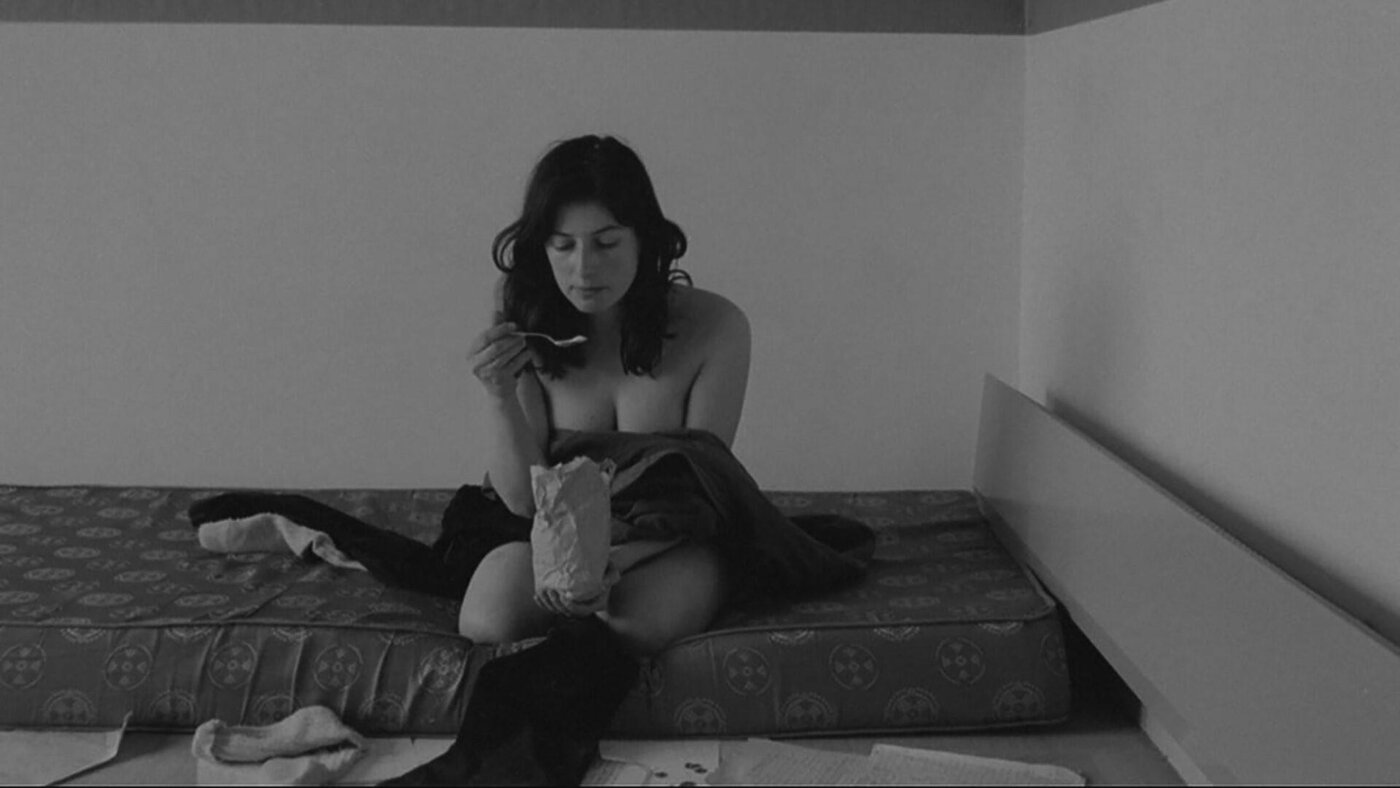
Je Tu Il Elle (Chantal Akerman 1974)
- Writing a Letter: Akerman Ballet, Act 1, Collier Schorr’s stand-alone document of the first act of her ballet inspired Chantal Akerman’s Je Tu Il Elle (1974), is available to purchase from The Song Cave individually or bundled together with Akerman’s memoir My Mother Laughs.
EXTRAS
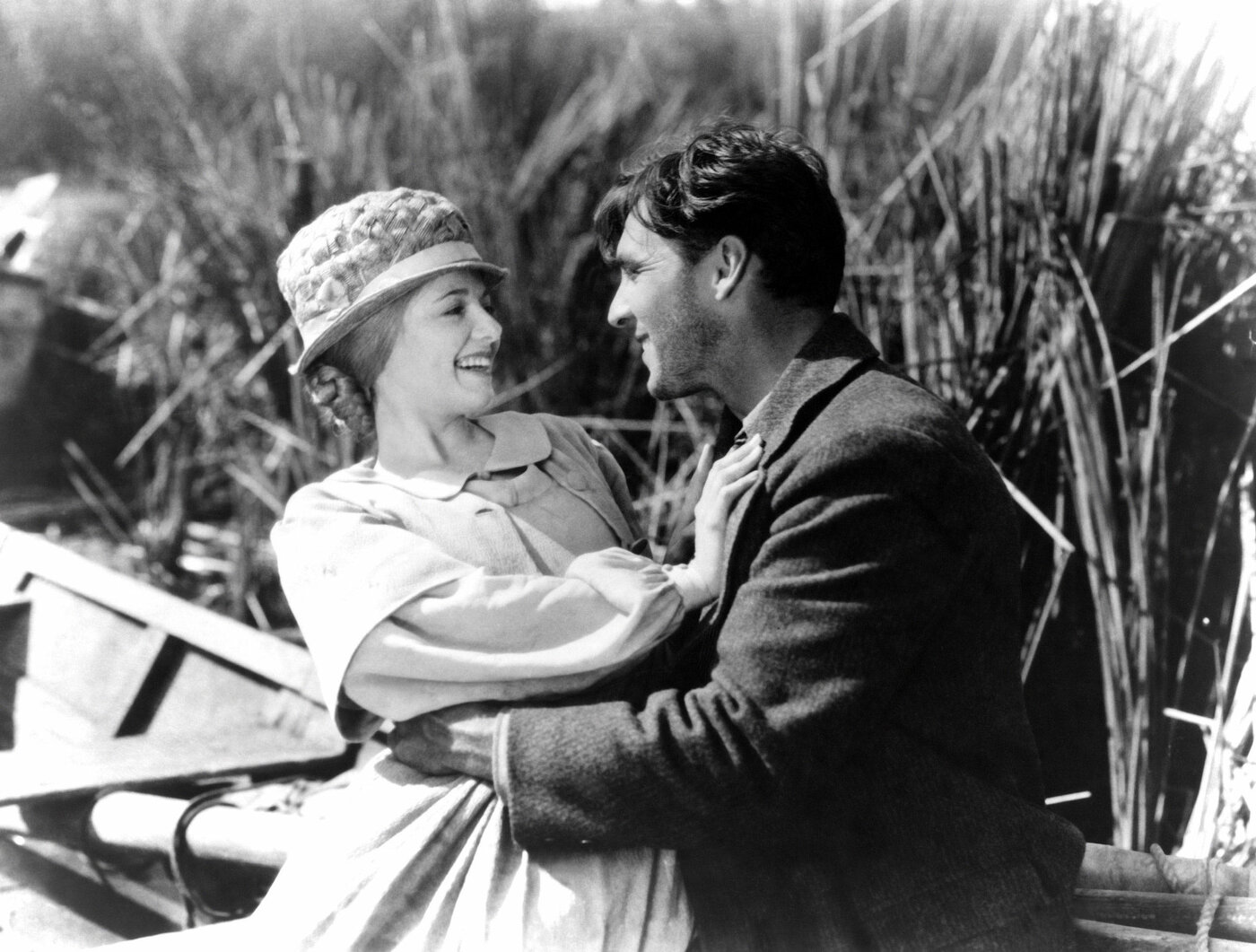
Sunrise: A Song of Two Humans (F. W. Murnau, 1927).
- Read the results of Ehsan Khoshbakht’s poll of 180 attendees about their favorites and discoveries at this year’s Il Cinema Ritrovato.