The Mastermind, a MUBI release, is now in theaters.
The Mastermind (Kelly Reichardt, 2025).
Before going into production on her latest film, The Mastermind (2025), Kelly Reichardt gave the cast some homework. Stars Josh O’Connor, Alana Haim, Hope Davis, and Bill Camp were asked to watch Jeff Kreines’s self-reflexive documentary The Plaint of Steve Kreines as Recorded by His Younger Brother Jeff (1974). This intimate work of nonfiction—made in the early 1970s, the same period in which The Mastermind is set—captures an upper-middle-class family on the brink of change: 22-year-old Steve is moving out, much to his parents’ dismay. One could imagine Davis and Camp studying the familial dynamics of the film’s mealtime scenes, but Reichardt was also interested in its small, in-between moments, such as a close-up on a comb gliding through Steve’s thick, frizzy hair or the slow unloading of a moving truck.
Across 30 years of Reichardt’s cinema, mundane details and subtle gestures are often tasked with conveying the essence of her human dramas. In a profile for The New Yorker, Doreen St. Félix calls Reichardt America’s “finest observer of ordinary grit.” The description is apt, though her protagonists have depth as well as texture; their precise cultural and historical resonances belie their “ordinariness.” Reichardt’s filmography revolves around quiet Americans whose shyness, reticence, or reserve may be, at least in part, a response to the social conditions of their gender, class, and race. Think of Wendy (Michelle Williams), the drifter at the center of Wendy and Lucy (2008), whose economic precarity is evident in the way she counts her change and avoids eye contact; or Jamie (Lily Gladstone), the lonely Indigenous American ranch hand in Certain Women (2016), whose romantic longing for a professional white woman, Beth (Kristen Stewart), is never put into words. Avoiding unnatural dialogue that could reveal too much about her characters, Reichardt focuses on behavior, gesture, and routine, asking viewers to extrapolate character through visual cues rather than verbal exposition.
This practice places Reichardt in the lineage of Chantal Akerman, whose hyperrealist style, emphasizing the minutiae of daily life through extended takes, is exemplified in Jeanne Dielman, 23 Quai du Commerce, 1080 Bruxelles (1975). In Nothing Happens: Chantal Akerman’s Hyperrealist Everyday, scholar Ivone Margulies argues that Akerman, taking inspiration from the films of Michael Snow and Andy Warhol, expands the viewer’s impression of real time by focusing almost exclusively on Dielman’s chores and rituals as a housewife and sex worker. The camera lingers on her daily tasks, whether she is making the bed, preparing a Kosher meal, or washing the dishes. Maurice Blanchot refers to such routines as “the slice of life that is usually considered unworthy of attention.” Most filmmakers relegate them to the margins of their storytelling, or else omit them entirely, but Akerman places them front and center. As the film progresses, these fundamental rhythms of life are gradually disrupted by subtle signs of Dielman’s distress, culminating in a shocking rupture.
The inclusion of such “images between images,”1 as Margulies calls them, expands conventional notions of cinematic time and space while raising moral questions about which narrative details are worthy of attention. Akerman’s style in Jeanne Dielman also embodies Cesare Zavattini’s conception of “social attention,” which he thought of as the defining property of neorealist cinema. For the Italian screenwriter and theorist, cinema’s task was to turn its gaze toward the everyday lives of ordinary people, especially the poor and marginalized, foregoing the artificial plots, spectacle, and melodrama of Hollywood. “Social attention” refers to a gaze that is sustained, compassionate, and truthful, a cinema attuned to the rhythms of life as it is lived. Reichardt’s practice is situated between neorealism and hyperrealism, shaping a feminist and deeply humanist vision of cinema in which frustration, delay, and resistance emerge as recurring themes.
River of Grass (Kelly Reichardt, 1994).
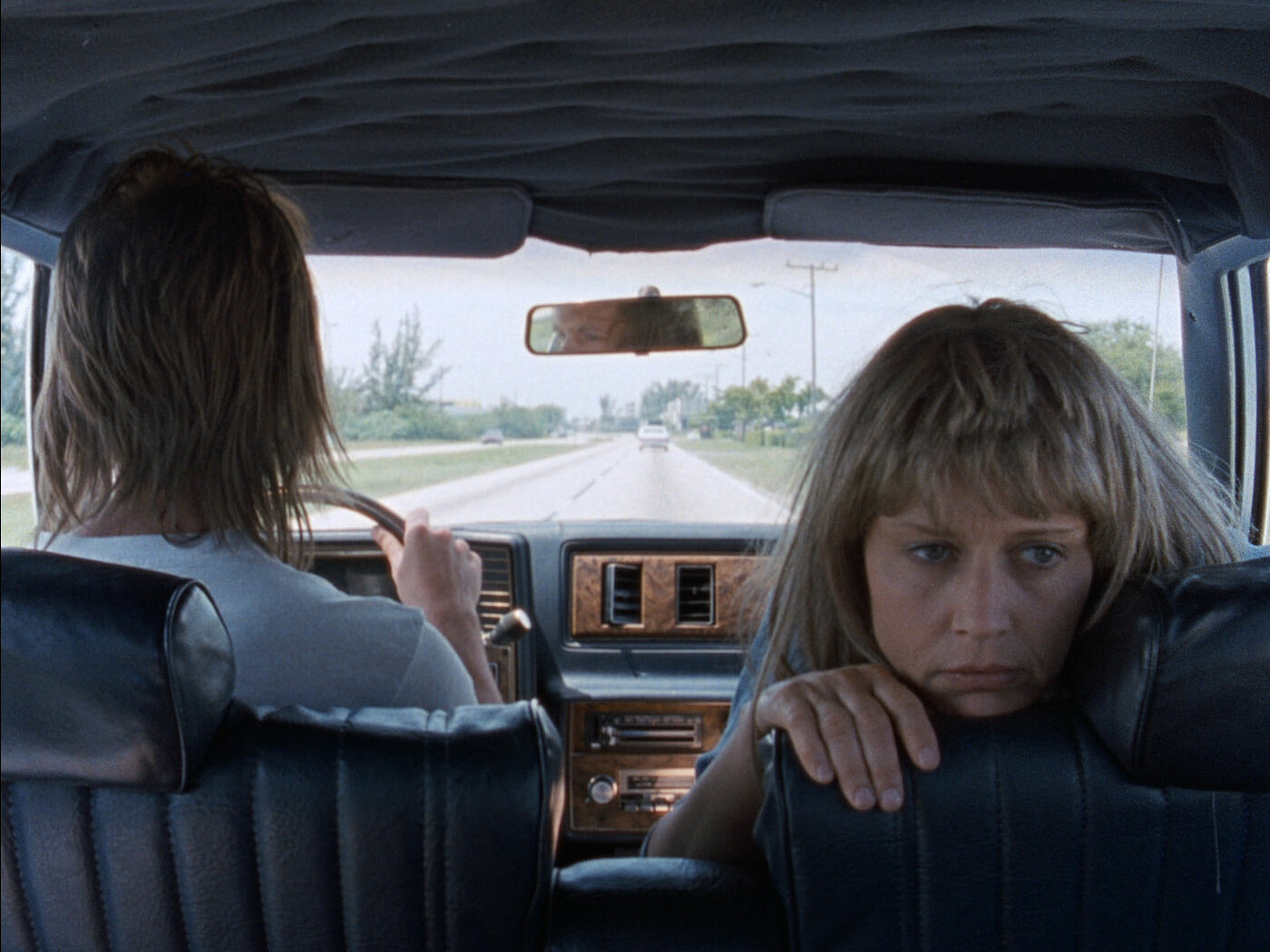
Reichardt’s first feature, River of Grass (1994), sketches her desire to subvert filmmaking conventions and attend to marginalized experiences, though it lacks the pared-down formalism that would come to define her later work. Set in Dade and Broward County, Florida, where Reichardt was born and raised, the film is an idiosyncratic twist on a number of Hollywood genres: the crime film, the love story, and the road movie. Itfollows Cozy (Lisa Bowman), a lonely housewife, who burns off restless energy by spinning around in circles, doing back bends and cartwheels in the backyard, neglecting her children, who sit in front of the television inside. Unlike most characters in Reichardt’s filmography, Cozy is an open book. Her motivations and inner thoughts are revealed via voiceover, a device Reichardt would never deploy again. Cozy romanticizes her loveless marriage and fractured domestic life with a poetic cadence, an escapist sort of wish fulfillment that contradicts her quiet, practically mute existence at home.
It isn’t until she puts on makeup and a push-up bra and meets Lee (Larry Fessenden), an aimless drifter with a gun, that Cozy sees an opportunity for escape. Lee persuades her to go swimming at his “friend’s” pool, but during this sexy interlude, Cozy accidentally shoots the surprised owner of the house—or at least that’s what she thinks. Now holed up in a cheap motel, Reichardt cuts Cozy’s fantasy short. She lingers on Cozy’s motor-mouthed boredom as she speaks in a manic monologue to the ceiling while Lee ignores her. Reichardt drains the momentum of this Bonnie-and-Clyde fantasy with each waking moment they spend sitting in the motel. They smoke joints and watch television to pass the time, but Cozy’s high makes her paranoid and resentful of Lee and their situation. Boredom, rather than danger or desire, becomes the film’s main subject, leaving Cozy even more disillusioned than she was at the beginning.
Meek’s Cutoff (Kelly Reichardt, 2010).
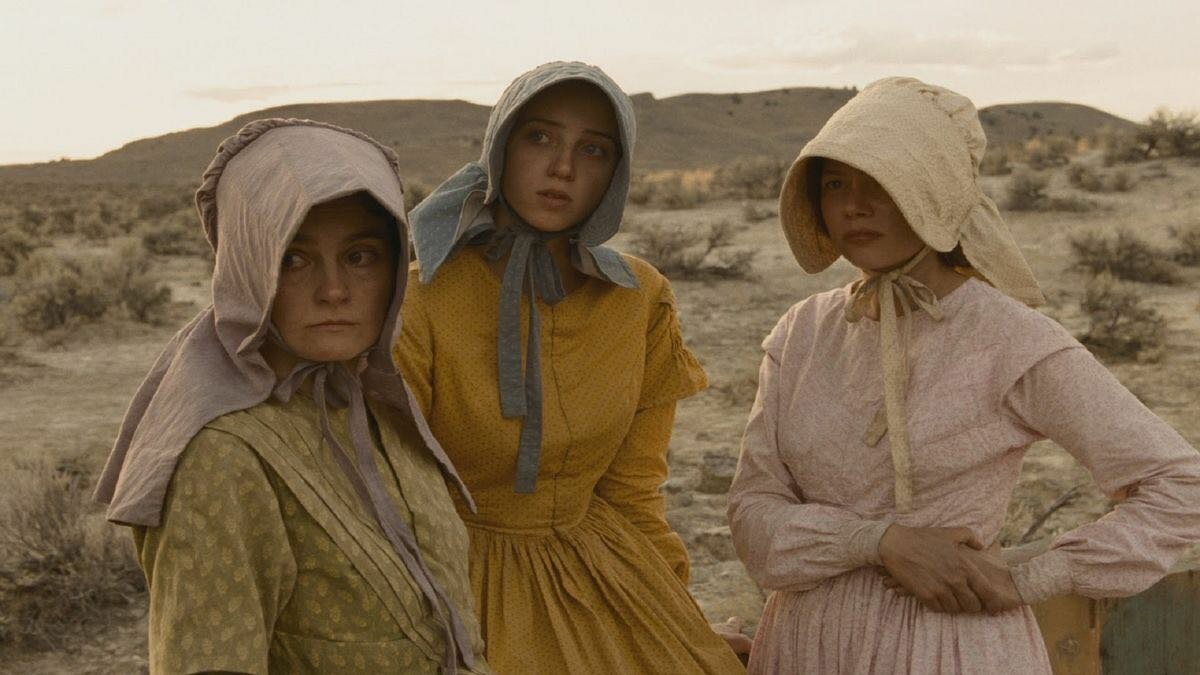
Sixteen years and two feature films later, Reichardt offered another feminist twist on a stereotypically male-driven genre film with Meek’s Cutoff (2010). This covered-wagon western, set in 1845, is loosely based off of the Meek party, a group of settlers who became lost while traveling the Oregon Trail. In Reichardt’s film, three families hire fur-trapping guide Stephen Meek (Bruce Greenwood), based on a real frontiersman, to lead them to the Willamette Valley in Oregon. Meek’s titular “cutoff” is a shortcut that leaves them lost somewhere in the state’s High Desert. Meek is fashioned like a Davy Crockett with suede fringe and an unkempt beard, but unlike a classical male western hero, he never controls the gaze of the film. Reichardt instead hands the reins of the film to the wives of the caravan, who respond to Meek’s riddles and navigational ineptitude by rolling their eyes. The camera prioritizes their experience by foregrounding their labor in close-ups on their hands; it shares their resentment, rarely featuring Meek’s reverse shot. As Reichardt explained in an interview with The Guardian, “I always wondered what, say, John Wayne in The Searchers must have looked like to the woman cooking his stew.”
Reichardt and her cinematographer Christopher Blauvelt introduce this idea in the film’s opening scene via wide shots that follow Emily (Michelle Williams), Millie (Zoe Kazan), and Glory (Shirley Henderson) as they transport bird cages and baskets across the river. This “image-between-image” of women wading waist-deep through water is reminiscent of the peasants in Jean-Francois Millet’s painting The Gleaners, emphasizing the concentrated labor of those who are often overlooked. Instead of the masculine battles of strength that take center stage in a traditional western, Reichardt focuses on feminized labor in a harsh frontier environment as the women knead bread, gather kindling, and light a fire without use of matches. Their work is centered, rather than their faces; Reichardt lets these tasks play out at length so the viewer can see the physical struggle required of Emily, Millie, and Glory. They don’t have time to wax poetic like Meek; they have to keep the caravan afloat and fed, but to do so, they need water, which the men cannot find. For this, they must wait. In their spare time, they focus on needlework and Bible study with clenched jaws. The waiting never ceases, and Reichardt keeps us firmly anchored in real time during these moments, the tension mounting, the characters parched.
Certain Women (Kelly Reichardt, 2016).
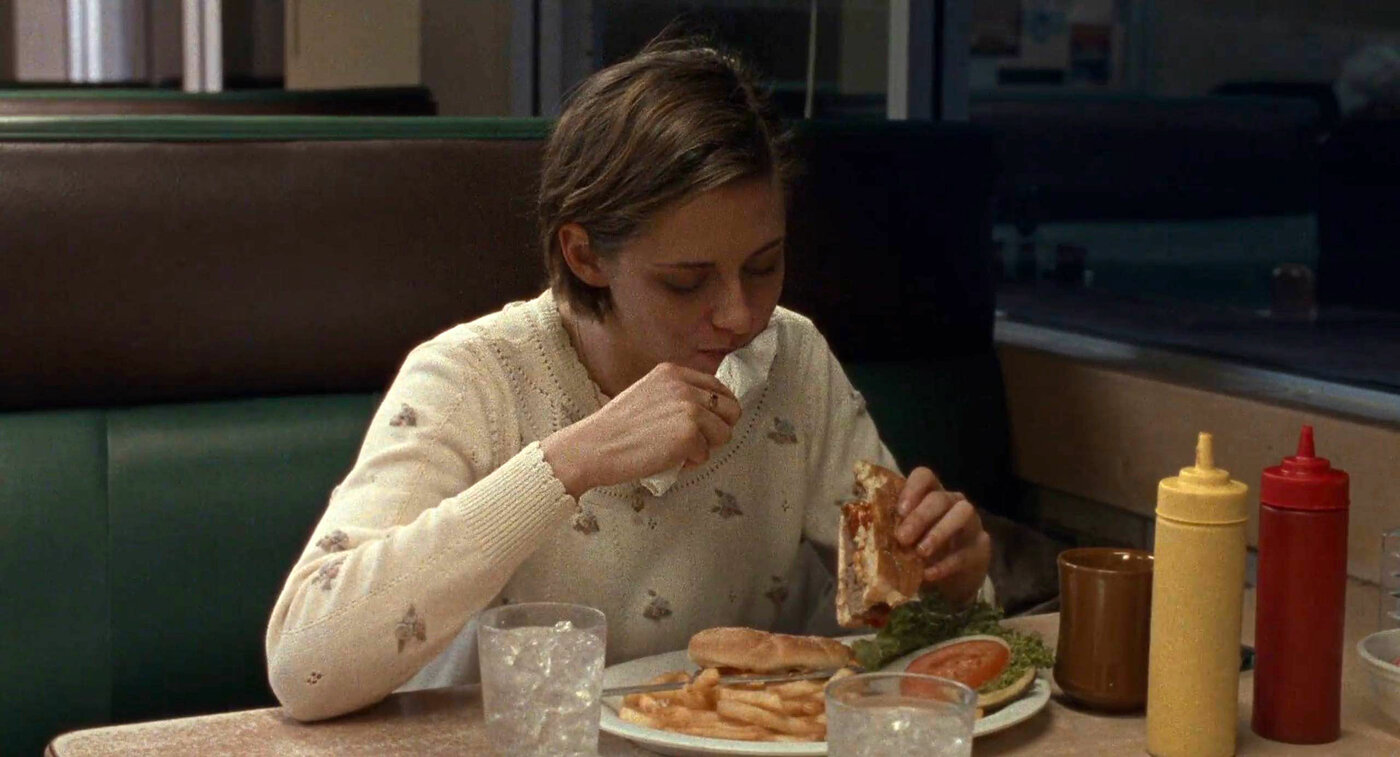
Where Meek’s Cutoff foregrounds women’s labor against the vast backdrop of the frontier, Certain Women turns to the intimate scale of private longing against the open landscape of Montana. Reichardt braids together three distinct vignettes drawn from short stories by Maile Meloy. The most resonant chapter, inspired by “Travis B.” belongs to Jamie, a ranch hand whose days are spent mucking stalls and feeding horses, routines that Reichardt studies with the same quiet attentiveness she brought to Meek’s Cutoff. During this winter job, Jamie’s days consist of work, microwaved meals, and television. Her only companions are the horses and a wound-up Corgi until she stumbles into an “education in law” class taught by Beth, a young lawyer. Like Jamie, Beth is quiet and awkward, distracted by the pressures of her own life. She confused two different towns, Belfry for Belgrade, and must now drive four hours each way to teach the class twice a week. They size each other up over an impromptu meal at the diner after class: Jamie puts her best foot forward, sitting attentively without a plate while Beth gobbles down a burger and fries, wiping her mouth with a silverware rollup that’s still folded. This classroom-to-diner pilgrimage repeats until Jamie plucks up the courage to offer Beth a ride home on her horse. To Jamie, it is a romantic gesture that shifts her everyday routine into high gear, but to Beth, Jamie is only being friendly. The film treats both Jamie’s desire and Beth’s indifference with the same calm scrutiny. Reichardt affords both characters the same quiet gaze, illustrating her refusing to favor one perspective over the other, but Gladstone’s vacant stare and shortness of breath during her ride home are telling. Returning from a fruitless overnight pilgrimage to Beth’s home, Jamie’s eyes glaze over and eventually she drives into a ditch, revealing the effects of this brief encounter on her psyche.
One thing almost all Reichardt characters have in common is their obsessive nature. Rather than relying on exposition to explain their frustrations, Reichardt lets their tics play out. For sculptor Lizzy (Williams again), the protagonist of Showing Up (2022), any hour not devoted to making art feels wasted; carving out time for her practice becomes the central concern of the film. Making sculptures of dancing women provides relief from her overbearing family, her unfulfilling job as administrative assistant, and her rivalry with her unreliable landlord, also a rising star in the local art scene (Hong Chau). Similarly, in Night Moves (2013), eco-terrorist Josh (Jesse Eisenberg) is driven by his environmental mission, the urgency of climate catastrophes, and visions of grandeur. He dedicates himself to careful preparation, which takes patience, planning, and stockpiling plenty of fertilizer. Reichardt structures her narratives around compulsions and frustrations—and a whole lot of waiting—with a deeper investment in process than outcome. For Reichardt, Lizzy’s art show and Josh’s explosion function as MacGuffins, occasions to depict her characters navigating their routines.
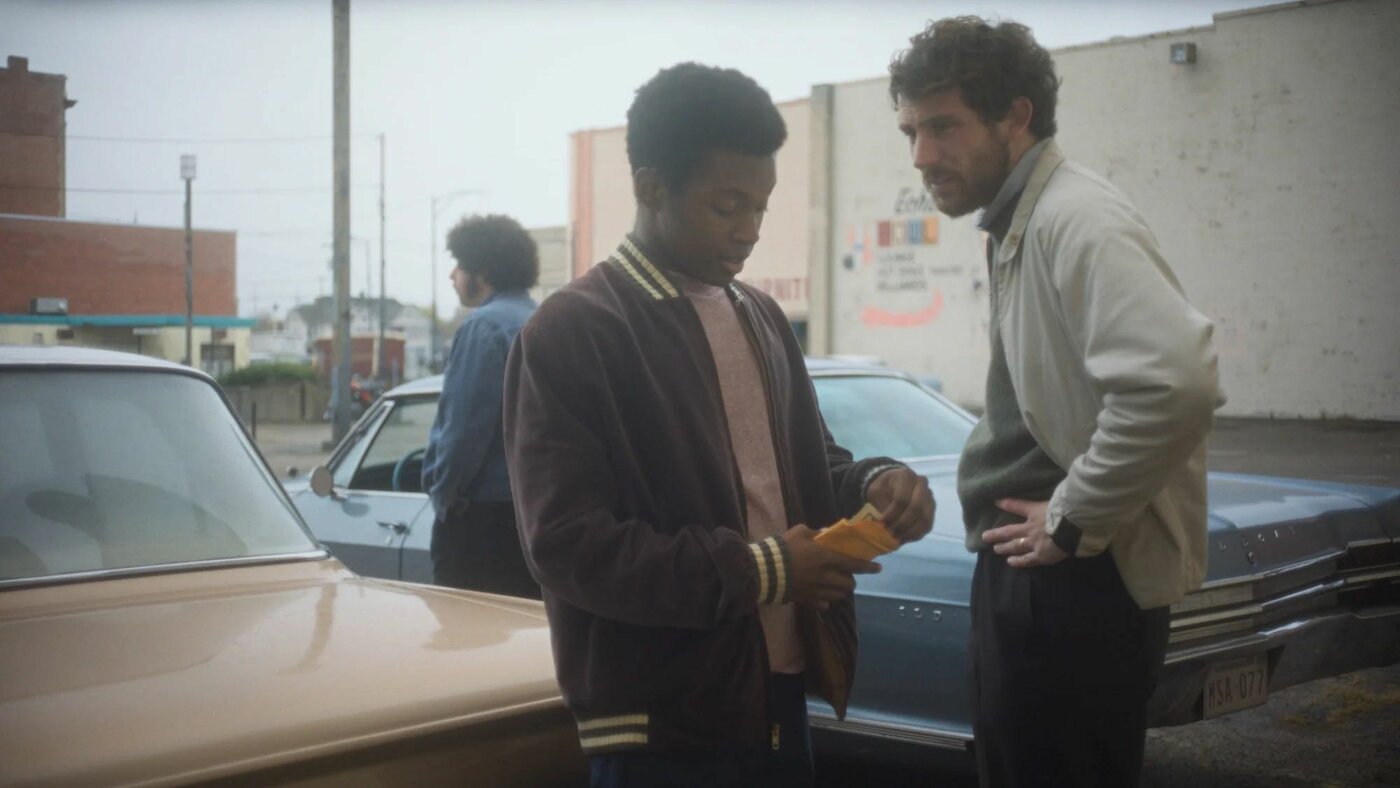
The Mastermind (Kelly Reichardt, 2025).
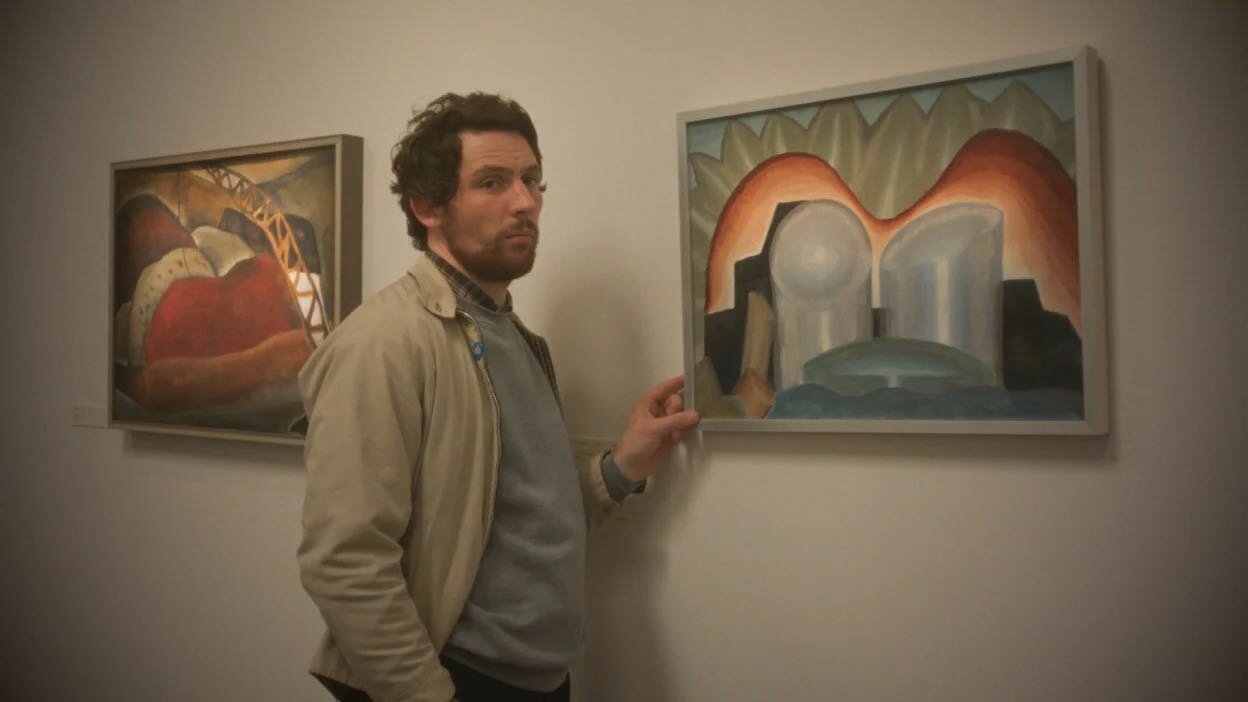
J. B. Mooney (Josh O’Connor), the main character of The Mastermind, is the antithesis of most Reichardt characters. Where they tend to be defined by their meticulous routines, he is defined by the absence of a productive one. He’s tethered to his upper-middle-class parents, who float him cash. Mooney is a carpenter by trade, but without steady work; his wife Terri (Alana Haim), an office employee, is the family’s primary breadwinner. Mooney spends his days surveying the local art museum, observing both the patrons and the guards. Reichardt and cinematographer Blauvelt capture the museum in fluid motion with wide shots: Students sketch and visitors wander until the camera settles on Mooney, who is clearly casing the joint. In the film’s opening scene, he slips a small wooden figurine into his pocket, relishing the thrill of petty crime as he confidently sashays out the door. Reichardt, who rarely relies on music to heighten dramatic action, here leans into the tropes of the crime genre. She turns up the dial on Rob Mazurek’s jazz score to punctuate the moment, only to let the scene fall flat. Mooney’s heist is unimpressive and anticlimactic, ultimately foiled by his fatal flaw: smug complacency.
Mooney hatches a plan to steal a series of paintings by Arthur Dove, the early American abstractionist. That Dove’s work was not particularly valuable in the 1970s suggests that Mooney is not motivated by profit, but rather by his desire to outsmart his father, who emasculates him during family dinners. By pulling off the theft of something his parents—and, by extension, their postwar generation—neither understand nor value, he will position himself both intellectually above them and outside the law. Butin true Reichardt fashion, The Mastermind is an aftermath film. Reichardt refuses the conventional pleasures of a crime movie, depicting Mooney’s heist without glamour. These men are not experts but amateurs fumbling their way through the motions, and their heist feels more like a clumsy group project than a slick operation. Despite it all, the ever-smug Mooney is proud of his work. Afterward, he religiously reaches for the newspaper; headlines function like chapter breaks in the film. And for a brief, shining moment, it seems that Mooney has pulled off the impossible, or at least something outside of his dad’s “realm of expertise.”
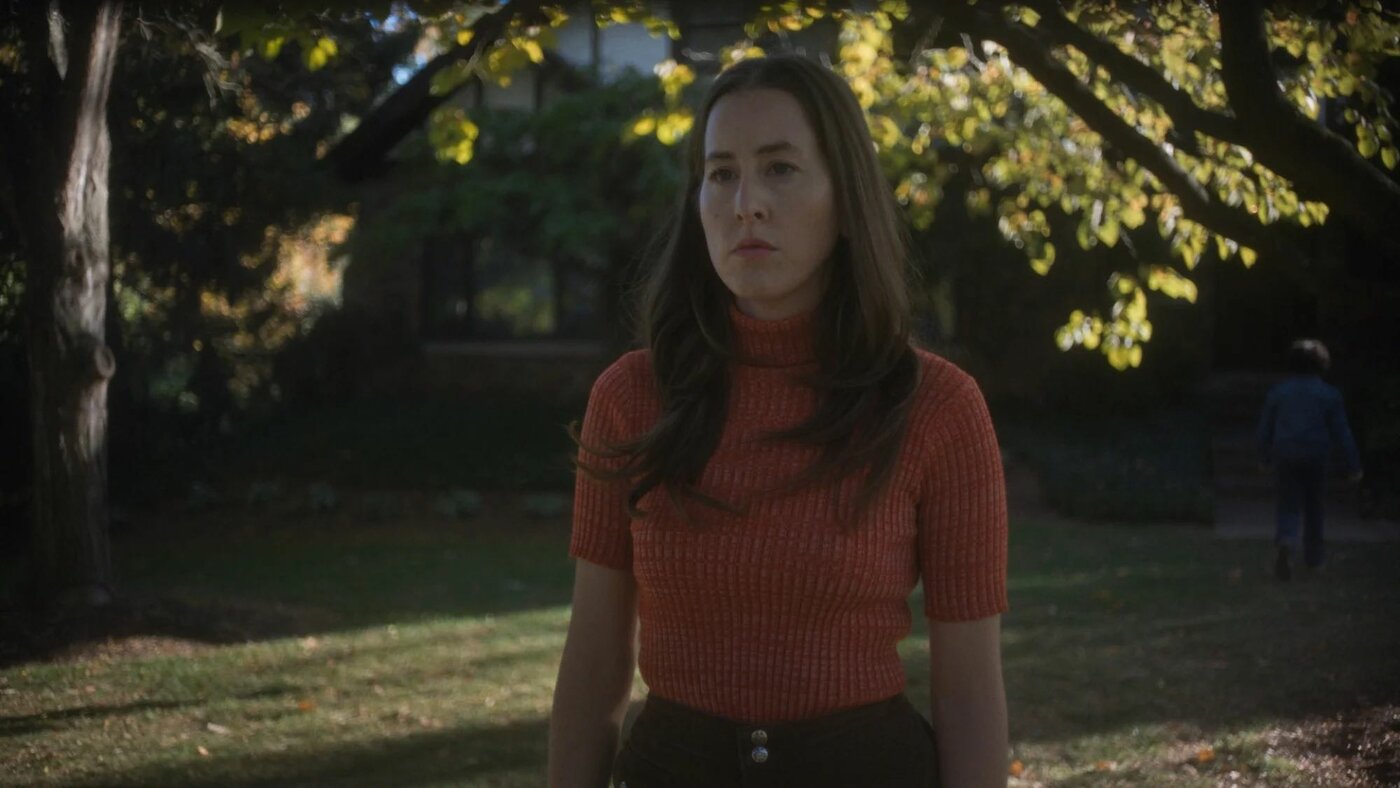
The Mastermind (Kelly Reichardt, 2025).
The Mastermind is set in a liminal political moment that mirrors Mooney’s unsettled place in the world: the revolutionary optimism of the ’60s is waning, and the disillusionment of the ’70s is beginning to set in. Like Cozy, who also leaves her family in River of Grass, Mooney embodies a certain cultural dislocation rather than a clear ideological stance. He is not an activist like Josh—Reichardt deliberately keeps the Vietnam War on the film’s periphery—nor a worker like Lizzy or Jamie, but a restless figure whose petty schemes signal the aimlessness of his privileged class. Mooney strategically name-drops his father, “Judge Mooney” (Bill Camp), during a pivotal scene and evades arrest. Until this point, it’s clear that Mooney comes from an upper-middle class background, but not that his father works in the judicial system. Reichardt places this revelation at the midpoint of the film, so that it catches both the policemen and audience off-guard. But he’s not in the clear yet.
Still a prime suspect but now out of cards to play, Mooney drifts through small-town America on the run, allowing Reichardt to widen the film’s cultural lens. When Mooney sees the invasion of Cambodia on Walter Cronkite’s evening news, or a sailor reporting for service, leaving his wife and infant child on a bus, he does not react. “Everything I’ve done has been for you and the family… and me,” he declares to his son Tommy (Jasper Thompson), acknowledging his self-centered worldview. Terri fades from the film like a ghost, as do his art school friends Maud (Gabby Hoffman) and Fred (John Magaro) and the rest of his family. As Reichardt chronicles Mooney’s petty schemes in such detail, she underscores not only his solipsism, but also the privilege that insulates him from the cultural upheaval all around him. As America reshapes itself, he’s confined by his own preoccupations, the limits of his gaze.
- Ivonne Margulies, Nothing Happens: Chantal Ackerman’s Hyperrealist Everyday (Duke University Press, 1996), 22. ↩