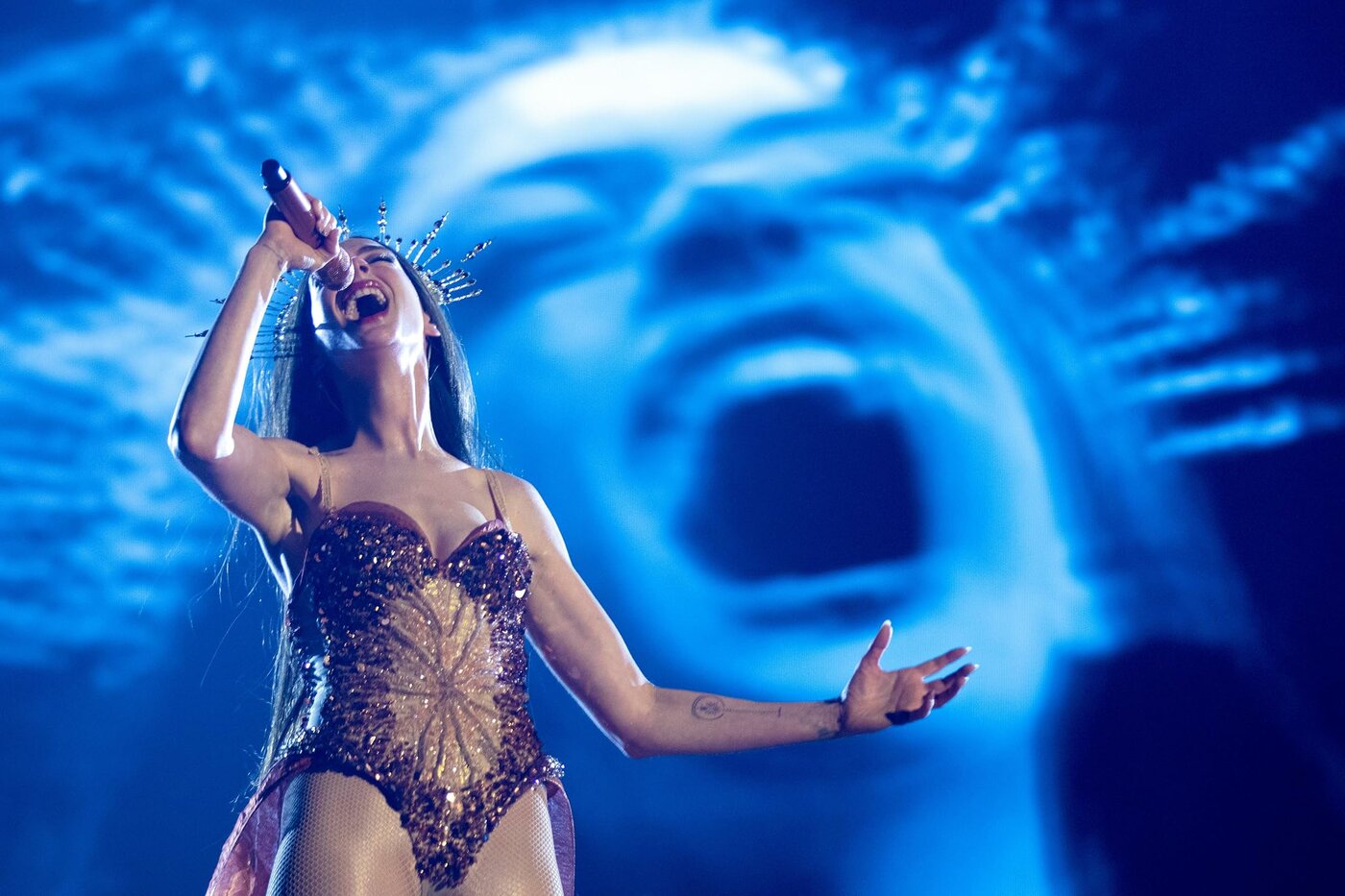
Mother Mary (David Lowery, 2026).
One of my most played DVDs as a preteen growing up in Brazil was called Rouge: O sonho de ser uma Popstar [Rouge: The Dream of Being a Pop Star].It chronicled the making of Rouge, a girl group put together by a record label, from the selection process to live performances. Watching the group converge was like watching the crew-assembly montage of a heist film. The girls lived in a house. They practiced choreo and took singing lessons and picked outfits. Importantly, each member had a distinct personality trait that defined her role in the context of the group: There was the dancer, the fashionista, the lyricist, and so on. Rouge’s DVD came out in 2002, half a decade after the Spice Girls had established the millennial girl-group standard, in part by trading on similar pre-determined archetypes.
The received idea was that pop stars had an identity that was specifically meant for public consumption, which added to the effect of the music by amping up their mythology. The appeal of a DVD like Rouge’s—or, for that matter, of a talent competition show like American Idol or The X Factor, where global phenomena like One Direction were engineered—is that audiences could watch the process by which it was determined, by men in suits or girls in microskirts, who would be Sporty and who would be Posh.
In the late 1990s and early 2000s, the pop star’s dual existence, having separate private and public personas, was a sort of magic trick the culture took at face value. The Disney Channel’s enormously popular Hannah Montana (2006–2011) was predicated on this trick: To see star Miley Cyrus, who was only marginally older than her audience, go from ordinary teen to global star with the addition of a wig taught us that there were two different kinds of people: ordinary ones, and pop-stars. By the 2010s, with the rise of the internet, the invention of social media, the ubiquity of reality television, the shrinkage of the world and the notion that we were all connected, or at the very least, separated only by a bridgeable distance, pop-stars lost their duality. Now, their private and public identities have collapsed into a singular persona. In fact, these days, the pop star gets her power from how convincingly she can telegraph “authenticity” by denying any sense of a manufactured public identity. Taylor Swift, the biggest pop star on the planet, was from the beginning a girl with a guitar, singing about normal-girl things, like school and boys and friendships.
The alt-pop star Lana Del Rey’s debut album, Born to Die, released in 2012, divided critics on the question of artifice. Many felt discomfited by Lana’s persona, which was a visual and sonic pastiche of Americana. In the music video for “National Anthem,” she played both Marilyn Monroe singing “Happy Birthday” to John F. Kennedy and Jackie Onassis herself, casting the rapper A$AP Rocky as the president. In his clear-eyed review of the album, the critic Sasha Frere-Jones argued that the question of Lana’s “authenticity”—a debate that had made “people seem to feel that Del Rey is trying to trick us”—was an “arrantly stupid discussion.” Had we forgotten all about Hannah Montana’s wig? “Artists write material, alone or with assistance, revise it, and then present a final work created with the help of professionals who are trained for specific and relevant production tasks,” in a process not unlike filmmaking. But, as Frere-Jones points out, the crucial difference between Lana Del Rey and an actress like Meryl Streep is that audiences engage with Streep’s work having already accepted that it is a fiction.
Therein lies the potential of cinema to uncover the meatiest parts of the pop star’s persona construction. What movies cando that music can’t is to dramatize how music emerges from an individual experience and migrates to the public sphere, where it becomes bigger than itself. Film as a medium is particularly equipped to portray that journey, because it can include the music itself while narrativizing the process by which it comes to be, and by doing so, infuse it with an added layer of meaning. More than that, because we accept a film as a work of performance, watching someone evolve into a constructed identity within the cinematic context feels natural. The scene in Bradley Cooper’s remake of A Star Is Born (2018) in which Ally Campana (Lady Gaga) performs “Shallow” to an unsuspecting crowd is a poignant example of the cinematic power of that process. Ally performs the song before she has become the star to which the title refers. The movie’s metatextual triumph is that it makes you forget that the unknown vocalist on stage is in fact the woman behind one of the most influential personas in contemporary pop music.
Lately, the cinema has found in the collapse of the pop star’s private and public personas a poignant symbol of the malaise in contemporary art-making; in the process, it has discovered a reliable cash cow. Coming on the heels of M. Night Shyamalan’s Trap (2024), which turned the lens on the duality of the audience member (Josh Hartnett plays a serial killer and devoted girl-dad) rather than the pop star’s, this year has seen a slate of pop star-centric movies. In the winter, Netflix’s KPop Demon Hunters (2025), which follows a K-pop group leader overcoming personal challenges and using her pop stardom to protect the world from demons, won Oscars for Best Animated Feature and Best Original Song. Writer-director David Lowery premiered Mother Mary (all movies 2026 unless otherwise noted), which scrutinizes the relationship between the eponymous fictional pop-star (played by Anne Hathaway) and her estranged designer, Sam Anselm (Michaela Coel). And the pop star of the moment, Charli XCX, officially entered her “cinephile era,” marking her presence in this year’s indie circuit by appearing in buzzy films like Gregg Araki’s I Want Your Sex, the satirical art-world romp The Gallerist, Pete Ohs’ shot-on-the-fly Erupcja, and—most significantly—her own mockumentary, The Moment, which thinly fictionalizes the Charli XCX persona as she navigates the aftermath of 2024’s “brat summer.”
These recent cinematic efforts mark a departure from the conventions set by the sleek, studio-backed musician biopic, a genre that has become saturated since the phenomenal success of Bohemian Rhapsody (2018) and finds its most recent entry in Michael, the biopic of Michael Jackson which stars his nephew Jafaar and was produced by the Jackson family. They also stand in contrast to another, newer cinematic form that has come to flood streaming catalogues in recent years: the star-sanctioned behind-the-scenes concert documentary epitomized by Lana Wilson’s portrayal of Taylor Swift in Netflix’s Miss Americana (2018). Both the classic biopic and the hypersanitized concert film are products of the IP money-making machine, using nostalgia and built-in audiences to ensure box office revenue and subscription engagement at home. They tend to reiterate the pop-star’s established mythos, whereas more recent approaches set out to challenge it by asking: How does a pop-star get made?
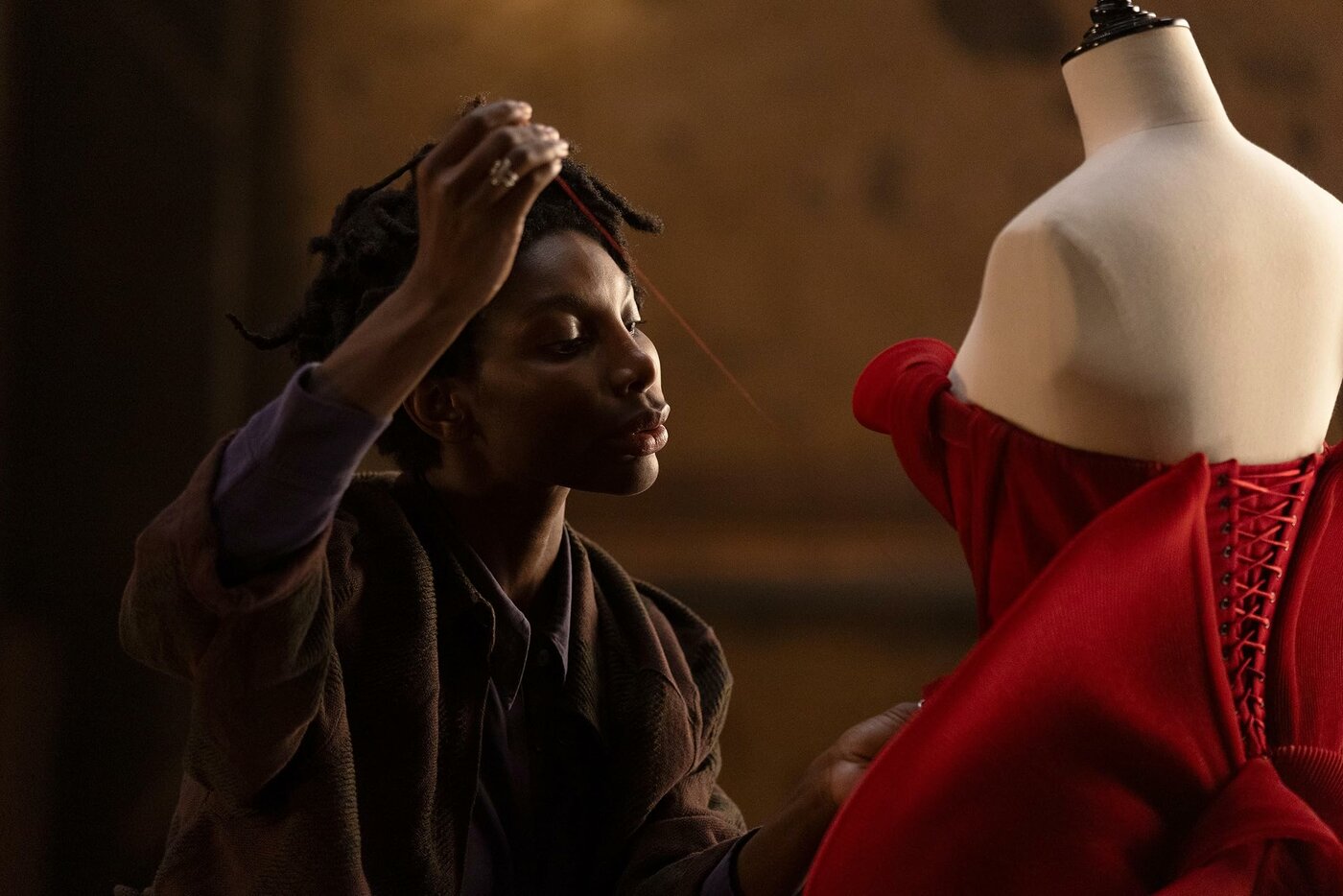
Mother Mary (David Lowery, 2026).
Lowery’s Mother Mary, which opened in April, is ostensibly about this question. A few years before the story’s present-day timeline, Mary fell from a suspended platform at one of her concerts, an incident that has kept her from touring (and which, it will gradually be revealed, was caused by supernatural forces). At the film’s start, Mary appears unannounced at Sam’s doorstep in England, with a request: She needs a dress for her comeback performance in three days’ time. The film opens with Mary letting out a scream of horror at the dress proposed by her team, which is not right. The brief for Sam is phrased simply, but in fact asks a great deal: The dress, in Mary’s words, needs to be “just me, all of me.” She can’t quite articulate what “me” is, but Sam can: clarity and sharpness. Her return to the stage needs to have “a point.” The expectation is that the dress will elucidate the question of who Mother Mary is, but we never quite get there.
If nothing else, it’s clear from the first that Mother Mary is a constructed persona. Despite Lowery’s references to Taylor Swift’s 2018 Reputation concert documentary in interviews, his fictional creation has none of Swift’s pretense to authenticity, even while his star, Anne Hathaway, shares Swift’s reputation for good-girl aplomb. Mary’s iconoclastic aesthetic is represented by her signature halo, an accessory designed by Sam that became a metonym for the singer, like Ariana Grande’s ponytail. The halo, combined with the music—written in collaboration with Charli XCX (there she is again), the ubiquitous producer Jack Antonoff, and the alt-pop icon FKA twigs, who also stars—points to the jumble of references that muddle Lowery’s title character. What kind of pop-star is Mother Mary?
The film largely unfolds as a chamber piece set in Sam’s barn-atelier, where Sam and Mary talk about their shared history and air out old tensions. From the moment she arrives, the star is powerless in the presence of her former designer. Hathaway, though astoundingly strong in figure, plays Mary with a teary-eyed brittleness that threatens to crumble in confrontation with Michaela Coel’s titanic restraint. Watching them go tit-for-tat, it’s hard to believe Mary ever did anything without Sam, let alone have a flourishing career. The relationship between them is not presented as a collaboration as much as it is a tyranny: Only one of them can claim Mother Mary. There is a compelling notion here of how, as a designer, Sam’s work gets subordinated to the pop star who embodies it. But Mary is too passive to read convincingly as a stadium act. From her choked-up attempts to define herself to Sam’s aesthetic imposition, there is little sense at all that Mary has a hand in the construction of her own persona. In a past act of self-determination, she fired Sam to strike out on her own, but she continued to wear the halo.
Rather than depict the process by which Mary’s persona gets constructed—and, through that process, touch on the hinted-at questions of authenticity, authorship, and subordination—Mother Mary circles dizzyingly around the aftermath of this unseen process. Whatever Sam and Mary saw in each other as potential collaborators, and why their shared vision fell apart, remains mysterious to the viewer. Sam repeatedly asks Mary, “Can’t you do the work?” but there is very little sense of what work she is referring to. The only time you see the two women engage with the upcoming performance is when Mary demonstrates the dance number that will accompany her comeback song, which Sam refuses to listen to. Other than that, there are no harried calls from stylists and managers blowing up Mary’s phone, no gaggle of assistants trying to figure out where she went only days before the concert; nor is there any sense of how the two women’s collaboration might impact Mother Mary’s music. Mother Mary’s idea of pop stardom is a fantasy in which the struggle for creative control happens independently of the work (to use Sam’s word) necessary to construct and maintain a pop star’s persona. No matter how famous or powerful Mother Mary might be, she would still have people—her employees, her audience, her financial backers—to respond to. In fact, it’s arguable that the more a pop star rises in the culture’s estimation, the more demands are visited upon her. There is a purity to Lowery’s vision of pop stardom that would be touching if it weren’t so hollow.
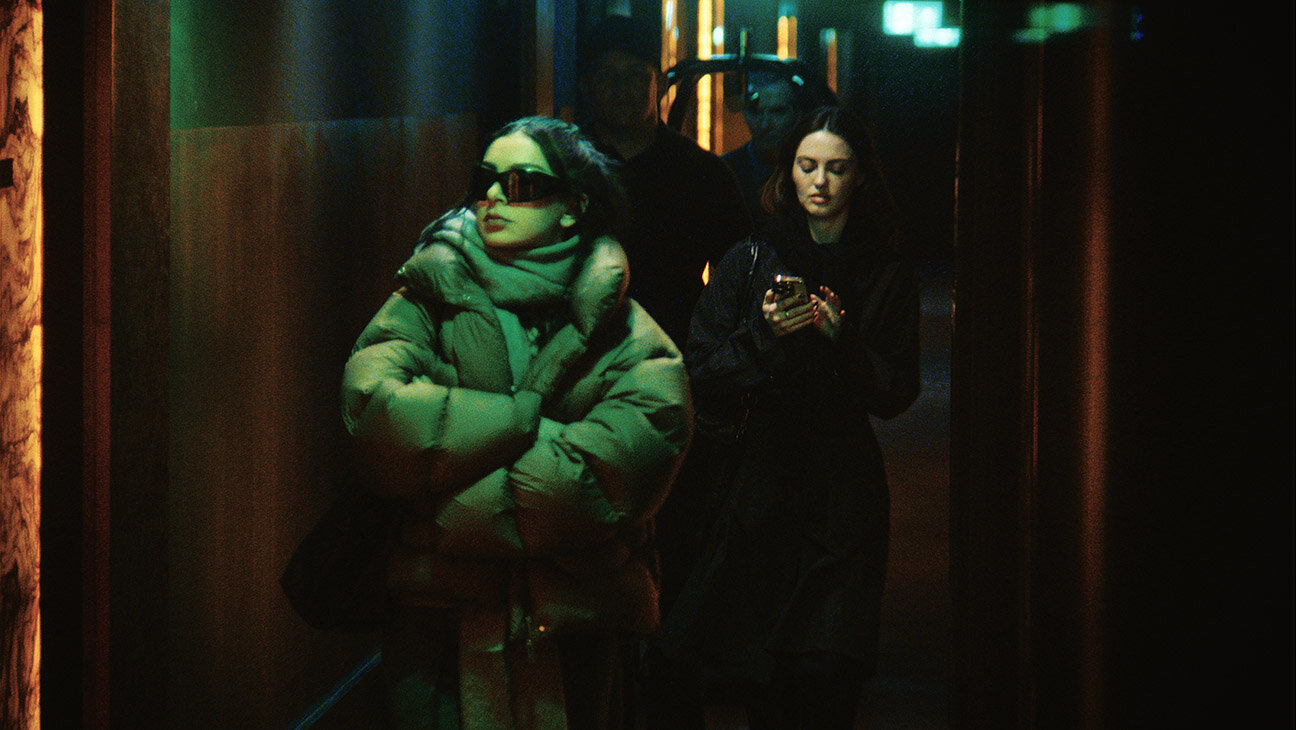
The Moment (Aidan Zamiri, 2026).
Charli XCX’s The Moment, by contrast, is concerned primarily with the pop star’s struggle for creative control in the face of rapidly growing fame. Charli, playing herself, gradually loses grip of her own ideas, brought to life in collaboration with her creative director, Celeste (Hailey Benton Gates), as they prepare for the musician’s first arena tour. Charli made her 2024 album brat in perfect independent freedom, but with astronomical success came commensurate demands: among them, a flurry of sponsorships, partnerships, meet-and-greets, rehearsals, label meetings, and an Amazon Prime deal, all of which increasingly detach Charli from her music. “I’m not sure I even like it anymore,” she says, about the album.
These conditions, however suffocating, are what cement the pop-star’s relevance in the public sphere: They form the bulk of the work that is absent from Lowery’s vision of pop stardom. It’s one thing to make pop-music on your own terms, and quite another to be a stadium act. The Moment is not the first film to dramatize that transformation as essentially corrupting, pushing against the virtues of self-expression. Brady Corbet’s Vox Lux (2018), to which The Moment owes some of its gaudy, bleak aesthetic, is about a teenager also named Celeste (played as a young girl by Raffey Cassidy, and later by Natalie Portman) who starts writing music to process a traumatic experience. As she gets older and more famous, her identity as a pop star becomes so divorced from her individual self that her music—written by real-life pop-powerhouse Sia to sound like generic, tacky radio pop—is mostly incidental to her life. Celeste’s misguided, often harmful attempts to impose her personality over her persona are a reaction to the hollow vessel the industry has made of her. In other words, art, once a product of personal expression, has become commerce.
That transformation is the main source of tension in The Moment, too: The film is an attempt to capture how such a process might occur despite the artist’s intentions. But if The Moment presents itself as a satire of the commercialized, soulless machine which co-opts art for profit—a key plot point involves a brat credit card targeting young queer people—it ultimately ends up achieving the same goal as the official behind-the-scenes portraits it mocks. The overall impression the viewer is left with is that Charli is an irreverent, self-aware pop-star, clever and funny and edgy. It doesn’t challenge her persona any more than an actual Amazon-produced concert documentary would. To see her in the studio, working to come up with lines like “I’m bumpin’ that” would be like watching the hottest girl in the club take off her makeup in bright daylight. As it turns out, though, that’s what I want from the pop star-centered film.
If the value of the genre is to pull back the curtain on the construction of the persona, the box-office phenomenon of Michael demonstrates how a persona might be turned into a brand. Michael emphasizes every symbol that has come to be associated with the star: The moonwalk, the glove, the chimp—even the nose job. The film ends in the mid-1980s, before any of the several allegations of child sexual abuse against Michael Jackson came out. In fact, the film depicts Jackson as unusually devoted to the well-being of children; there are several scenes in which the pop star visits sick children in the hospital. These inclusions are transparent attempts to exonerate his legacy, most damningly confronted by the HBO documentary series Leaving Neverland (2019), which was scrapped from the platform by the Jackson estate—the very same group that backed Michael. It has been reported that previous versions of Michael used the allegations as a framing device. It wasn’t until the movie had already been cut that the estate “remembered” a clause in the settlement contract with the Chandler family—the first to sue Jackson over child sexual abuse—that ruled out dramatic depictions of their ordeal.
There is no denying that Michael Jackson was a horribly abused child, and the film’s focus on that part of his life is meant to sanctify him. It’s impossible to watch a child—specifically, as portrayed by Juliano Valdi, a sensitive, gifted child—be mistreated and not immediately take his side. Here, the construction of the persona is presented as a purifying act, a way the preternaturally talented son of a cruel man found to transcend the horrible things that happened to him. As a film uniquely positioned to bank on the last decade’s debate about whether it’s possible to separate the art from the artist, or the persona from the person, it’s audacious on Michael’s part to suggest that you can’t—and shouldn’t, in its subject’s case, because Michael Jackson did nothing wrong. Michael is a film fitting for the Trump era, which has eradicated the process by which people are held accountable for what they do and say. What goes, these days, is brazen self-mythologizing, dishonest reinterpretations, self-serving narratives. What counts is profitable brand management.