
Notebook is covering the Locarno Film Festival with a cycle of close reads written by the participants in the Critics Academy.
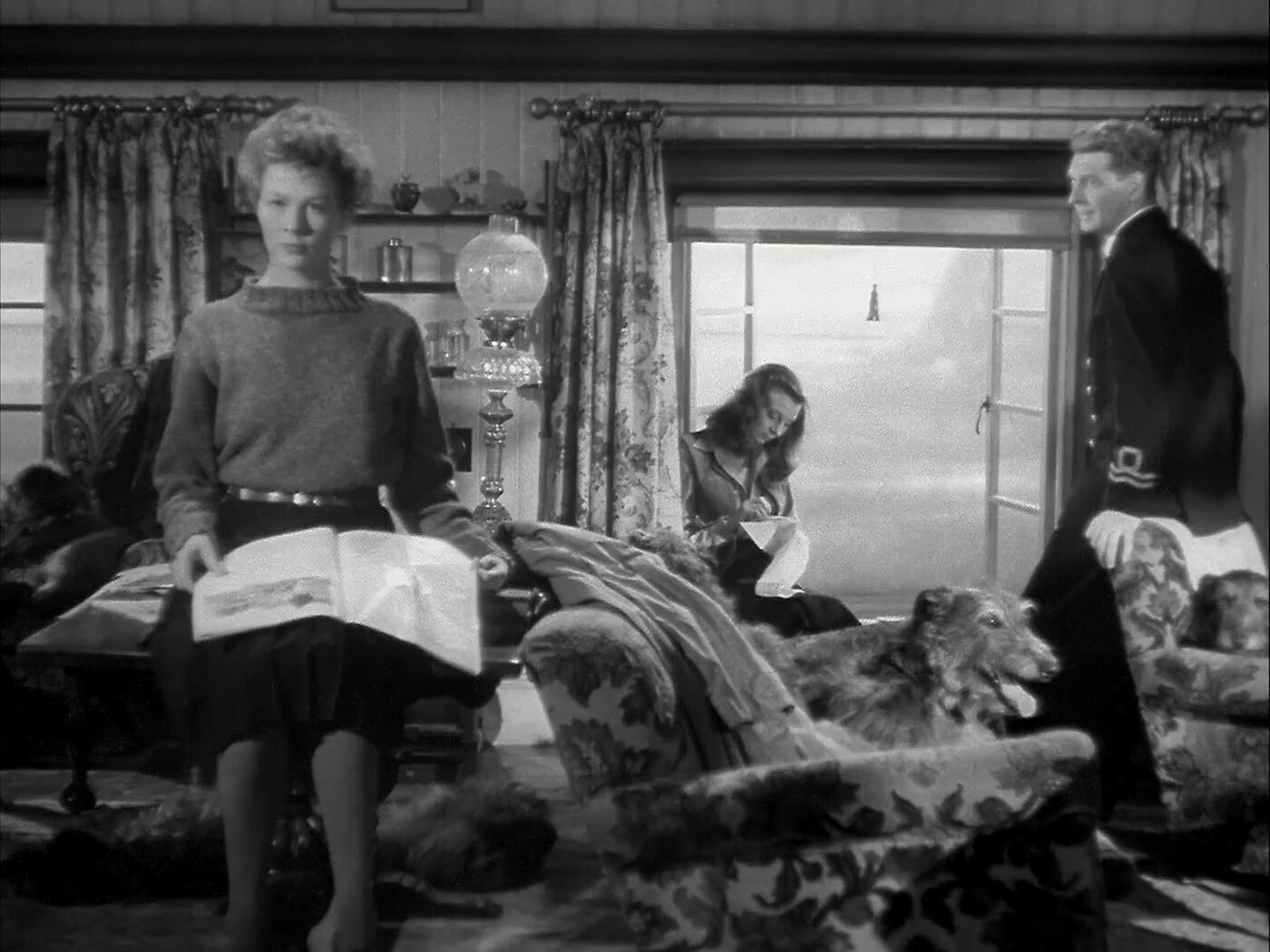
I Know Where I’m Going! (Michael Powell and Emeric Pressburger, 1945).
The words of the title card—Wendy Hiller / Roger Livesey / in / “i know where i’m going!”—are erased by a horizontal wipe: A baby girl crawls into the frame and over the text. “When Joan was one year old, she already knew where she was going,” a narrator announces in voiceover. What follows in the unconventional credit sequence of Michael Powell and Emeric Pressburger’s I Know Where I’m Going! (1945) is a swift montage of moments from Joan’s childhood; like punctuation, the words quickly, surprisingly displace these moments, then are displaced in turn as her early life passes like a sigh. Names and titles of the film’s personnel are inscribed on different props: a school blackboard, a horse-drawn carriage, an iron gate swinging shut. When the camera glides away from a list of names on the front of her cradle to reveal Joan at age five, writing a decisive letter to Santa by hand, it is as if the film is brushing aside her years as a baby, moving forward without looking back.
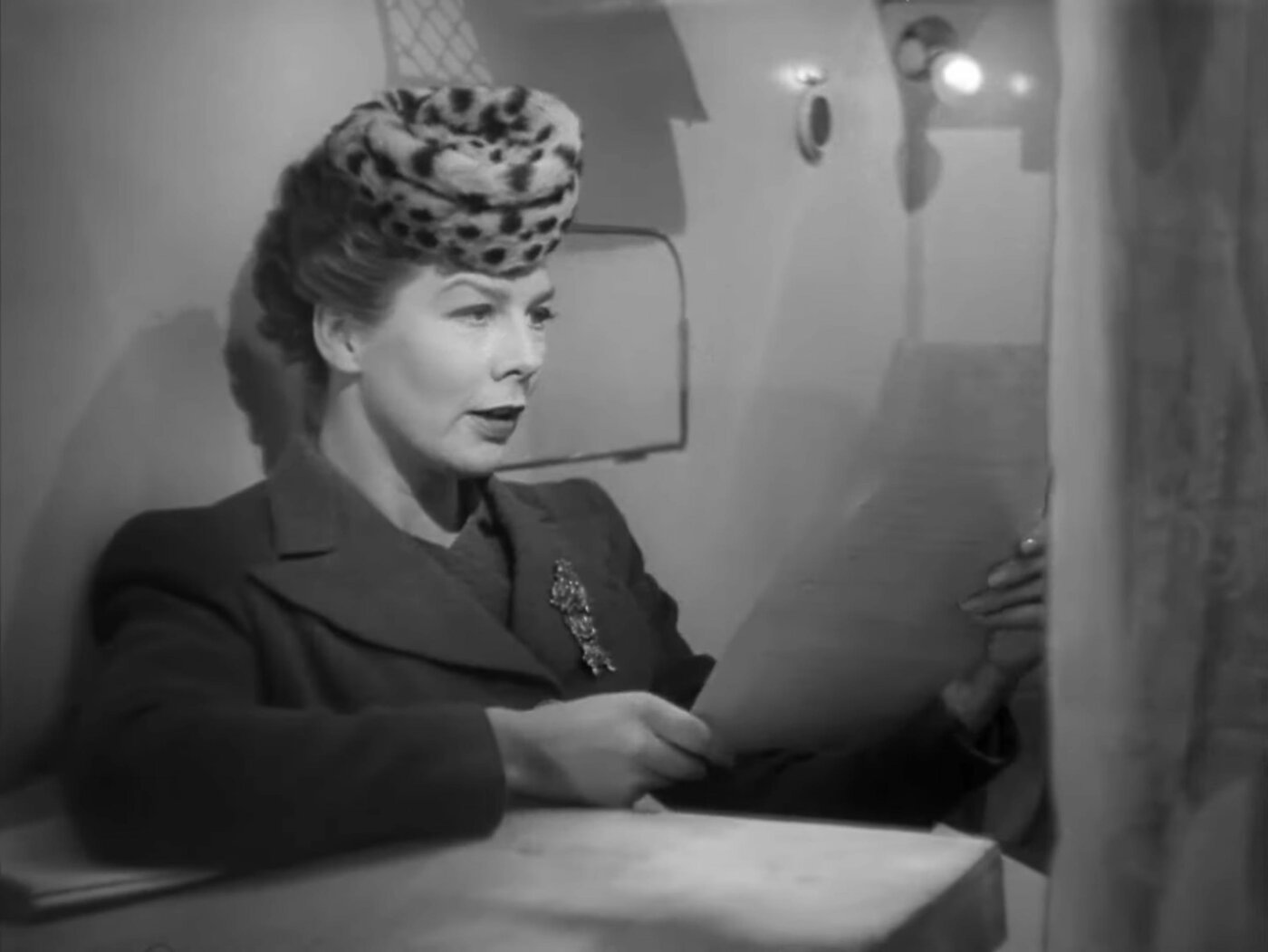
The sequence foreshadows the film’s narrative: Joan has a strong sense of what she wants and where she’s going, but forces beyond her control will unexpectedly reshape her path. At 25, Joan (Wendy Hiller) is about to be married to the wealthy chemical engineer Robert Bellinger, who lives on the remote Scottish island of Kiloran. To reach the altar, she travels by train from her home in Manchester to the Scottish Isle of Mull, just a ferry ride away from Kiloran. Threatening weather conditions will keep her stranded on Mull, preventing her from setting sail to reach her fiancé. But the meteorological event that overwhelms her the most is the downpour in her heart when she meets Torquil MacNeil (Roger Livesey), a navy officer who is also trying to return to Kiloran.
I Know Where I’m Going! (Michel Powell and Emeric Pressburger, 1945).
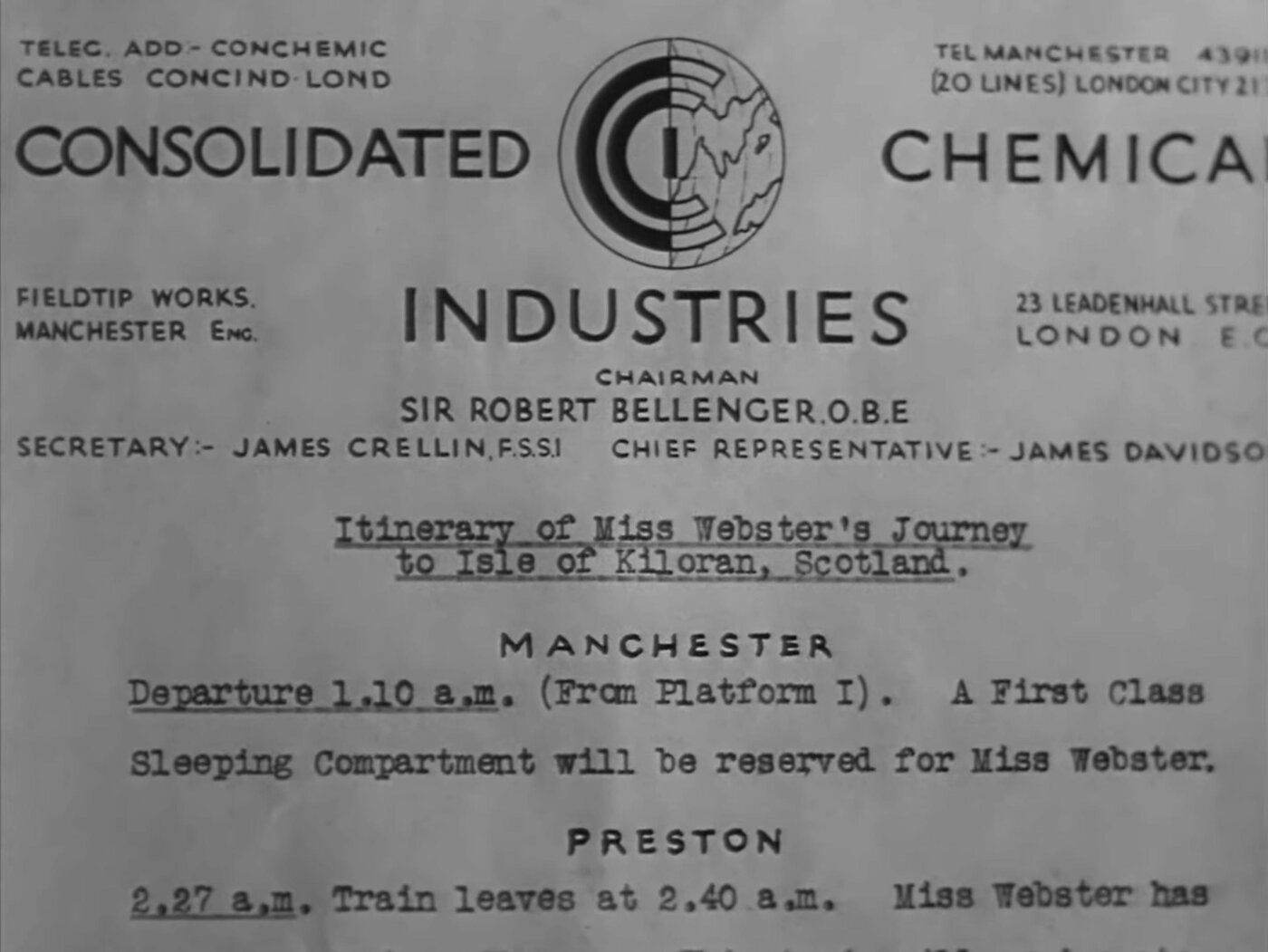
The path to Kiloran is inscribed on paper. Joan has an itinerary that precisely lays out where she’ll be at any time, including her departure and arrival times, and even the numbers of her train compartments. Powell and Pressburger show this piece of paper in close-up, scrolling the camera down the page, encouraging the viewer to read along with Joan. And yet, when she reaches Mull, the wind blows Joan’s itinerary out of her hands and into the sea: The words that gave Joan her bearings are forever smudged and illegible.
Joan will never reach Robert Bellinger, and he will never appear in the film. The only trace we see of him is in writing. When Joan announces to her father that she is getting married, she doesn’t tell him Bellinger’s name, but shows him a work pass from his company to explain: In close-up, we see the letters “CCI.” “You can’t marry Consolidated Chemical Industries,” her father says. Is Robert Bellinger a mere illusion? It is as if we are dealing with a postindustrial version of courtly love; Joan creates a textual, idealized version of her future husband, not by means of a sonnet, but in an employment document. The film’s real depiction of courtly love, then, would be the “forbidden” relationship between Joan and Torquil. In fact, the way in which they interact is very corporeal and sensual, rather than conversational. They constantly exchange charged glances, accompanied by the sound of the wind blowing and thunder booming. There is an awareness of the tension between them made manifest when Joan asks Torquil to sit at a different table in the dining room.
I Know Where I’m Going! (Michael Powell and Emeric Pressburger, 1945).
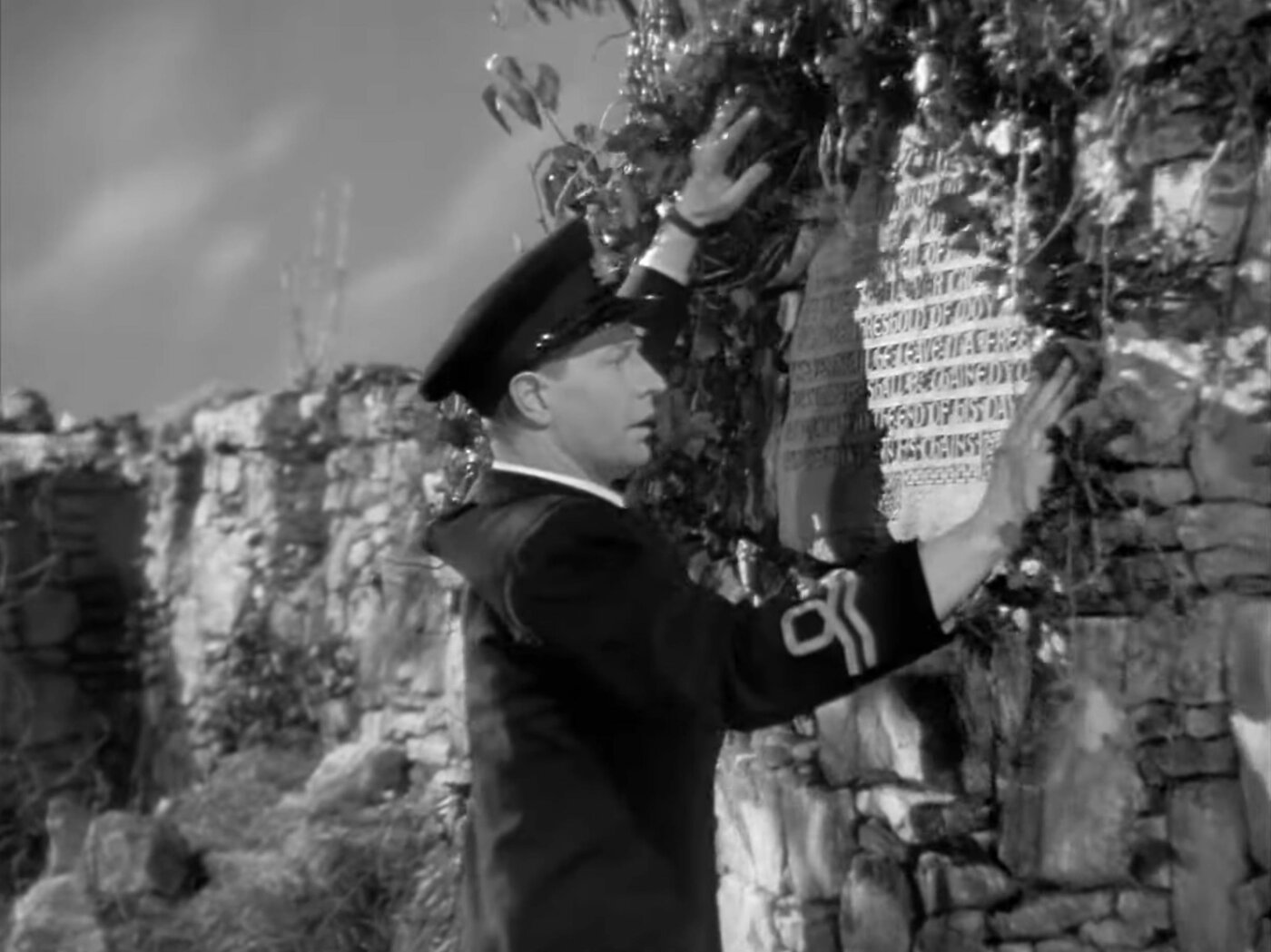
Despite their deep, nonverbal connection, the consummation of Joan and Torquil’s love will come by means of the written word. A curse is said to be etched on the stone walls of Mull’s Moy Castle, which is addressed to the lairds of Kiloran—the MacNeils, Torquil’s family. At the end of the film, after kissing Joan a final farewell, Torquil builds up his courage to enter the castle. We hear the curse in voiceover as he walks through the ruins, then finally discovers the inscription: every MacNeil of Kiloran that crosses its threshold will be “never leave it a free man; he shall be chained to a woman to the end of his days and shall die in his chains.” At this point, Joan rushes into the castle, having decided to come back to him, displacing words as in the opening sequence, undermining their solidity. They walk into the sunset in what seems to be a triumph of free will over ideal plans.
But why does their love imply the end of man's freedom? Why do some words appear so ephemeral while others endure? This inscription transcribes a curse from a Scottish oral tradition; is this form of transmission—from speech to stone, more collective and less industrial than typewritten memos—more appropriate to represent the oceanic force of passionate love? The film was released at the end of the Second World War: Joan and Torquil’s relationship carries both the joy of new beginnings after tragedy, but also the specter of uncertainty. Nowadays, potential lovers are not solicited with work passes, but on dating apps, with lists of personal qualities that are supposed to offer clarity about a person’s needs and desires. The only certainty in I Know Where I’m Going! is in its title, but beyond that, there are questions: Where will the wind take Joan and Torquil? We don’t know. Another storm may be waiting, but may their kisses free them from the chains of words.

Keep reading our coverage of Locarno 2025.