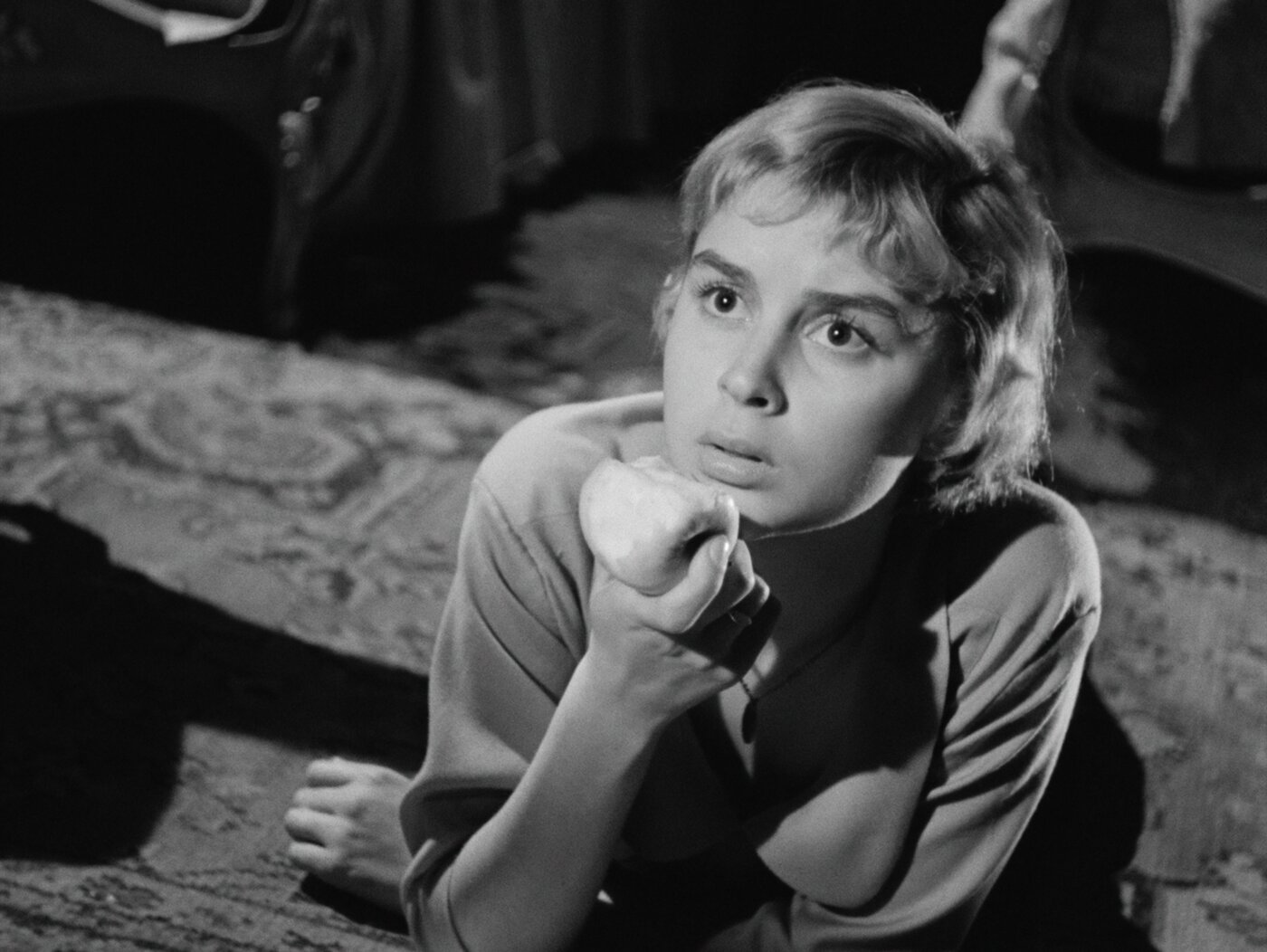
The House of the Angel (Leopoldo Torre Nilsson, 1957).
The brief introduction to Beatriz Guido’s short story The Usurper in the 1986 collection Other Fires: Stories from the Women of Latin America1 reads: “At the age of eight, Beatriz Guido decided that she wanted to go to a convent school ‘because nuns are so mysterious.’” The anecdote is left uncited, a mystery in itself floating in the text, but its arch candor captures something essential about the work of the Argentinian author and screenwriter over her decades of writing: To truly know something, you have to be on the inside.
But to reach this position of knowledge, whether of the convent or the upper echelons of Argentinian society—did that mean belonging, infiltrating, or worse yet, falling into a trap? And once you’re in, how do you escape? These questions are strikingly considered in an informal trilogy of early works made by Guido and her filmmaker husband, Leopoldo Torre Nilsson. Made within a four-year period, these films, The House of the Angel (1957), The Fall (1959), and The Hand in the Trap (1961), are all distinct stories, yet they share such close themes and creative parallels that to consider them together opens up a fascinating perspective on the early creative vision of this underknown figure of film history.
The evident synchronicity of these works is enticing. All three films were based on short stories written, and later adapted for the screen, by Guido. They all concern young women dealing with oppressive family dynamics inside dark, gothic homes, plagued by sordid family histories and morose patriarchs. The same actress, prolific Argentinian star of the 1960s Elsa Daniel, played all three central roles. Guido’s storytelling is remarkably realized in this daring, neat trio of films. And while these works were not explicitly autobiographical, the tensions that arise in them—power dynamics between men and women, the religious and political pressures of contemporary society, upper class milieus and their familial legacies—speak to many of the experiences Guido lived as a woman both welcomed and rejected by the world around her.
Born in Rosario, Argentina, in 1922 to a prominent architect, Ángel Guido, and an actress, Berta Eirin, Guido entered the Argentinian cultural sphere very much as an insider. A burgeoning fiction writing career followed an education in Europe, further bolstering her social standing in the intellectual circles of 1950s Buenos Aires. Writing from this position, however, would later prompt much of the criticism leveled at her—she was privileged, bourgeois, connected.
Thanks to the novelist Ernesto Sabato, it was in this cultural sphere that she met the young filmmaker Leopoldo Torre Nilsson—an insider himself, being the son of Argentinian Golden Age filmmaker Leopoldo Torres Rios. Although both were married to other people at the time, they felt their lives were bound together from the moment of their first conversation in Sabato’s home. Guido playfully lied about having seen Nilsson’s debut (co-directed with his father), The Crime of Oribe (1950), in Portugal, despite the film never having left Argentina. Their marriages ended; the personal and professional lives of Guido and Torre Nilsson, or Babsy as she called him, were never to be separated from that moment until Torre Nilsson’s death in 1978. But outside of this collaboration, scant attention has been paid to Guido’s work since the height of her fame in the 1950s and ’60s. Very little writing exists in English on Guido, and much of what can be gleaned about her comes from texts primarily focused on her husband; one of the few Spanish-language books written about her, a biography by Argentinian journalist Cristina Mucci, was republished in 2022 in a collection called Las olvidadas, “the forgotten ones.”
Guido and Torre Nilsson worked on over 20 films together, with Guido co-writing several original screenplays as well as adapting her own novels and short stories for the screen. Their partnership was integral to the promotion of Argentinian cinema and literature in Europe in the mid-20th century; through the film festival circuit, Torre Nilsson became regarded as the leading light of an expressionist Argentinian cinema that flourished after the end of president Juan Domingo Perón’s reign in 1955. Prior to this, Torre Nilsson had been steadily producing work, though nothing had broken through to international audiences—scholar Roy Armes considered one of Nilsson’s other films made with his father, El hijo del crack (1953), a “purely commercial work.”2 Torre Nilsson’s first film directed independently, Days of Hate (1954), meanwhile, was supposedly disliked by Jorge Luis Borges,3 whose short story had been adapted for the film.
Sparks of Torre Nilsson’s true talent became more apparent the more he grew into his own filmmaking style and voice. But it was ultimately Guido’s work that initiated his success. Her award-winning first novel La casa del ángel (“The House of the Angel”) from 1954 was adapted for his film of the same name (or sometimes appearing as End of Innocence in English), which was his first to appear at the Cannes Film Festival, in 1957. This film was where he “reached maturity as a director,” wrote Armes.4
This sentiment was shared by Mario Trajtenberg, who wrote in the Fall 1961 issue of Film Quarterly: “There were only thirty people present when La casa del ángel (End of Innocence) was shown at the Cannes Festival in 1957. But once the film ended, so the legend goes, applause lasted for five minutes and the select personalities rushed to congratulate Leopoldo Torre Nilsson. Overnight he became a question mark: who had ever foreseen such high standards in an Argentine director?”5 Trajtenberg’s snarky surprise is hard to overlook here, a symptom of Eurocentric artistic standards (Suzan Martin-Márquez in the Fall 2011 issue of Cinema Journal describes how “French critics scrambled to ‘locate’ [Torre Nilsson] in accordance with their hierarchical notions of space and time,”6 i.e. to credit his success to the influence of Luis Buñuel, Alfred Hitchcock, and Michelangelo Antonioni).
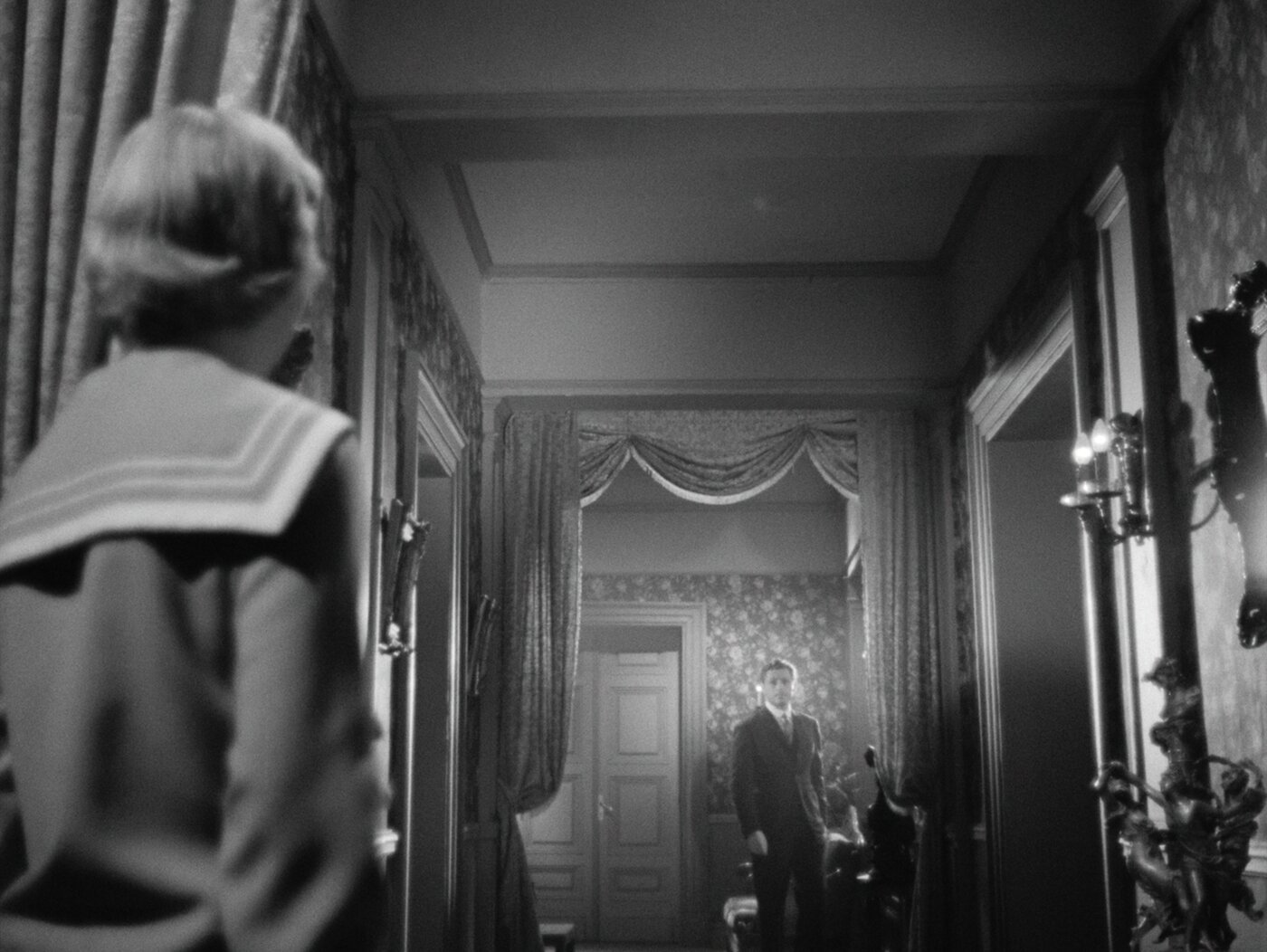
The House of the Angel (Leopoldo Torre Nilsson, 1957).
If this sudden appraisal of the filmmaker occurred thanks to his newfound visibility in a regarded critical space, it was still the result of a merit-worthy collaborative work between Guido and Torre Nilsson. The House of the Angel is subtly devastating, tinged with shadows and horror, and lit by Daniel’s quiet but glittering screen presence. Trajtenberg continues: “The turning point in Torre Nilsson's career (indeed, in the history of Argentine cinema) was the beginning of his work with Beatriz Guido. There is a great leap between El protegido [Torre Nilsson’s film from 1956] and La casa del ángel, though less than a year intervened; suddenly the old anchors of bad taste, bad dialogue, and bad acting are aweigh.”7
What facilitated this “great leap”? Torre Nilsson’s run of films before The House of the Angel were noir-ish romances, dramatic tales of criminals and love triangles; only Graciela (1956) hints at the fruitful narrative world that he was about to uncover, with its story of a small town girl (his first collaboration with Elsa Daniel) arriving at a decaying family home in the city. It was then Guido’s writing which allowed him to fully exploit this dramatic avenue, writing that was already, in itself, ready for the screen.
The novel of La casa del ángel is at once cinematic in style and fascinated by cinema; the power of an image to shatter the life of a character is fundamental to the text. Under the thumb of her devout Catholic mother and the machismo of the world her politician father occupies in 1920s Buenos Aires, protagonist Ana is taught to fear everything. The greatest threat, however, is her own body, that vessel of sin considered so dangerous that her mother won’t even let her bathe without a nightdress on. Yet adorning the walls of their house in Belgrano are frescoes depicting half-naked nymphs and the Rape of the Sabine Women. Ana doesn’t know where to look.
The violence of the images and the symbolism that so heavily oppresses Ana’s environment are dark foreshadowings of what is to come in the story, when she is ultimately raped by an associate of her father and lives the rest of her life, phantom-like, in a state of haunted grief. That the novel, and the film, are intrinsically structured as a flashback only reinforces the image as a force of power and, in this case, devastation.
In the novel, the cinema arrives in the first few pages—Ana is captivated by the silence as she wanders the corridors of a convent (like Guido, searching for its secrets), but “outweighing any enchantment,” Guido writes, “was the approach of the hour when we would go to the motion pictures.” Ana’s mother only permits her and her sisters to see the films she deems appropriate (“Lillian Gish is not an actress; she’s not like the rest of them,” her mother says of the saintly star), and yet the girls always manage to see something forbidden, an onscreen kiss at the very least. “Here it comes; here’s what we’ve been waiting for,” her sister Isabel says. “Don’t miss it.”8 But Ana’s torment only continues; “On the way home I kept thinking constantly of the immodest and shocking thing I had done in permitting myself to become fascinated by the images on the screen,”9 she says.
Traces of Ana’s fascination are found in Guido herself. In a lecture titled “La agonía del escritor frente al cine”10 [the writer’s agony in the face of cinema]given in 1970, Guido said, “I think all contemporary writers feel a fundamental temptation to surrender our material, that is, our intimacy, to the image.” Though her more explicit screenwriting work with Torre Nilsson may have felt closer to a voluntary surrender, Guido had written in images well before this: “the house, surrounded by mist, seemed to float on air that morning”11 or “and on those nights, when I closed my eyes, I used to see cities permanently lit up, fireworks, and Apocalyptic angels,”12 just two examples of the hauntingly visual, gothic evocations that fill La casa del ángel. (A critical New York Times review of Guido’s later 1966 novel End of a Day noted, “To make matters worse, the action is blocked out episodically, as in a scenario.”) Torre Nilsson had these kinds of specific details to draw on for his baroque, shadowy rendering on screen, cementing the artistic vision that was undoubtedly a product of his and Guido’s collaboration.
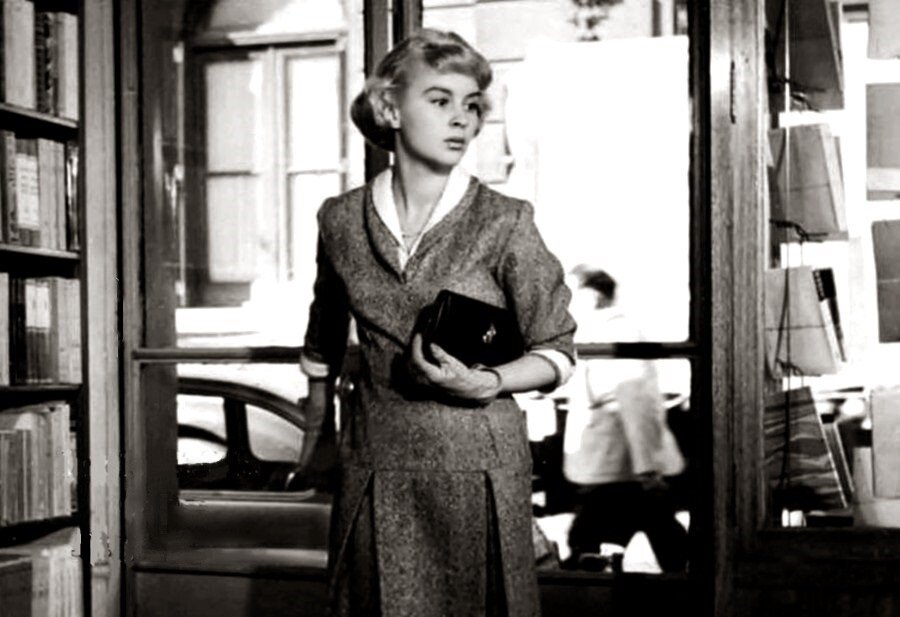
The Fall (Leopoldo Torre Nilsson, 1959).
The subsequent films, The Fall and The Hand in the Trap (winner of the Critics’ Prize at the 1961 Cannes Film Festival) followed, containing the same morose preoccupations with the inherent oppression within familial and communal structures in Argentina. The inside, when there is no way out, is far from a position of desire. Albertina in The Fall and Laura in The Hand in the Trap are both guests in homes they know little about—the former, a university student, rents a room in a large apartment occupied by a sickly mother and her four rebellious children, and the latter returns to an imposing family mansion from a convent boarding school. Both houses have secrets; rooms under lock and key, stories from the family history that can’t be explained. And the girls, Ana in The House of the Angel included, move about these spaces with the same trepid fascination, their mysteries offering a chance to dip a toe in the waters of disobedience and nonconformity.
Nudity inspires fear; in The Fall, the locked room in the sprawling, chaotic apartment is filled with pictures “of naked women,” one of the boys says, a provocative sparkle in his eye. “They’re famous paintings, fool!” comes the retort from his older sister. When Albertina catches the children showering partially clothed on the rooftop and demands them to stop, they tease her prudeness. Each film is engulfed in palpable claustrophobia, not always imposed by the male characters but undoubtedly a symptom of their influence. In The Fall, the ability of the oldest child, Gustavo—though he is still much younger than her—to torment Albertina and impose a patriarchal system on the household is one of the more terrifying elements of the film. And in The Hand in the Trap, one man’s infidelity sets in motion a chain of events that leaves Laura’s aunt traumatized and trapped away in a hidden chamber. Each of the characters played by Daniel is ultimately raised by women—a mother, aunts, the nuns—and feels the sharp edges of their own experiences cut into the way they care for her.
Formally, too, the films share a language shaped by Torre Nilsson’s direction. Daniel is always the focus, often shot in close-up and softly lit to exaggerate the innocence that is soon to be lost to the pall of her surroundings. The camera follows her eye around a room as she casts her intense glance on the ornate furnishings or across all of those paintings, and tracks with her movements as she approaches a figure or an object, which then loom into view, casting their own immense shadow. More than once, Nilsson uses a split diopter effect to cast Daniel in the immediate foreground and another character, a symbol of surveillance, in the background. The edges of the frame are felt around Daniel as much as the walls of her characters’ homes. Flashbacks, too, occur in all three films—are crucial to their narrative structures, in fact—as ghostly echoes of tragic memories.
The star anchors these films together as much as the subject matter, Daniel’s doe-eyed gaze sharpened by the strong angle of her brow to give her own act of looking a stoic intensity. And while the actress isn’t a proxy for Guido, the connection between the two in these films adds a further realism to their dissections of patriarchal tyranny. These stories, drawn from the writer’s personal experience living inside the very world they target, come alive with Daniel’s continued participation.
Guido was widely successful in Argentina as a novelist—she published regularly until the 1980s and was awarded the National Prize for Literature in 1982. But this prestige did little to alleviate the criticisms leveled at her as the privileged insider, the woman of a cultural stature that placed her in a position of influence. To paraphrase the author and researcher Marcos Zangrandi, who wrote on Guido in 2023 for Clarín’s Revista Ñ,13 many of her contemporaries took umbrage with what they perceived to be a canny deployment of her bourgeois connections and advantages. Zangrandi cites Adolfo Bioy Casares, writing in his diaries that he and Jorge Luis Borges attributed the success of The House of the Angel to Guido having loaned her house to a publisher who would subsequently translate the novel, and to being friends with Torre Nilsson, who could go on to direct its adaptation. Guido didn’t exactly care about these accusations—when asked about winning the 1954 Emecé prize in a 1966 interview, she quipped, “I was friends with all the judges.”14
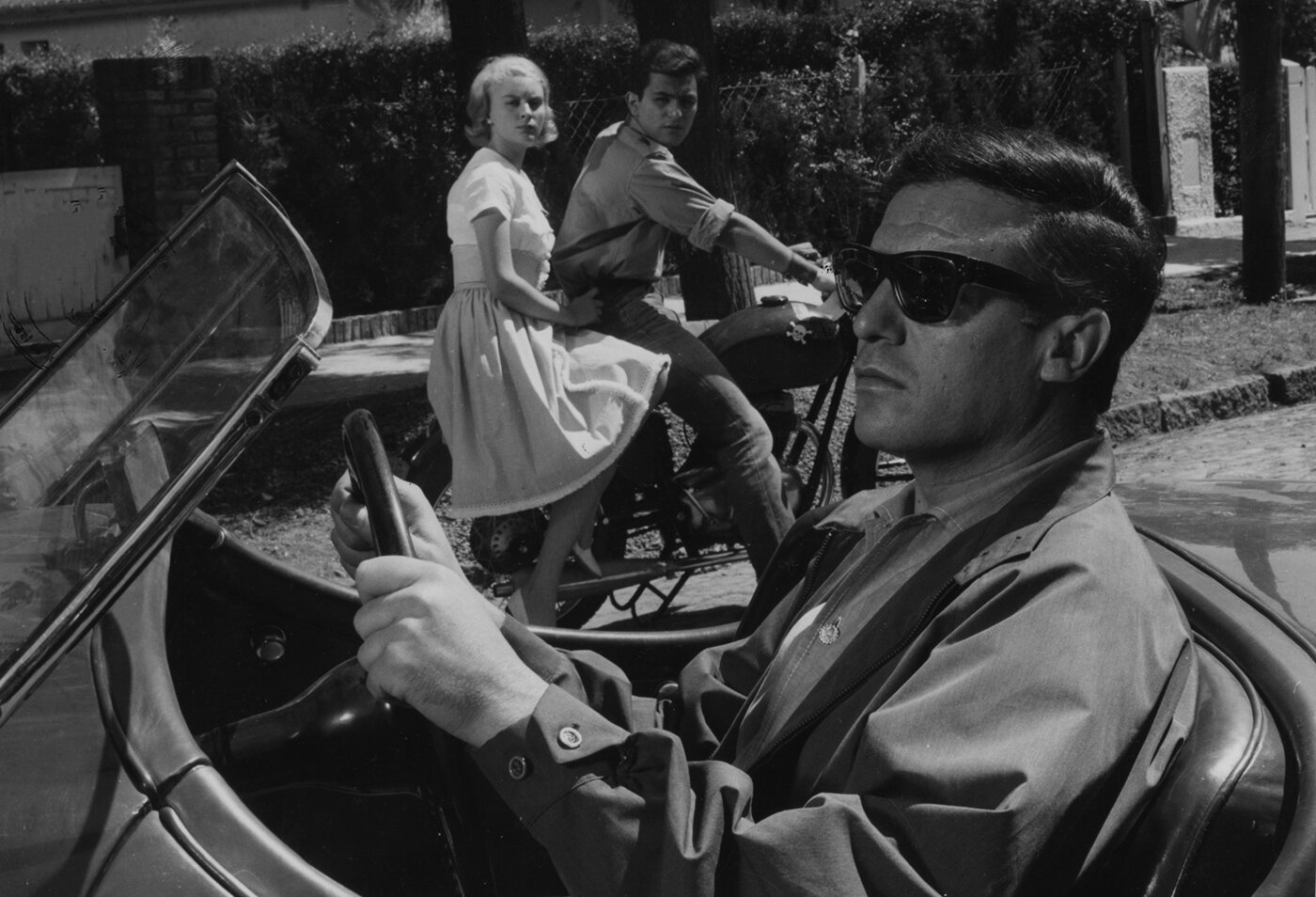
The Hand in the Trap (Leopoldo Torre Nilsson, 1961).
This criticism is complicated by the political moment in which Guido and Torre Nilsson worked, and in which they were vocally outspoken. Their staunch anti-Peronist views positioned them in a volatile middle ground, derided not only by supporters of the authoritarian government but also by revolutionary counterparts who viewed Guido’s literary interest in the world she knew, the upper-middle classes, as a complicit pandering to an elite that had no place in the country’s moment of change. A cultural insider but political outsider, and an opinionated, prominent female voice who wrote what she knew—Guido rubbed certain people the wrong way. Reports of her public persona in Argentina during the height of her fame situate her as an unreliable, often contradictory, dramatic speaker, and often for her own amusement. That lie she told about seeing Torre Nilsson’s film in Portugal was perhaps not such an anomaly. Was it this inability to pin her down, to understand her in plain terms as a political and literary thinker, or the perceived audacity of her position—ever the abrasive woman— that has led to her work falling largely into obscurity since her death in 1988?
But recent years have allowed for some reconsideration and renewed interest in Guido’s work, at least in Argentina. To celebrate the centenary of her birth, several of her novels were republished, a film series and exhibition was organized at the Centro Cultural San Martín in Buenos Aires, and one of the first critical studies of her work, Espía privilegiada by Diego Sabanés and José Miguel Onaindia, was published. Much of the press around this moment in 2023 refers to a rescuing of Beatriz Guido, a correction to the silence that fell on her—trapped inside her very own haunted house of history, with no escape but being forgotten.
“Privileged spy,” as Sabanés and Onaindia call her, is an apt name for Guido, so captivated by the act of looking and seeking from inside the worlds she inhabited. And even if her contribution was rendered less visible by the memory of cinema history, her voice, her images, are embedded within the films that carry her work. From the outside looking in, we see Guido in the stone statue of an angel watching Ana from her balcony, in the painted cherubs flying above Laura’s bed, and in the children that dominate Albertina’s daily life. She appears in these compelling, foreboding images, symbols and people, luring us in, knowing just the fate that awaits.
Thanks to Lucía Salas for her support and assistance with translation.
1. Other Fires: Stories from the Women of Latin America, ed. Alberto Manguel (Picador, 1986), 188
2. Roy Armes, “Leopoldo Torre Nilsson,” International Film Guide, ed. Peter Cowie (Tantivy Press, 1967), 31.
3. Edgardo Cozarinsky, Borges In/And/On Film (Lumen Books, 1988), 95.
4. Armes, “Leopoldo Torre Nilsson,” 32.
5. Mario Trajtenberg, “Torre Nilsson and His Double,” Film Quarterly 15, no. 1 (1961), 34.
6. Susan Martin-Márquez, “Coloniality and the Trappings of Modernity in ‘Viridiana’ and ‘The Hand in the Trap,’” Cinema Journal 51, no. 1 (2011), 99.
7. Trajtenberg, “Torre Nilsson and His Double,” 36.
8. Beatriz Guido, The House of the Angel, trans. Joan Coyne MacLean (Andre Deutsch, 1958), 5–6.
9. Ibid., 9.
10. Beatriz Guido, “La agonía del escritor frente al cine”, Semana de literatura y cine argentino, 14 al 20 de octubre de 1970 (Universidad Nacional de Cuyo, 1972), 19–23. Accessed via https://leopoldotorrenilsson.blogspot.com/2011/10/la-agonia-del-escritor-frente-al-cine.html
11. Guido, The House of the Angel, 15.
12. Ibid., 17.
13. Marcos Zangrandi, “Beatriz Guido. Novelas al calor de las injurias,” Revista Ñ, September 2023, https://www.clarin.com/revista-n/beatriz-guido-novelas-calor-injurias_0_Fp1H0lPFyJ.html
14. Horacio Verbitsky, Interview with Beatriz Guido, Confirmado, no. 56, July 1966. Accessed via https://www.pagina12.com.ar/diario/verano12/subnotas/62832-20696-2006-02-09.html