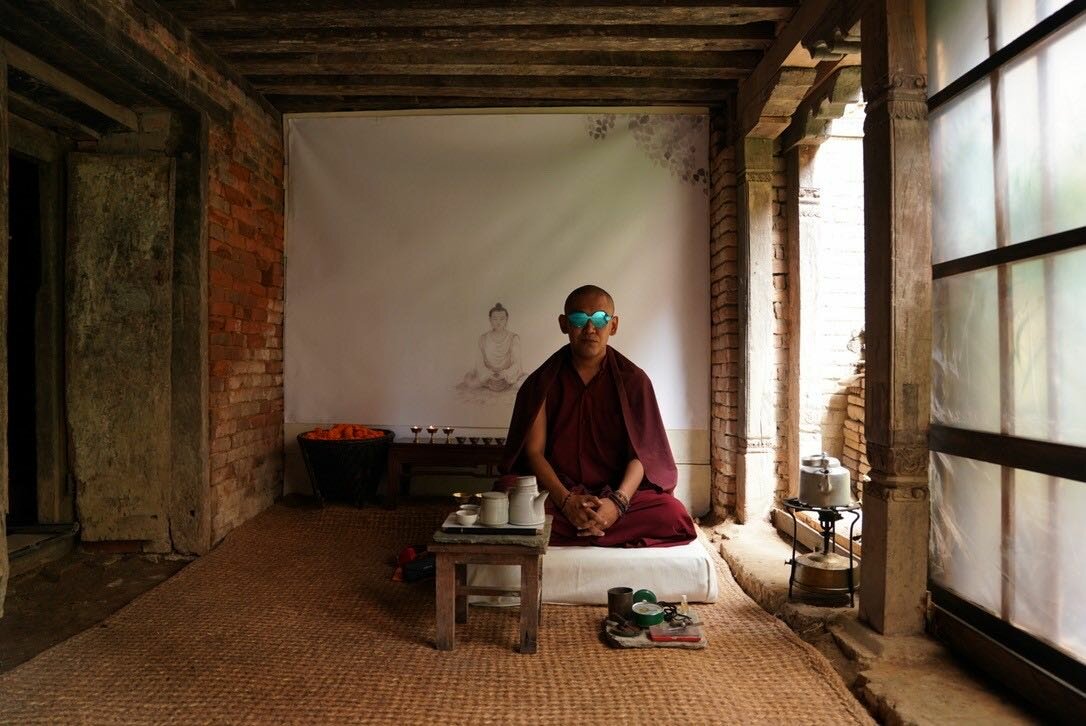
Looking for a Lady with Fangs and a Moustache (Khyentse Norbu, 2019).
The entire history of cinema in Bhutan spans barely four decades. The small nation’s first film, Ugyen Wangdi's Gasa llamai singye, was distributed on VHS in 1989. Throughout the twentieth century, Bhutan resisted first television and then internet access, an information blockade designed to preserve traditional values, particularly those embedded in the culture’s deep connection to Buddhist beliefs. Since King Jigme Singye Wangchuck lifted these restrictions in 1999 as part of a carefully orchestrated process of democratization, cinema has emerged as the primary form of mass entertainment.
For two decades, a new wave of spiritual filmmaking has been quietly establishing itself in Bhutan. This movement represents more than an emerging national cinema finding its voice, manifesting a sense of spirituality, cultural memory, and contemporary expression. While early Bhutanese cinema drew heavily from the melodramatic films of India’s Bollywood system—with sweeping romances, musical interludes, and heightened emotional drama—we are now seeing a renaissance of storytelling rooted in Bhutan’s specific cultural context.
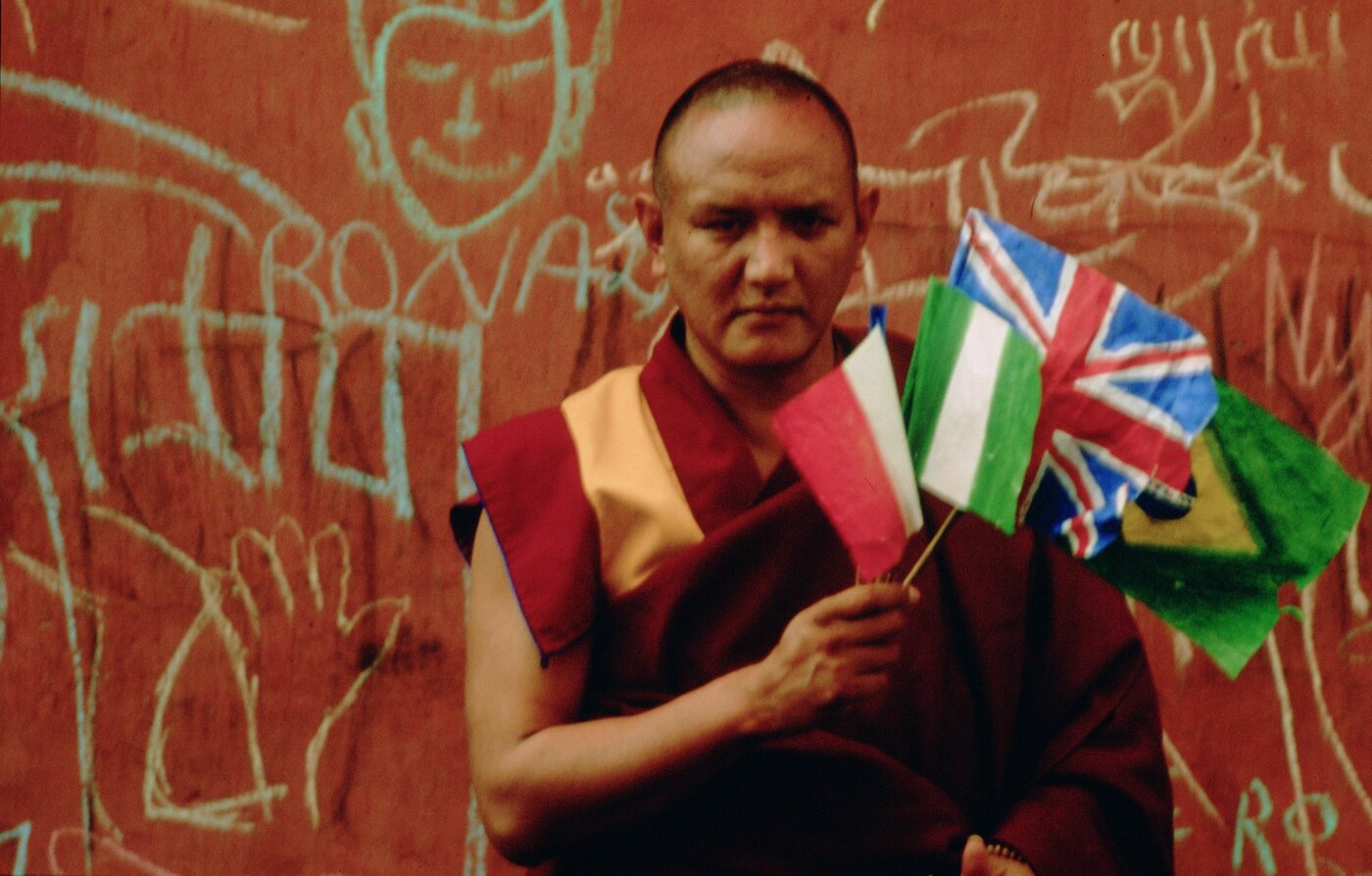
The Cup (Khyentse Norbu, 1999).
These films employ deliberate camerawork, understated performances, and editing that resists narrative manipulation to evoke states of spiritual contemplation. The new cinema falls squarely within what Paul Schrader identified, in his seminal book Transcendental Style in Film, as the “Mandala” category, breaking free from the “iron nucleus” of narrative to create numinous visual and temporal spaces of transcendental suspension, allowing events to unfold in a circular rather than linear fashion. But unlike the static meditation objects to which Schrader refers—the candle, the rock garden, the flower arrangement—the new cinema uses the dynamic, processual form of the mandala itself, the sacred circular designs that serve as visual maps guiding meditators from material existence toward enlightenment.
At the front of this movement stands Khyentse Norbu, who at the age of seven was recognized by the head of the Sakya school of Tibetan Buddhism to be the third reincarnation of the nineteenth-century Tibetan Buddhist lama Jamyang Khyentse Wangpo, a key figure in the nonsectarian Rimé movement. Norbu was a practicing monk when he was enlisted as a Buddhist consultant for Bernardo Bertolucci's Little Buddha (1993), though he was critical of the resulting film—in particular of the casting of Western stars as Buddhist figures, which for him represents a fundamental misunderstanding of the spiritual and cultural context these figures embody, suggesting that Buddhist identity can be superficially adopted rather than lived and understood from within the tradition. His directorial debut was the first Bhutanese film to be distributed internationally. The Cup (1999) is a subtle comedy about young monks’ love for soccer, evincing the harmonious coexistence of spiritual life with contemporary interests. Where Bertolucci presents the east through an ornamental spectacle, The Cup depicts Buddhist monasticism as a living, breathing tradition.
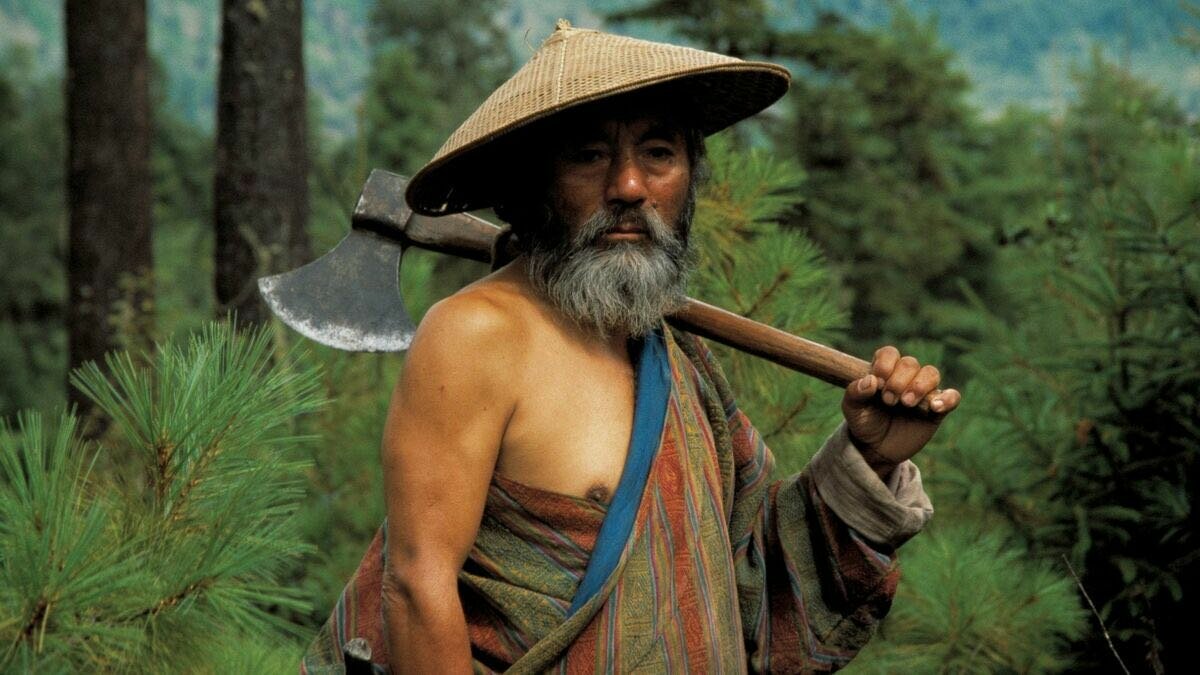
Travellers and Magicians (Khyentse Norbu, 2003).
Norbu’s genius lies in how he renders ancient Buddhist teachings in a contemporary register, though he hesitates to categorize his cinema as Buddhist or even “spiritual,” explaining that he “[doesn’t] want to claim that I am doing any service for the dharma community at the moment.” In Travellers and Magicians (2003), the life of Dondup (Tshewang Dendup), a government official infatuated with American culture, becomes intertwined with that of Tashi (Lhakpa Dorji), another restless young man. Dondup, dismissive of local customs and frustrated by what he perceives as his country’s backwardness, is eager to leave Bhutan. His negotiation of tradition and modernity speaks directly to the country’s ongoing cultural transformation as it emerges from isolation into modernization, importing new cultural values from the outside world, particularly those of accumulative consumption.
When Tashi drinks a magic potion, he is transported to a distant place where he falls in love with Deki (Deki Yangzom), the young wife of an old woodsman, but returns home to tragic consequences. Both Tashi’s story and Dondup’s represent the Buddhist concept of taṇhā (craving) and how attachment to worldly desires—whether romantic love or Western materialism—leads to suffering. By placing these teachings in the mouth of a young monk who quietly joins Dondup’s journey, Norbu suggests that Buddhist thought can emerge from ordinary figures rather than formal teachers, affirming its continued relevance as a value system that informs a storytelling tradition in modern Bhutanese culture.
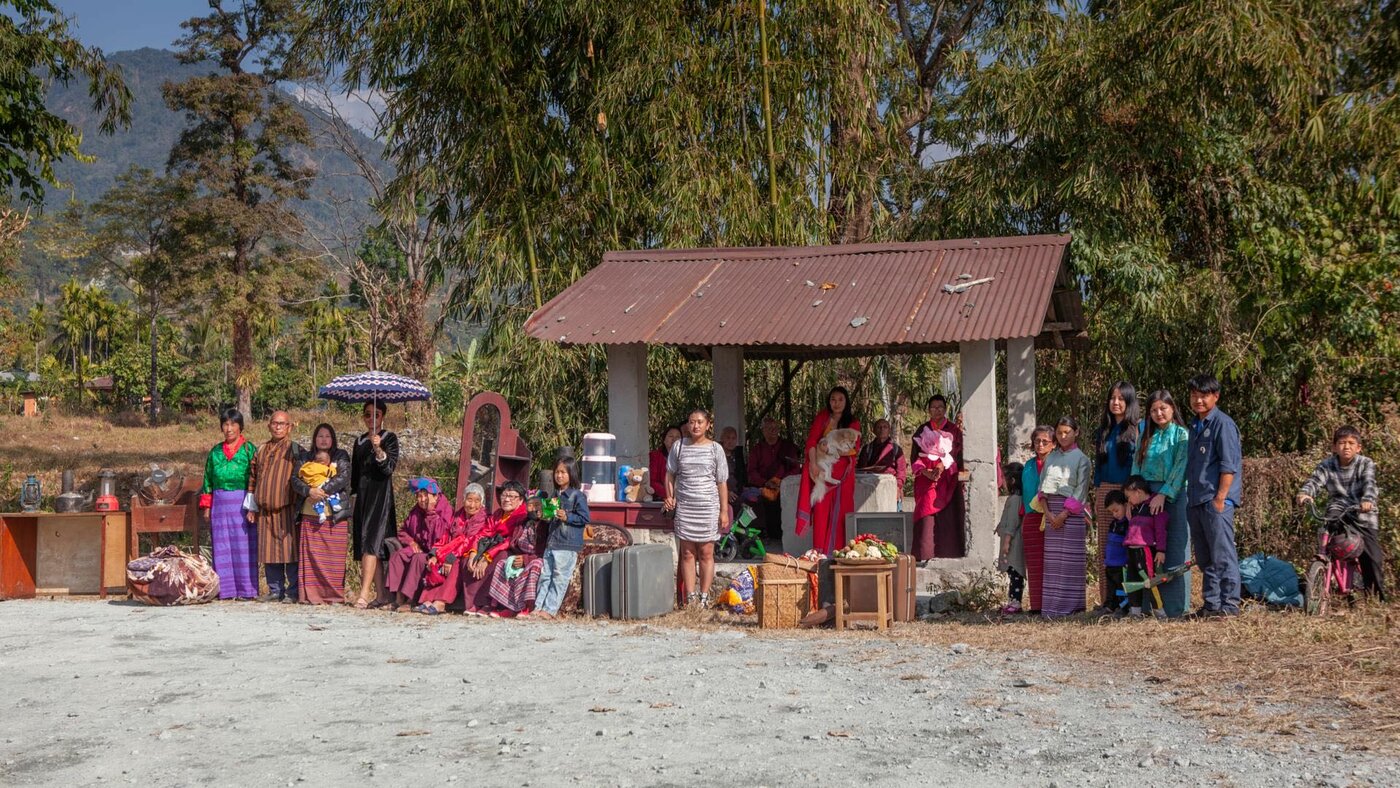
Pig at the Crossing (Khyentse Norbu, 2024).
With his latest feature, Pig at the Crossing (2024), Norbu departs from traditional narrative into a domain that marries formal experimentation to Buddhist metaphysics. The film opens in a crowded market where we meet Dolom (Kuenzang Norbu), a young man whose appearance—sporting a leather biker jacket over a traditional gho skirt—immediately signals a life caught between local and global, traditional and modern, East and West. What begins as a conventional farce of sexual errors changes abruptly when Dolom, distracted by his phone while riding his motorcycle, collides with eternity in the form of an oncoming truck. The narrator’s death is not simply a plot device, but a means of restructuring the story into a circular shape, with a nonteleological rhythm.
Norbu limits our perspective to Dolom’s subjective experience as he struggles to accept his condition: a soul waylaid in limbo, what in Buddhism is called the bardo. His attachment to his final task, by which he hopes to clear himself of responsibility for having impregnated a married woman, becomes a desperate attempt to assert agency over his fate. Elements within scenes work to distance us from identification, whether through absurdist intrusions, like a German woman bursting suddenly into song during a mourning rite, or through Dolom’s own impassive presence, which denies us psychological intimacy and redirects our attention toward the film’s metaphysical frame.
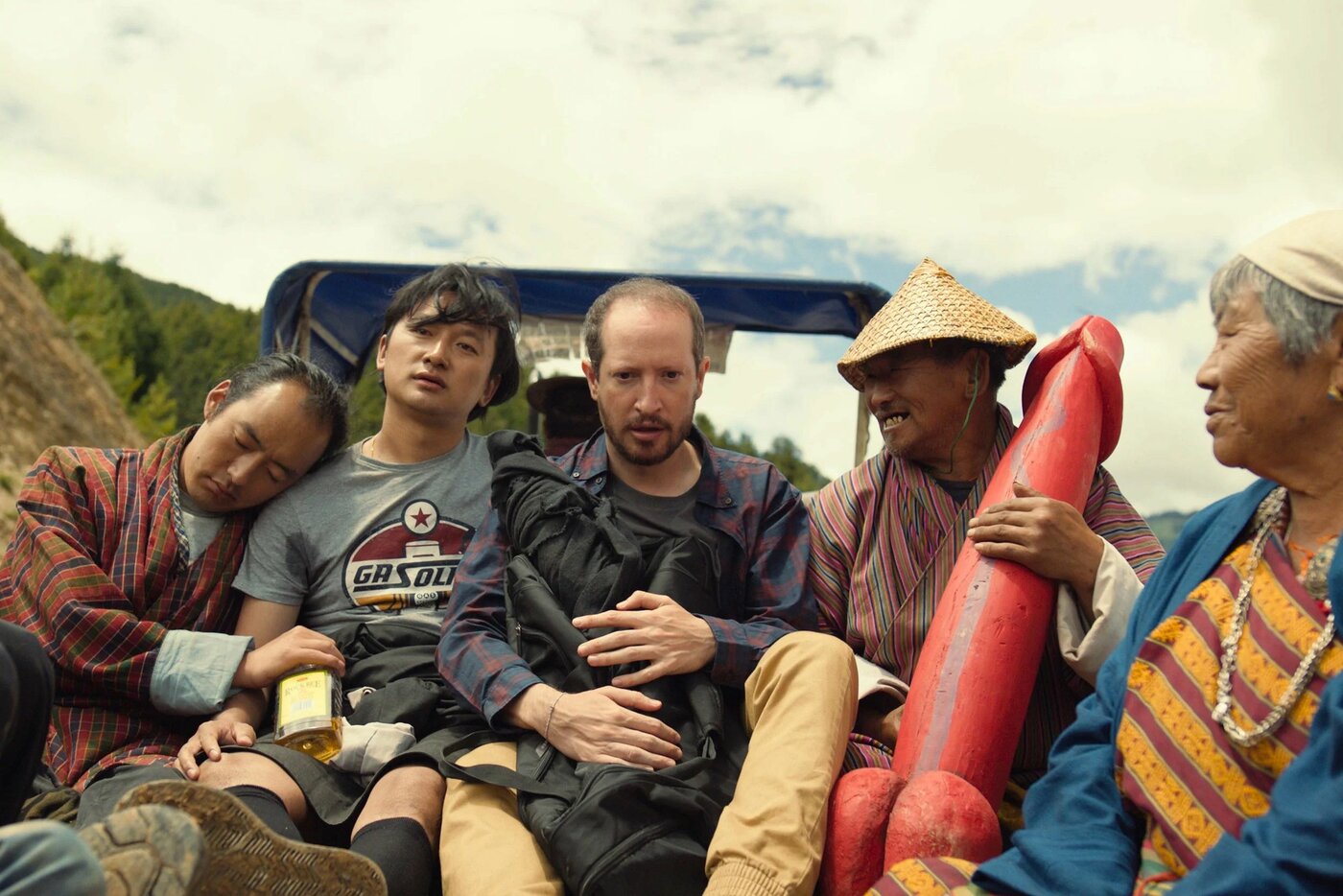
The Monk and the Gun (Pawo Choyning Dorji, 2023).
Pawo Choyning Dorji worked as an assistant director for Norbu’s Vara: A Blessing (2013) and a producer for Hema Hema: Sing Me a Song While I Wait (2016), before making his directorial debut with Lunana: A Yak in the Classroom (2019). Though his work remains fundamentally attached to the ethos that characterizes Norbu’s cinema, Dorji’s films adopt a more accessible approach, emphasizing picturesque rural settings and everyday human drama. Unlike Norbu’s explorations of Buddhist paradoxes and metaphysical dimensions, Dorji favors human connection and ethical contemplation that appeal to broader audiences outside of Bhutan, making the spiritual themes more approachable without losing their essential meaning.
Dorji’s latest feature, The Monk and the Gun (2023), is a satire of world politics set during Bhutan’s democratic transition in 2006. In three interconnected narratives, a family navigates political divisions, an American collector pursues a Civil War–era rifle that has come into the possession of a Bhutanese farmer, and a young monk embarks on a mission to obtain firearms to be sealed inside a stupa, a structure housing spiritual relics, as offerings. The film’s engagement with modernization extends beyond electoral politics to encompass the effects of Western cultural penetration; recurring James Bond references speak to the impact of globalization on traditional societies. The American collector's inability to understand the rifle’s cultural significance beyond its material rarity contrasts with the Bhutanese view of the weapon as an object to be ritually transformed, reflecting broader patterns of cultural extraction disguised as appreciation.
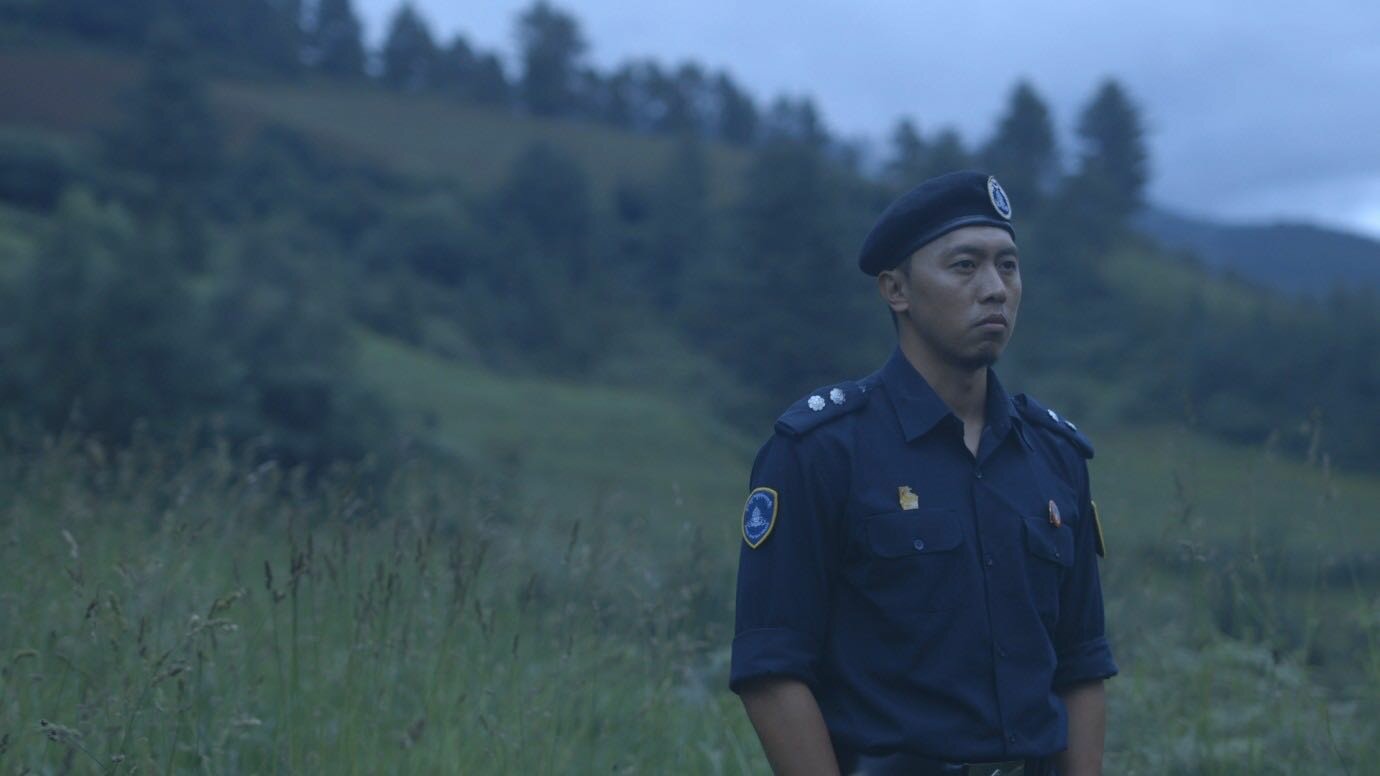
Honeygiver Among the Dogs (Dechen Roder, 2016).
Dechen Roder’s Honeygiver Among the Dogs (2016) reconfigures the existentialism of film noir through Buddhist thought. Following policeman Kinley’s investigation of a missing abbess, the film introduces Choden, whose presence represents both the femme fatale and ḍākinī archetypes—the latter a a female figure in Tantric Buddhism associated with wisdom and spiritual disruption. A ḍākinī also surfaces in Khyentse Norbu’s Looking for a Lady With Fangs and a Moustache (2019), where she becomes a catalyst for spiritual awakening and a disruptive force that guides seekers toward enlightenment through unconventional means.
Roder’s cinematographer, Jigme Tenzing, also collaborated with Norbu on Hema Hema and Dorji on Lunana and A Monk and a Gun. What distinguishes his visual approach across these diverse films is his practice of “contemplative cinematography.” The deliberate deployment of extended takes and available lighting transform both urban Thimphu in Honeygiver and the remote Himalayas in Lunana into spiritually charged spaces where scenery functions as narrative participant rather than mere backdrop.
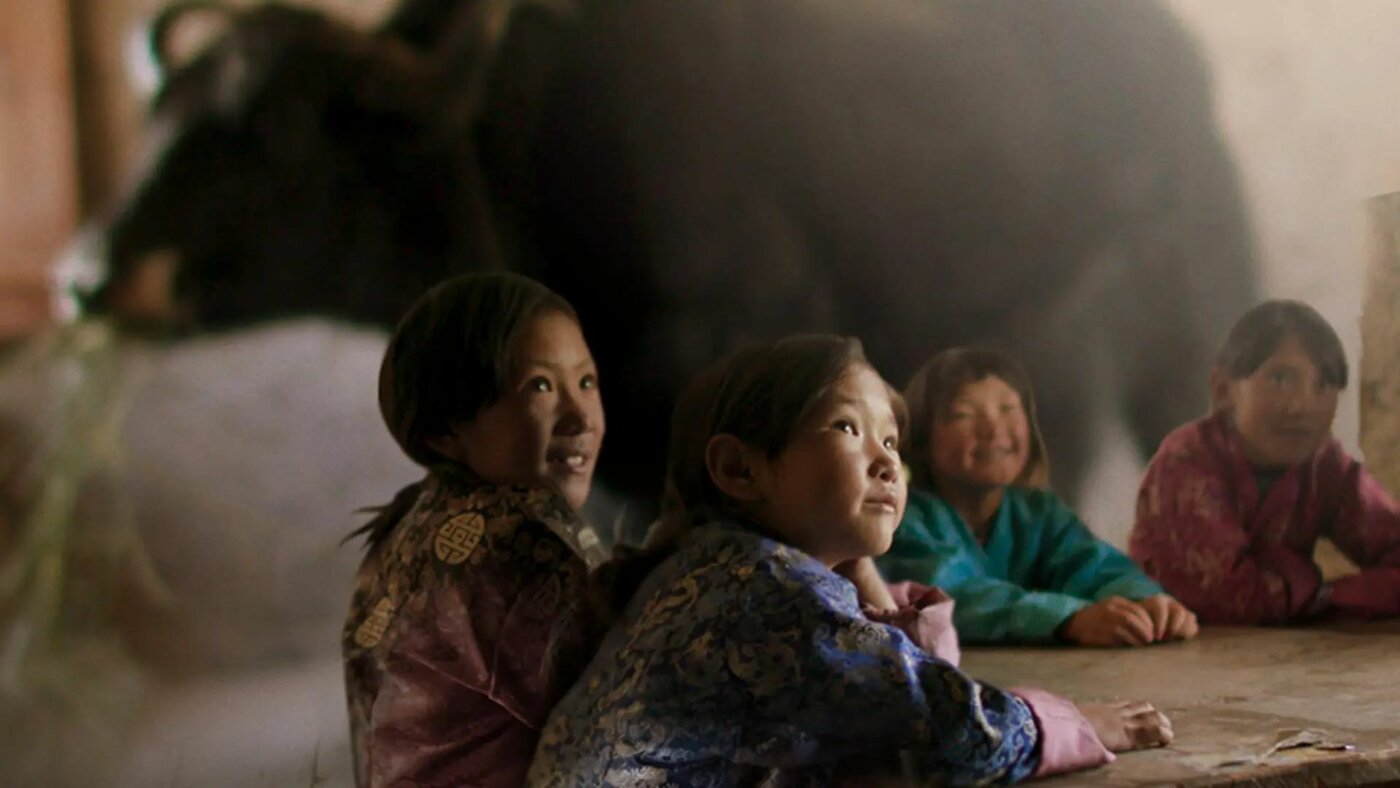
Lunana: A Yak in the Classroom (Pawo Choyning Dorji, 2019).
After a delayed start, Bhutanese filmmakers are creating a distinctive cinematic language grounded in their cultural memory, forging a new wave of cinema that stages a dialogue between tradition and innovation, spiritual insight and artistry. From this remarkably compressed timeframe has come a body of work that resists Western narrative and cinematic conventions. These films have proven that a national cinema does not require decades of development before achieving philosophical sophistication. Instead, by drawing directly from centuries of Buddhist thought and practice, Bhutan’s directors have created mature meditations on existence, attachment, and transcendence. As this youngest of all national cinemas continues to evolve, it stands as proof that innovation in film language comes from a thoughtful translation of tradition, essential insights, and storytelling strategies into contemporary forms.