Get in touch to send in cinephile news and discoveries. To keep up with our latest features, sign up for the Weekly Edit newsletter and follow us @mubinotebook on X and Instagram.
NEWS
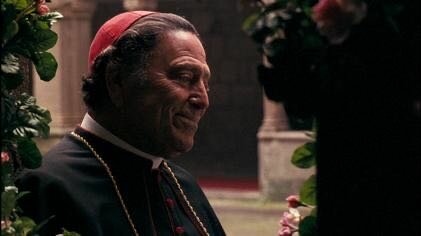
The Godfather Part III (Francis Ford Coppola, 1990)
- At this year’s Cannes Film Festival, Cristian Mungiu’s Fjord (2026) won the Palme d’Or, the Romanian filmmaker’s second top-prize win following 4 Months, 3 Weeks and 2 Days (2007). Meanwhile, Andrey Zvyagintsev took home the Grand Prix with Minotaur (2026), with Fatherland (2026) Paweł Pawlikowski scored his second Best Director, shared with Javier Calvo and Javier Ambrossi for Black Ball (2026), and Valeska Grisebach won the Jury Prize for The Dreamed Adventure (2026). Visit the official festival website for a complete list of Competition and Un Certain Regard winners.
- The Toronto International Film Festival will launch an official content marketplace designed to position the festival as a global industry hub. “We want to provide a bigger platform for people to do business, to meet each other and advance the networks that are necessary in a really quickly changing industry now,” says CEO Cameron Bailey.
- In his latest papal encyclical, Pope Leo XIV warned the public and global leaders about the dangers of artificial intelligence. Over the course of 42,000 words, he calls for government regulation of private companies driving AI development, stronger protections for workers and students, and safeguards to ensure the future of humanity.
- Beginning in 2027, the Academy of Motion Picture Arts and Sciences will launch the Academy Marquee List, a global initiative designed to recognize the “most remarkable movie theaters around the world.” Spearheaded by Jason Reitman, the award will celebrate the very best in exhibition as a means of preserving cinematic history.
DEVELOPING
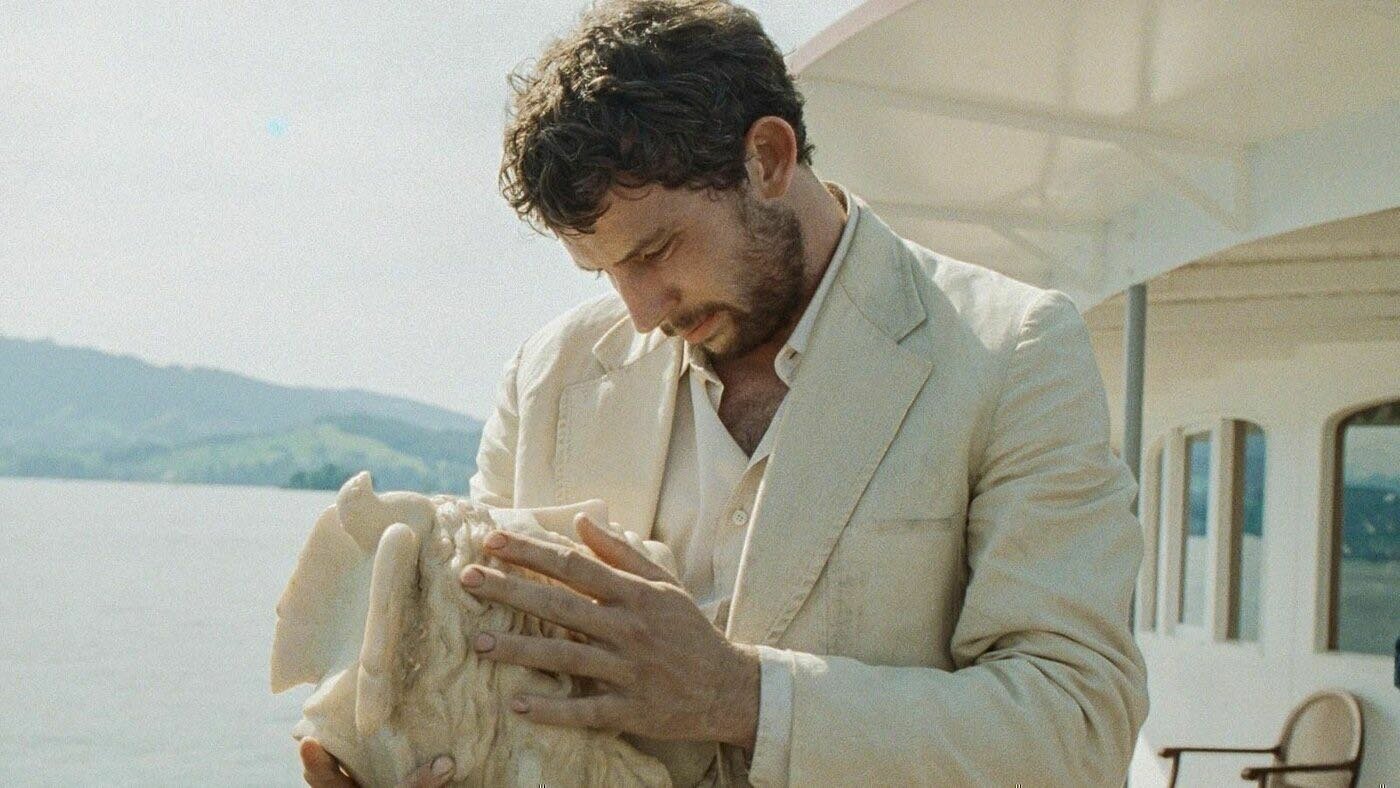
La Chimera (Alice Rohrwacher, 2023)
- Alice Rohrwacher is set to direct The Baron in the Trees, an adaptation of Italo Calvino's 1957 coming-of-age fable, following completion of Three Incestuous Sisters, a mostly-silent film co-written by Rohracher and Ottessa Moshfegh, starring Dakota Johnson, Saoirse Ronan, and Jessie Buckley.
REMEMBERING
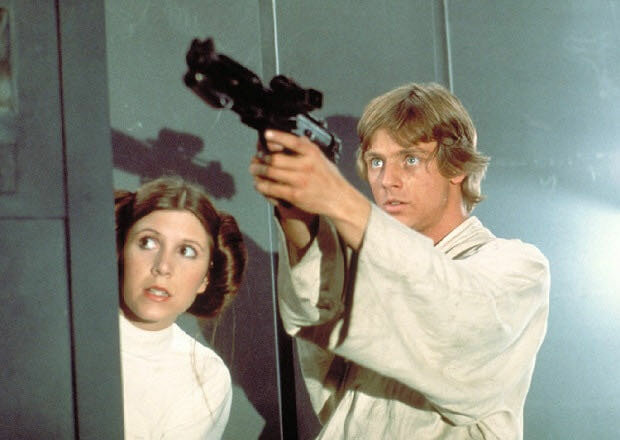
Star Wars (George Lucas, 1977)
- Marcia Lucas has died at 80. The American film editor began her career as an apprentice under Verna Fields on the documentary Journey to the Pacific (1968). It was there she met and began dating her future husband, George Lucas, who tapped her to edit his short film Filmmaker (1968). Over the next few years, Marcia served as an assistant editor on a handful of crucial New Hollywood films, including Francis Ford Coppola’s The Rain People (1969), Haskell Wexler’s Medium Cool (1969), and Michael Ritchie’s The Candidate (1972). After serving as an assistant editor on George’s debut feature THX 1138 (1971), she and Fields co-edited his follow-up American Graffiti (1973), which led to an Oscar nomination and her first studio job editing Martin Scorsese’s Alice Doesn't Live Here Anymore (1974). During this time, she contributed to the first draft of Star Wars (1977). In between acting as a supervising editor on Taxi Driver (1976) and New York, New York (1977), Marcia served as one of three credited editors on the film, all of whom won an Oscar for their efforts. “She was really the warmth and the heart of those films,” said actor Mark Hamill, who claimed that she was responsible for many of its crowdpleasing elements. She was similarly responsible for changing the ending to Raiders of the Lost Ark (1981) after viewing a rough cut and noting that there was no emotional closure between Indiana Jones and Marion Ravenwood. “She helped redefine what film editing could be and paved the way for generations of women who followed,” reads a statement from Marcia’s family.
RECOMMENDED READING
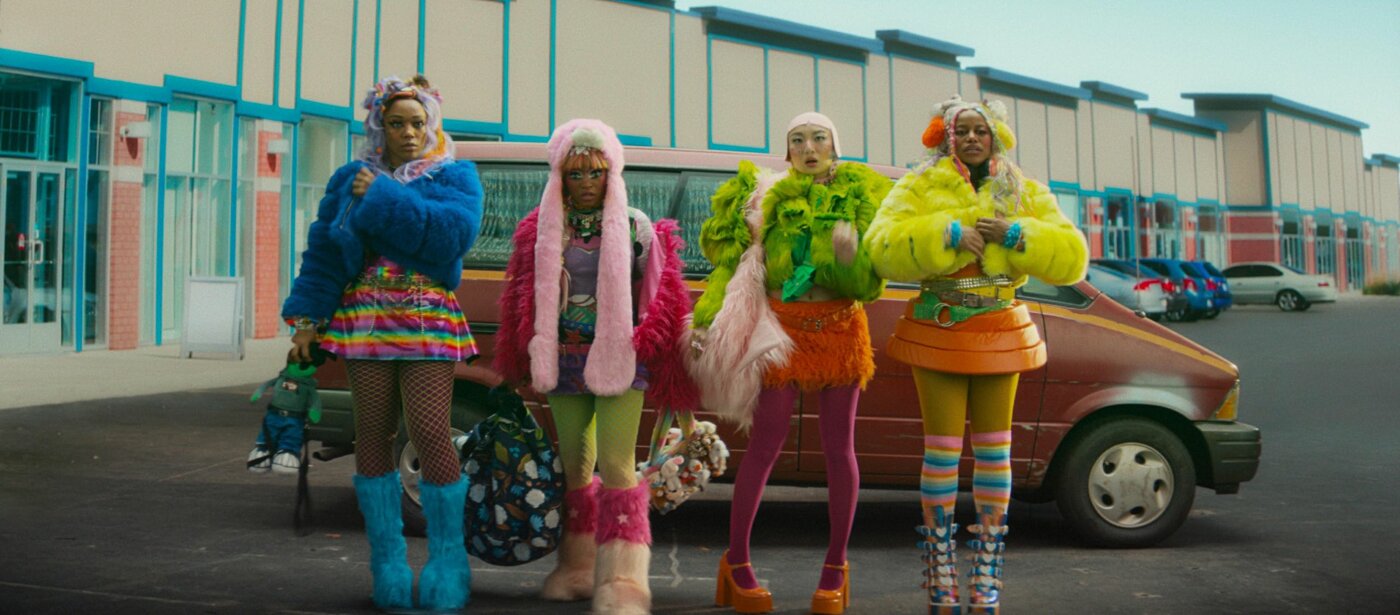
I Love Boosters (Boots Riley, 2026)
- “[Parsons] also resisted the idea that YouTube was seen as a steppingstone on the way to Hollywood. Couldn’t it be the main event? ‘I get a perfectly adequate level of financial security from YouTube and a perfectly fulfilling level of creative gratification from it,’ he said, adding, ‘Trying to jump mediums on certain projects will take away something intrinsically valuable about the original idea.’” For the New York Times, Kyle Buchanan profiles Backrooms (2026) director Kane Parsons about how he adapted his YouTube series into a blockbuster feature film.
- “And so for every Hollywood suit who visited Sundance, the opposite kind of person also continued showing up. These were people in the mold of Redford himself — ’an intellectual cowboy who blazed his own trail,’ as Barbra Streisand eulogized him at the Oscars — idealistic do-gooders who continued to believe that Sundance could offer real correctives to an industry led astray.” For n+1, Will Tavlin reports on Park City, Utah’s final Sundance and the complicated history of America’s preeminent “independent film festival.”
- “At one point, his only solution for the problem of too many strands flying in too many directions is to introduce a teleportation device that triples as a heavy piece of symbolic machinery. Turn one dial and you’ve got a direct line to a Chinese factory floor, where a strike is underway. Turn another and you’re in deconstruction mode, reducing people and objects to their constituent thesis and antithesis. Call it late-stage didacticism.” For 4Columns, K. Austin Collins reviews Boots Riley’s I Love Boosters (2026), an “unabashedly postmodern" satirical work.
- “In my opinion, we belong to a sacrificed generation. These are the last generations of television-induced stupefaction. There will be a whole reappropriation of the image, of machinic data. All of this may happen much faster than we think. Do you realize what it will mean for children to encode everything they read, everything they think; to have access to databases; to compose their programs by accessing image banks; to engage in international communication within a new type of sociality?” For e-flux’s Film Notes, Ethan Spigland translates Félix Guattari’s essay “The Image Machine,” originally published in Cahiers du Cinéma.
RECOMMENDED EVENTS
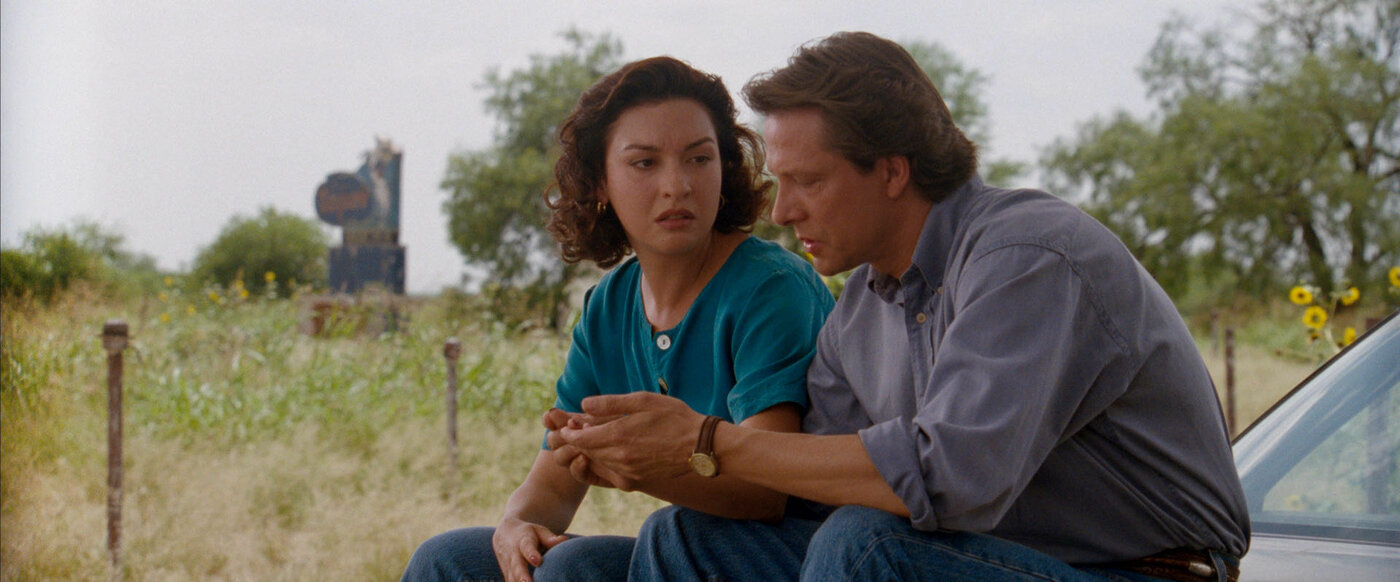
Lone Star (John Sayles, 1996)
- New York, through July 5: The Museum of the Moving Image presents By the People, For the People: Real American Tales, a screening series timed to America’s 250th birthday dedicated to highlighting films that feature “historically marginalized” national perspectives.
- Zurich, June 4 through July 7: Kino Xenix presents Hotel Xenix, a program dedicated to cinematic depictions of the hotel room that includes films such as Bed Peace (1969), The Celebration (1998), and The Hangover (2008).
- Toronto, June 11 through 18: TIFF Cinematheque presents Declarations of Independence: The Cinema of John Sayles, a retrospective of the American filmmaker’s work featuring multiple in-person appearances by the director himself.
- Berlin, June 12: The House of World Cultures presents the European premiere of The Color Scheme, Aria Dean’s performance piece that imagines a dialogue between two Black expats that serves as a meditation on 20th century avant-garde aesthetics and political movements.
RECOMMENDED VIEWING
- Warner Bros. presents a trailer for The End of Oak Street (2026), David Robert Mitchell’s follow-up to Under the Silver Lake (2018), about a suburban family struggling to survive a mysterious dinosaur uprising.
- Black Bear presents a trailer for The Rivals of Amziah King (2025), Andrew Patterson’s follow-up to The Vast of Night (2019), which stars Matthew McConaughey as a beekeeper whose honey business is under threat.
- Ketchup Entertainment presents a trailer for Coyote vs. Acme (2026), a live-action animated Looney Tunes film that was initially shelved by Warner Bros. Discovery to obtain a tax write-off.
- Le Cinema Club presents Jinho Myung’s Softshell (2024), about two Thai-American siblings navigating life in New York in the wake of their mother’s death, as part of their New American Voice series.
RECENTLY ON NOTEBOOK
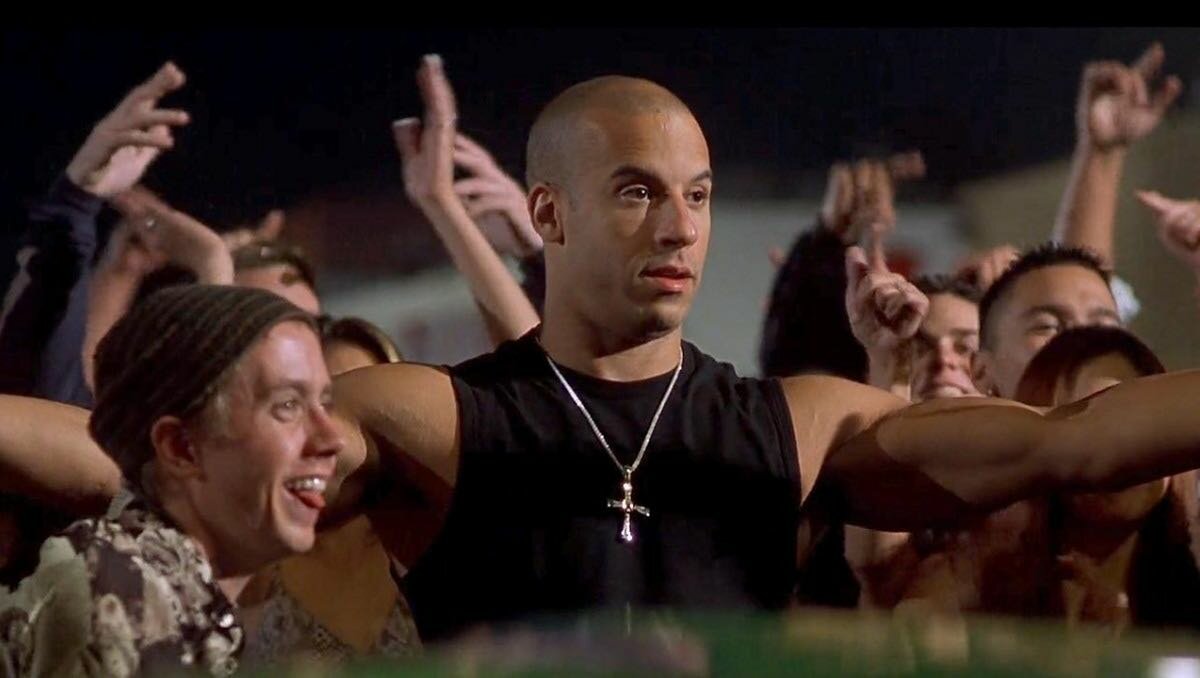
The Fast and the Furious (Rob Cohen, 2001)
- “It's tempting to read Ryoo’s difficult life circumstances into his early work, which abounds with a sense of scrappiness. Die Bad portrays machismo and disaffected youth using an aggressive, freewheeling style, from an exhausting foot chase between cop and criminal, intercut with mockumentary-style interviews with each, to an undercranked shot where a character rains down blows directly at the camera, accompanied by ‘chop-socky’ sound effects.” For Notebook’s Primer column, Jonah Jeng surveys the career of Korean action craftsmen Ryoo Seung-wan on the heels of his latest film Humint (2026).
- “You think you have learned to expect the unexpected. And then the Cannes Classics section announces a random 25th anniversary screening of the 2001 original The Fast and the Furious as a headline event of the 2026 edition, and you understand, with the humility of a repeat student failing a class yet again, that you have learned nothing at all.” As part of Notebook’s Cannes coverage, Pedro Emilio Segura Bernal draws connections between two disparate programs: a surprise screening of The Fast and the Furious (2001) and a collection of five short films by Artavazd Pelechian.
- “The circumstances that lead to the Gheorghiu family being investigated and prosecuted in Fjord are so psychologically fraudulent, so clearly avoidable—if only a single one of these characters could act outside of the fate that Mungiu has prescribed for them, the entire conflict would collapse—that the film only functions as a sadistic exercise in engineering doublethink in an audience that it knows has already made up its mind. Some call that complexity; I’m inclined to go with ‘bullshit.’” Blake Williams reports from Cannes about Cristian Mungiu’s Palme d'Or-winning Fjord (2026), Quentin Dupiex’s Vertiginous (2026), and Arthur Harari’s The Unknown (2026).
- “While [Kiyoshi] Kurosawa was not in competition, a one-time student of the director was. As far as adaptations go, nowhere on anyone’s bingo card was Maho Iono’s 2019 When Life Suddenly Takes a Turn: Twenty Letters Between a Philosopher with Terminal Cancer and a Medical Anthropologist, but Ryusuke Hamaguchi has not only done it, but turned into a sublime, languidly engrossing paean to having hope in impossible situations—making All of a Sudden an unexpected companion piece to Kurosawa’s samurai picture.” For his Cannes report, Daniel Kasman explores some of the festival's filmed adaptations, including Kiyoshi Kurosawa’s The Samurai and the Prisoner (2026) and Ryusuke Hamaguchi’s All of a Sudden (2026).
WISH LIST
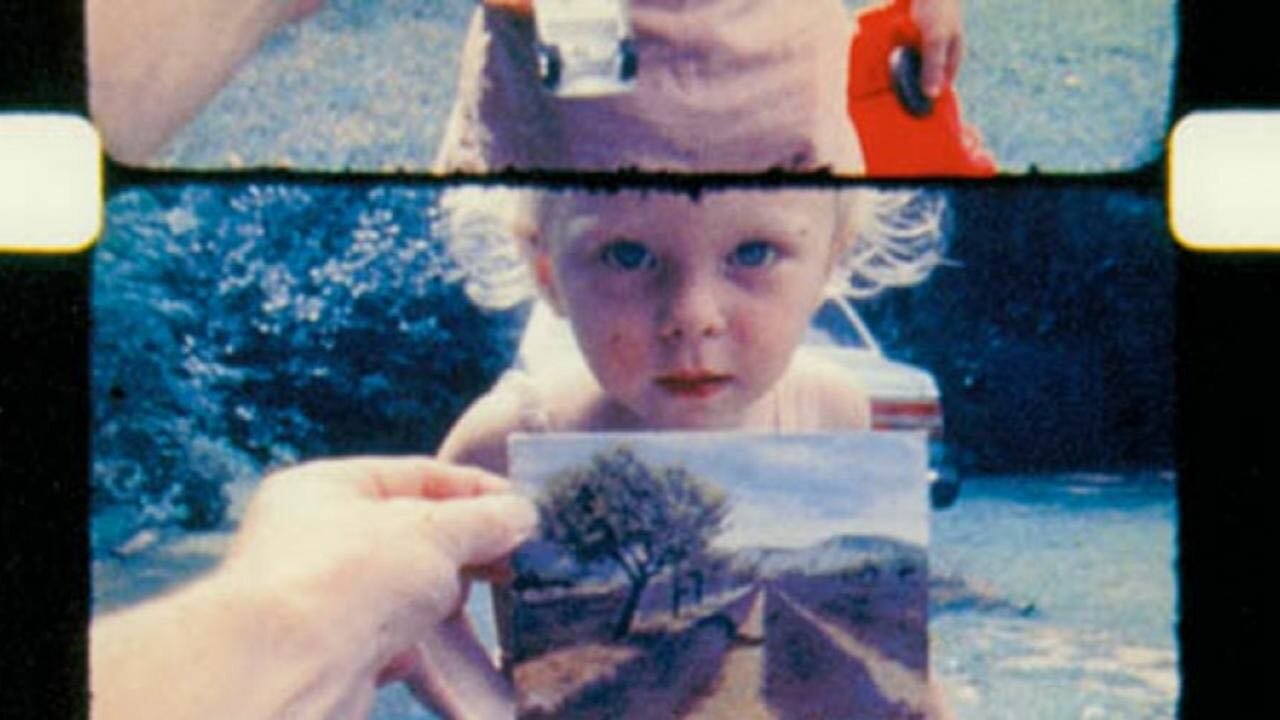
As I Was Moving Ahead Occasionally I Saw Brief Glimpses of Beauty (Jonas Mekas, 2000)
- Across the Movie-verse: Writing on Film, 2011–2021, a new anthology of J. Hoberman’s writing from his post-Village Voice career, is available to preorder.
EXTRAS
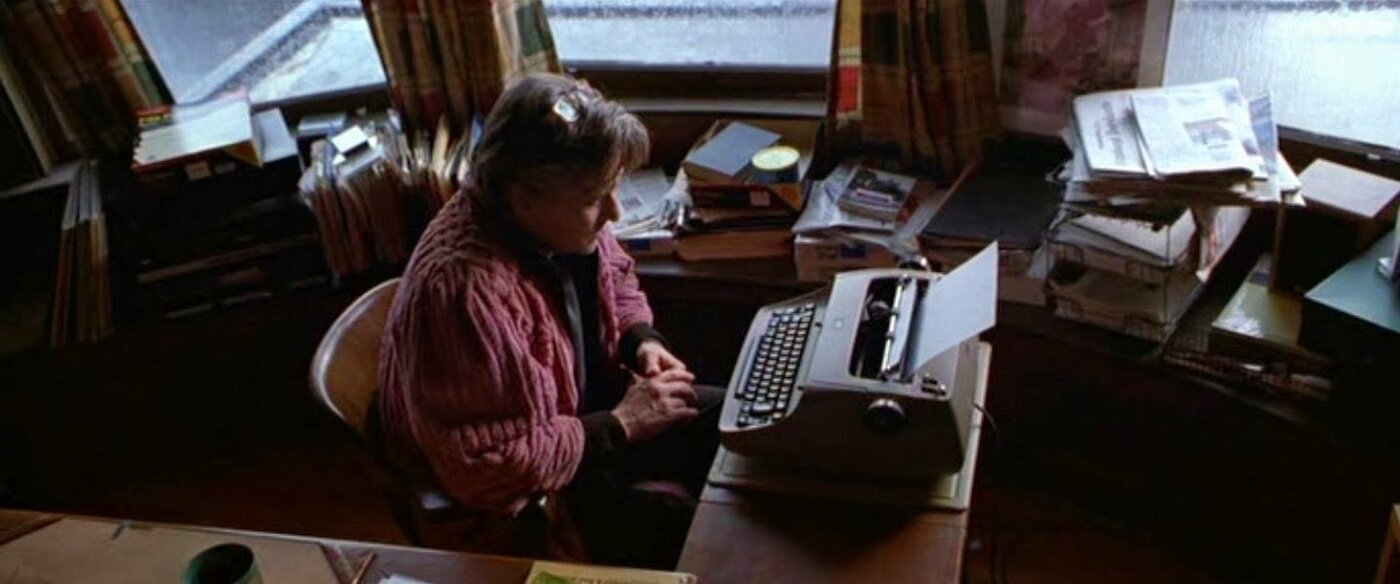
Wonder Boys (Curtis Hanson, 2000)
- Applications are now open for the fourth Critics Campus, a workshop for emerging film critics organized by Notebook contributor Leonardo Goi, during the 23rd Golden Apricot International Film Festival in Yerevan, Armenia. The workshop runs between July 13-17 and the deadline to apply is June 5, 2026, at 12:00 PM AMT.